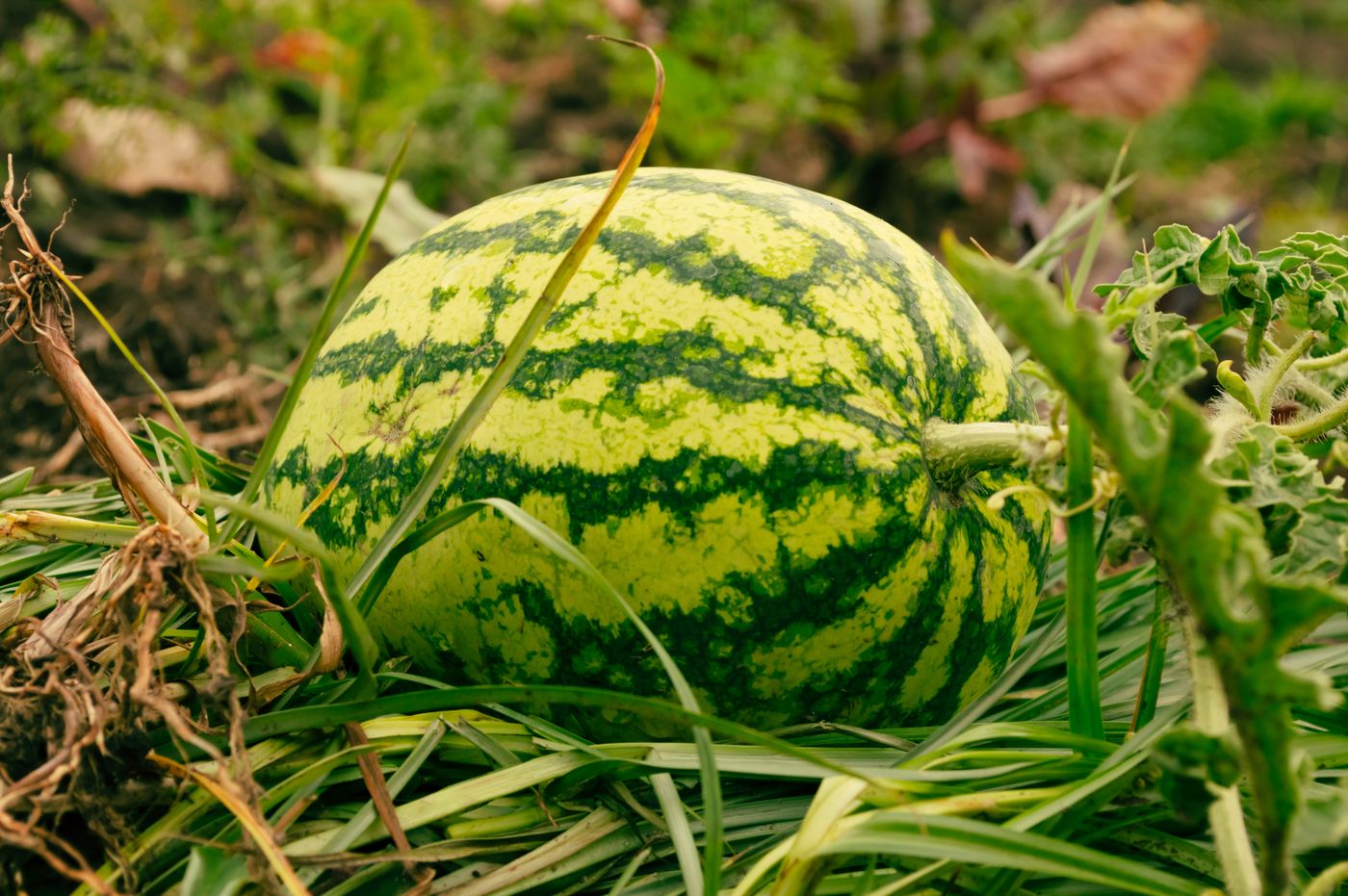
Watermelon is one of the most rewarding quick crops a Kenyan farmer can grow. In warm areas it can go from seed to harvest in under four months, the fruit sells well in towns and along the roads, and demand peaks in the hot months after the short rains, from December into February, when buyers want something cold and sweet. A crop planted at the start of the short rains is timed to meet that market.
But watermelon also punishes mistakes. Plant it in a cool, high area and the vines crawl along without setting good fruit. Plant it on wet, heavy soil in a rainy season and the fruit rots where it sits. Spray at the wrong time and you kill the bees that pollinate it, and the field flowers without fruiting. Harvest by guesswork and half your melons are pale and tasteless.
This guide covers where watermelon does well, choosing a variety, preparing the land and spacing the plants, irrigation alongside the short rains, pollination, protecting the crop from rot and pests, and how to tell when a melon is ripe.
Is Your Area Warm Enough?
Watermelon is a warm season crop. It needs heat and sunshine to grow fast and to build the sugar that makes the fruit sweet. In Kenya it does best in the warm lowlands and mid-altitude areas, such as parts of Eastern, the Coast, the lower areas of Central and the drier parts of the Rift Valley. In cool highland areas growth is slow, fruit set is poor and the fruit tends to be less sweet.
If you are not sure whether your farm is warm enough, ask your county agriculture office or look at whether other farmers nearby grow watermelon successfully. Their experience is a better guide than any general rule.
Watermelon also needs well drained soil. Sandy loams that warm up quickly and drain freely are ideal. Heavy clay soils that stay wet for days after rain are a poor choice in the short rains, because waterlogging damages roots and encourages fruit rot and wilt diseases.
Choosing a Variety
Kenyan seed suppliers stock open pollinated varieties such as Sugar Baby and Charleston Gray, and a range of F1 hybrids. Sugar Baby produces small, round, dark green fruit and matures relatively early; Charleston Gray produces large, long, pale fruit that travels well. Hybrids often give more uniform fruit and higher yields but the seed costs more, and you cannot save seed from them.
Choose for your market. Supermarkets and town traders often prefer certain sizes and shapes; roadside sellers may want large fruit. Check how many days to maturity the supplier quotes, and buy certified seed from a registered stockist, keeping the packet and receipt.
Land Preparation and Spacing
Clear the land, dig or plough deeply and break the clods so the roots can spread. Watermelon roots go deep and wide when the soil allows. Work well rotted manure or compost into the planting rows or holes; it improves structure and holds moisture in sandy soils. Ask your agronomist about a fertiliser plan based on a soil test.
In the short rains, drainage is the priority. Raised beds or ridges keep the root zone above standing water, and planting on the crest of a ridge or a small mound protects young plants after heavy storms. Run beds along the contour on sloping land.
Watermelon vines spread a long way, so give them room. Spacing varies with variety and system, but a common smallholder layout is rows about 2 metres apart with plants about 1 metre apart along the row, sowing two or three seeds per hole and thinning to the strongest one or two seedlings.
Water: Rain Plus a Reliable Backup
The short rains are unreliable in many watermelon areas. A few heavy storms can be followed by dry weeks just when the plants are flowering and filling fruit. Watermelon needs steady moisture from planting until the fruit is nearly full size; stress at flowering reduces fruit set, and an irregular water supply can cause cracking and poorly shaped fruit.
Drip irrigation is well suited to watermelon. It delivers water to the root zone without wetting the leaves, which reduces leaf diseases, and it lets you add fertiliser through the system. Lay one drip line along each row on the bed. Our guide to drip line installation and layout walks through the setup, and our guide to irrigation scheduling explains how much to give.
Irrigate during dry spells between rains, and check the soil a few centimetres down rather than relying on how the surface looks. As the fruit approaches maturity, many growers reduce watering, because too much water late in the season can dilute sweetness and cause splitting. Ask your agronomist about timing for your variety.
Pollination: Look After the Bees
Watermelon plants carry separate male and female flowers. The female flowers are easy to spot: each has a tiny, round, striped fruit at its base, behind the petals. Pollen must be carried from male to female flowers, and bees do almost all of that work. A female flower that is not visited enough produces a small, misshapen fruit or none at all.
Protect the pollinators. Avoid spraying insecticides when flowers are open and bees are active, usually from mid-morning to afternoon; if a spray is necessary, ask your agronomist about products and timing that reduce harm to bees, and spray late in the evening. Some farmers place beehives near their melon fields to improve pollination; our guide to beekeeping equipment covers what you need to get started.
Rot, Disease and Pests in a Wet Season
Warm, wet weather favours fungal diseases on watermelon leaves, such as downy and powdery mildew and anthracnose, and soil-borne wilts. Fruit lying on wet soil can rot from below. Good practice reduces most of these problems.
Mulch under the developing fruit with dry grass or straw so it does not sit on wet ground. Use drip irrigation rather than overhead watering. Rotate fields so that watermelon, cucumber, pumpkin and other relatives are not grown on the same land season after season. Remove badly infected plants and fruit from the field. Scout the crop at least weekly for aphids, beetles, fruit flies and leaf spots.
When a spray is needed, ask your agronomist or county crop officer which products are registered for watermelon in Kenya, the correct dose and the pre-harvest interval, and follow the label. In the rainy season, spraying needs extra care so the product is not washed off before it works; our guide to spraying in the rainy season explains rainfastness, and our knapsack sprayer calibration guide makes sure the right amount goes on.
How to Tell When a Watermelon Is Ripe
Picking at the right time is what separates a sweet, red melon from a pale, bland one. Watermelon does not sweeten after it is picked, so harvesting early cannot be fixed later. Look for several signs together rather than relying on one.
Cut a test fruit or two from different parts of the field before harvesting the whole crop. Harvest in the cool of the morning, cut the stalk with a sharp knife rather than twisting the fruit off, and handle the melons gently. Bruised fruit spoils fast. Keep harvested melons in the shade, stack them carefully on a bed of dry grass, and get them to buyers quickly.
Selling: Grade, Line Up Buyers and Avoid the Glut
Watermelon prices in Kenyan markets rise and fall sharply with supply. When many farms in one area harvest in the same few weeks, traders can pick and choose, and prices at the farm gate drop. Farmers who do best usually do three things.
They stagger planting. Sowing a field in two or three blocks a couple of weeks apart spreads the harvest, so you are not forced to sell everything at once and you can supply buyers steadily over a longer period.
They line up buyers early. Talk to traders, fruit vendors, hotels, schools and supermarket suppliers before the crop is ready. Agree the sizes they want, how they will collect, and how they will pay. A buyer who knows your crop is coming is less likely to beat the price down at the gate.
They grade the fruit. Sort melons by size and quality at harvest. Large, well shaped, unblemished fruit can go to buyers who pay more for appearance, while smaller or marked fruit can be sold locally or to juice makers. Selling a mixed heap usually means being paid the price of the worst fruit in it.
Keep records of planting dates, inputs, yields and prices for each block. After a season or two you will know exactly which variety, planting date and buyer give the best return on your farm.
Your Watermelon Checklist
| Stage | Check |
|---|---|
| Site | Warm area; well drained sandy loam; raised beds for the rains |
| Seed | Certified variety chosen for your market; days to maturity counted back from selling time |
| Spacing | Rows about 2 m apart, plants about 1 m, thinned to the strongest |
| Water | Drip line per row; irrigate in dry spells; reduce as fruit matures |
| Pollination | No spraying while bees are active; hives nearby if possible |
| Protection | Mulch under fruit; rotation; weekly scouting; registered products only |
| Harvest | Several ripeness signs together; test fruit cut; picked cool, handled gently |
Watermelon Equipment, With Prices
These prices are from the Fuga price list at the time of writing; check the site or call a branch for current prices and stock.
| Item | Stock code | Price |
|---|---|---|
| Irrigation Kits | Various | From KSh 1,000 |
| DOUBLE EMITTERS DRIP LINE 150MM | 6492 | KSh 7,438 |
| WATER FILTER | 6423 | KSh 2,000 |
| Manual Knapsack Sprayer | Various | KSh 1,600 |
| JEMBE 3LB ALLIGATOR | 6256 | KSh 450 |
| RAKE 12 TEETH | 6373 | KSh 220 |
Plant in warm, well drained ground on raised beds, back up the rains with drip irrigation, protect the bees, keep fruit off wet soil and pick only when the signs agree. For drip kits and sprayers, see our irrigation kits, manual knapsack sprayer and the full water and irrigation range, or WhatsApp 0716 961 018 with the size of your plot.
Key Takeaways
- Watermelon needs a warm area and well drained soil; use raised beds or ridges in the short rains.
- Choose a certified variety for your market and count back its days to maturity from the hot season selling weeks.
- A common layout is rows about 2 m apart with plants about 1 m apart, thinned to the strongest seedlings.
- Back up the rains with a drip line along each row and reduce watering as fruit nears maturity.
- Protect bees: avoid spraying while flowers are open and bees are active, and keep fruit on dry mulch.
- Pick when several signs agree: dry tendril, creamy yellow ground spot, dull rind and a deep, hollow knock.
Frequently Asked Questions
Can I grow watermelon in the short rains in Kenya?
Yes, in warm areas with well drained soil. Plant on raised beds or ridges so roots and fruit stay out of standing water, and back up unreliable rain with drip irrigation. A crop planted as the short rains start can meet strong demand in the hot months that follow.
What spacing should I use for watermelon?
A common smallholder layout is rows about 2 metres apart with plants about 1 metre apart along the row. Sow two or three seeds per hole and thin to the strongest. Follow your seed supplier's advice for your variety.
Why are my watermelon flowers falling without fruit?
The first flowers are mostly male, so early flower drop is normal. If female flowers, the ones with a tiny fruit at the base, also drop, poor pollination is likely: too few bees or spraying while bees are active. Protect pollinators and consider hives nearby.
How do I know when a watermelon is ready to harvest?
Look for several signs together: the curly tendril nearest the fruit stalk is brown and dry, the ground spot has turned from white to creamy yellow, the rind looks dull, and a knock gives a deep, hollow sound. Cut a test fruit before harvesting the field.
How long does watermelon take to mature?
Depending on variety and temperature, roughly three to four months from sowing in warm areas. Check the days to maturity on the seed packet and expect slower growth in cooler places.