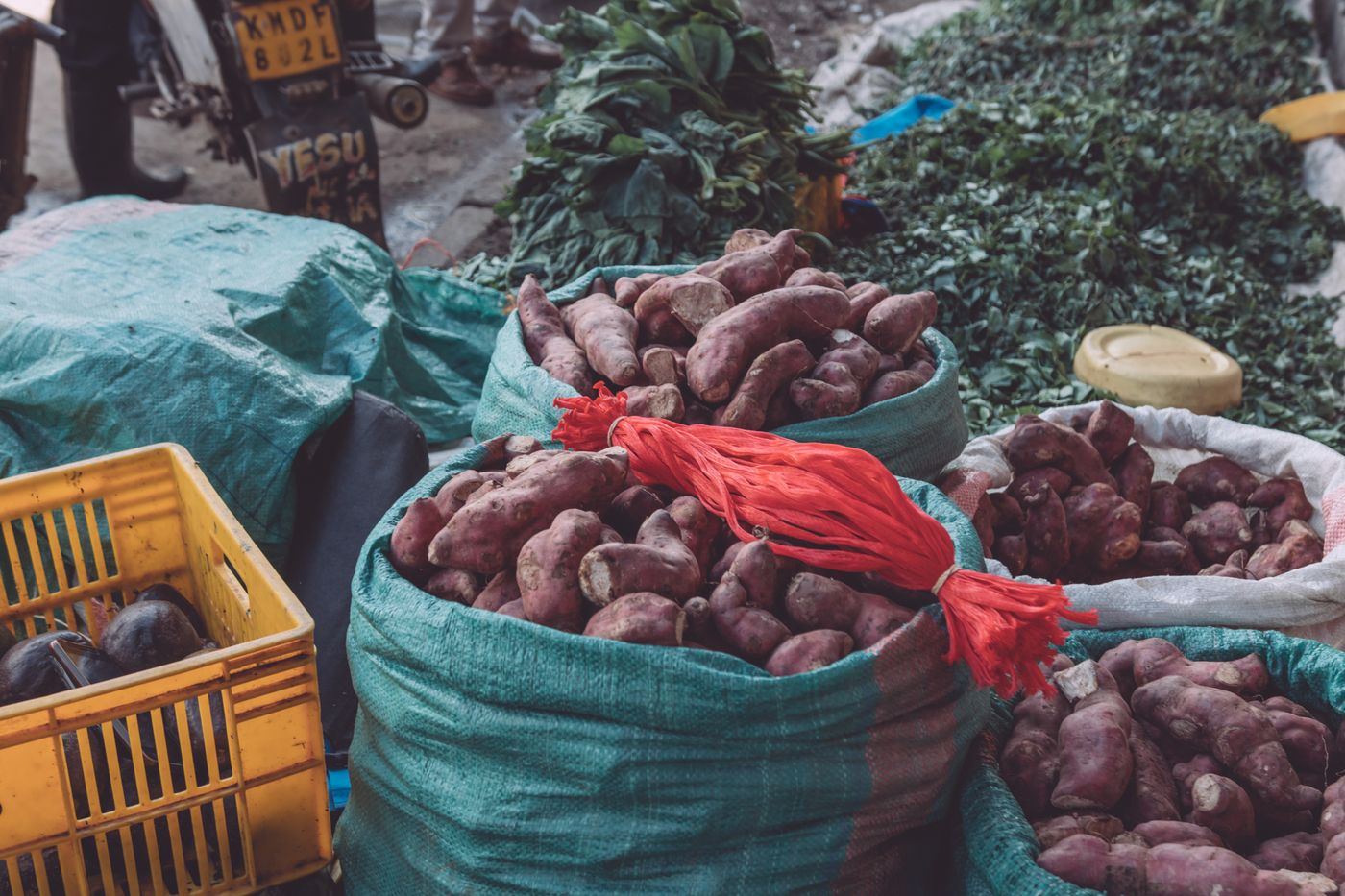
Sweet potatoes are one of the most forgiving crops a Kenyan farmer can grow. They tolerate poor soil better than maize, cover the ground fast enough to smother many weeds, survive a dry spell that would finish beans, and can be dug a few at a time over weeks, which makes them a food security crop as much as a cash crop. Orange-fleshed varieties have also made them a favourite for families with young children, because the orange flesh is rich in vitamin A.
Yet many plots give a disappointing harvest: long vines and few roots, roots riddled with weevil tunnels, or plants stunted and crinkled by virus. Almost all of those problems are decided in the first weeks, by the vines you plant, how you prepare the ridges and how you cover the cuttings.
This guide covers how to get clean planting vines, prepare ridges or mounds, cut and plant vines the right way at the start of the short rains, weed and earth up, keep weevils out, and harvest and store the roots. It also covers the simple tools that make the work faster.
Start With Clean Vines, Not Whatever Is Nearby
Sweet potato is grown from vine cuttings, not seed, and that is both its strength and its weakness. Diseases, especially sweet potato virus disease, travel in the vines. If you cut vines from an old, infected field, you plant the disease along with the crop, and the yield falls season after season.
Wherever possible, get clean vines from a known source: a KALRO station, a county agriculture programme, or a trained vine multiplier in your area. Ask your extension officer which varieties suit your altitude and market. Orange-fleshed varieties released in Kenya include Kabode and Vitaa, and there are white and cream fleshed varieties that local markets know well. Choose the variety for what your buyers want and how long your rains usually last.
If you must use vines from your own field, take them from the healthiest, most vigorous plants: leaves flat and green, not crinkled, mottled or yellowed, and stems free of weevil holes. Never take vines from plants that look stunted.
Prepare Ridges or Mounds Before the Rains Settle In
Sweet potato roots need loose, well drained soil to swell into a good shape. In heavy or compacted soil they stay thin and twisted; in waterlogged soil they rot. That is why the crop is grown on raised ridges or mounds rather than flat ground.
Dig the ground to a good depth with a jembe or plough, break the clods, and remove perennial weeds such as couch grass by the roots. Then pull the soil up into ridges. Ridges are faster to make in long rows and easier to weed; mounds suit small, sloping or rocky plots and are traditional in many areas. On a slope, run the ridges across the slope, along the contour, so they hold water instead of channelling it downhill. Our guide to land preparation before the rains covers clearing and digging in more detail.
Cutting and Planting Vines the Right Way
Cut vines about 30 centimetres long, with several nodes, from the tips of healthy plants. A sharp panga or knife makes a clean cut that heals well. Many farmers leave cut vines in a shaded, damp place for a day or two before planting; this lets the cut ends harden and encourages roots to start, but do not let them dry out in the sun.
Plant when the soil is properly moist, ideally once the short rains have soaked the ridges. Push each cutting into the top of the ridge at an angle, with about two thirds of its length buried and the leafy tip above ground. The buried nodes are where the storage roots form, so burying more nodes gives the plant more places to make roots. Firm the soil around each cutting so it does not dry out or wash loose in a storm.
Space cuttings about 30 centimetres apart along the ridge. Closer spacing gives more, smaller roots; wider spacing gives fewer, larger ones. Fill any gaps where cuttings have died within the first two weeks, while the rains are still reliable.
Feeding the Crop: Roots, Not Just Leaves
One of the most common complaints about sweet potato is a field of lush, heavy vines with very few roots underneath. The usual cause is too much nitrogen. Nitrogen drives leaf and vine growth; when there is a lot of it, especially from fresh manure or a heavy dose of a nitrogen fertiliser, the plant puts its energy into vines rather than storage roots.
Sweet potato does well on moderate fertility. Well rotted manure or compost worked into the ridges before planting improves soil structure and supplies nutrients gently. Potassium is particularly important for root bulking, and soils that have been cropped hard for years are often short of it. A soil test, available through KALRO and some county and private laboratories, tells you what your field actually needs, and your agronomist or extension officer can turn the result into a fertiliser plan for the crop.
Rotation helps too. Sweet potato following a well fertilised maize crop often finds enough residual nutrients without much extra feeding, while following it with beans or another legume keeps the soil in good shape. Whatever you apply, place it in the ridge where the roots will find it, not scattered across the furrows where the weeds will use it first.
Weeding and Earthing Up
For the first month to six weeks, before the vines cover the ground, weeds compete hard for water and nutrients. Keep the ridges clean with one or two careful weedings using a jembe or hand hoe, and avoid cutting into the young roots in the ridge. After that, the vine canopy usually shades out most weeds by itself.
Each time you weed, pull loose soil back up onto the ridge. This earthing up does two jobs: it repairs ridges eroded by heavy rain, and it covers any roots that have started to show through the soil, which is the main defence against weevils. Our guide to weeding in the short rains covers tool choice and timing for mixed plots.
Keeping Weevils and Virus Out of the Crop
The sweet potato weevil is the most damaging pest in many parts of Kenya, and it is worst when the crop sits in dry, cracked soil late in the season. Damaged roots develop tunnels and a bitter taste that buyers reject. Integrated control works better than any one measure: plant clean tip cuttings, earth up regularly, harvest on time rather than leaving the crop in the ground long into the dry season, and remove crop residues and volunteer plants after harvest so weevils have nowhere to breed.
Rotate sweet potato with other crops and avoid planting a new field right next to an old, infested one. If you are considering any insecticide, ask your agronomist or county crop officer which products are registered for the crop in Kenya and how they should be applied, and read our guide to storing and handling agrochemicals before you buy.
For virus, prevention is the only cure. Plants that show crinkled, mottled or strapped leaves should be pulled out early and not used for vines. Replace your planting material with clean vines every few seasons if you see the problem spreading.
Harvest: Piecemeal or All at Once
Most varieties are ready about three to five months after planting, depending on variety, altitude and rainfall. Signs include leaves yellowing and roots cracking the ridge surface. Dig a test plant or two to check the size before you harvest the whole field.
Many households harvest piecemeal, digging a few roots from each plant as they are needed and leaving the rest to grow. That spreads food over weeks, but leaving the field too long into the dry season increases weevil damage. For selling, a single harvest is usually easier to market.
Dig carefully with a jembe or fork, starting from the side of the ridge rather than straight down onto the roots. Bruised and cut roots rot quickly and sell for less. Handle them gently, keep them out of the sun, and sort by size and damage before you bag them.
Storage and Selling
Freshly dug roots keep better if they are first cured: held for several days in a warm, humid, shaded place so small wounds heal over. After curing, store them in a cool, dry, well ventilated place, in breathable bags or baskets, and check them regularly for rot. Remove damaged roots before they spoil the rest. Our guide to Irish potato curing and storage explains the same principles for a related crop.
Sweet potato roots can also be sliced and sun dried into chips for flour, and the vines are a valuable livestock feed, especially for dairy cows, goats and pigs. Our guide to planting cassava cuttings is a good companion read if you are planning a drought tolerant root crop plot this season.
Your Sweet Potato Planting Checklist
| Stage | Check |
|---|---|
| Vines | Clean tip cuttings from a known source or the healthiest plants; no crinkled or mottled leaves |
| Ground | Dug deep, clods broken, couch grass removed; ridges along the contour |
| Planting | Moist soil; cuttings about 30 cm long, two thirds buried, about 30 cm apart |
| Early care | Gaps filled by week two; one or two weedings before the canopy closes |
| Weevils | Ridges earthed up, cracks closed, harvest on time, residues cleared |
| Harvest | Test dig first; dig from the side; handle gently and sort |
| Storage | Cure, then cool, dry and ventilated; check for rot |
Planting and Harvest Tools, With Prices
These prices are from the Fuga price list at the time of writing; check the site or call a branch for current prices and stock.
| Item | Stock code | Price |
|---|---|---|
| JEMBE 3LB ALLIGATOR | 6256 | KSh 450 |
| JEMBE 2LB ALLIGATOR | 6448 | KSh 400 |
| PANGA ALLIGATOR CURVED 16" WOODEN | 6321 | KSh 290 |
| RAKE 12 TEETH | 6373 | KSh 220 |
| SHOVEL METAL HANDLE | 6621 | KSh 400 |
| 50kgs storage bag | 6702 | KSh 250 |
Plant clean tip cuttings into moist ridges as the short rains settle, weed and earth up early, keep the cracks closed against weevils and harvest on time. For digging and planting tools, see our jembes, pangas and the full farm equipment range, or WhatsApp 0716 961 018.
Key Takeaways
- Plant clean tip cuttings from a known source or the healthiest plants; diseases such as sweet potato virus travel in the vines.
- Grow on ridges or mounds of loose, well drained soil, with ridges along the contour on slopes.
- Plant cuttings about 30 cm long into moist soil, two thirds buried at an angle, about 30 cm apart.
- Avoid heavy nitrogen, which gives vines instead of roots; a soil test guides fertility.
- Weed and earth up early, and keep cracks closed so weevils cannot reach the roots.
- Harvest on time, dig from the side of the ridge, cure the roots and store them cool, dry and ventilated.
Frequently Asked Questions
When should I plant sweet potato vines in Kenya?
Plant at the start of the rains, once the soil in the ridges is properly moist. In the short rains that is usually as the rains settle in October or November, depending on your area. Fill any gaps within the first two weeks while rain is reliable.
How long should sweet potato cuttings be?
About 30 centimetres, with several nodes, taken from the tips of healthy vines. Bury about two thirds of the cutting at an angle in the top of the ridge, leaving the leafy tip above ground.
Why do my sweet potatoes have lots of vines but no roots?
Usually too much nitrogen, from fresh manure or heavy nitrogen fertiliser, which drives leaf growth instead of root bulking. Use moderate fertility, well rotted manure and a fertiliser plan based on a soil test.
How do I control sweet potato weevils?
Plant clean tip cuttings, earth up the ridges to close cracks around swelling roots, harvest on time instead of leaving the crop in dry soil, rotate crops and clear residues after harvest. Ask your agronomist before using any insecticide.
How long do sweet potatoes take to mature?
Most varieties are ready about three to five months after planting, depending on variety, altitude and rainfall. Dig a test plant to check root size before harvesting the whole field.