Walk through almost any rural county in Kenya and you will find hives that have not been opened in two years. At harvest time the owner arrives at dusk with a torch and no suit, smashes out whatever is inside, and ends up with a bucket of dark, watery honey mixed with brood and wax that no shop will pay well for.
That is not a bee problem. It is an equipment problem, and it is why yields per hive in Kenya sit far below what the same colony would give a keeper with the right kit. Bees here are abundant and swarms will occupy a good bait hive for free. What separates a hobby hive from an income is the gear between the colony and the jar.
This guide walks the whole chain: hive choice, siting, clothing that lasts, smokers and hive tools, harvesting, extracting, settling, packing for sale, and the difference between keeping bees and running a honey business.
Three Hive Types, and the Keeper Each One Suits
Almost every hive in Kenya belongs to one of three families, and the choice you make on day one decides your harvesting method, your equipment bill and your ceiling for years.
The log or traditional hive is a hollowed trunk or bark cylinder. It costs next to nothing and cannot be inspected: you never see the queen or the brood, and you harvest by cutting comb out blind. It belongs in the apiary as a swarm catcher, not as a business.
The Kenya Top Bar Hive (KTBH) was designed in East Africa for exactly these conditions: a long trough with sloping sides and removable top bars, so bees build one comb per bar and you can lift out a single comb without breaking the colony apart. It is cheap to build locally and easy for one person to work. The catch is that top bar combs have no frame and no wire, so they cannot survive an extractor. You harvest by crush and strain, destroying comb the bees spent honey building.
The Langstroth hive is the box-and-frame system used commercially worldwide: a brood box below, honey supers above, wired frames that slide out. Its power is the extractor. A wired frame holds together at speed, so you spin the honey out and hand the empty drawn comb back to the bees, who refill it far faster than they can rebuild it. That single fact is why serious producers standardise on Langstroth.
Siting the Apiary: The Decision You Cannot Undo Cheaply
Bees fly a radius of a few kilometres, so forage matters less than beginners think and site management matters far more. What kills Kenyan colonies is not lack of flowers. It is ants, heat, water shortage, pesticide drift and theft.
Put hives on stands, never on the ground, with each leg in a tin of used oil so safari ants cannot climb, because ants will empty a young colony in a night. Face entrances away from the prevailing wind and from footpaths, and give the hive afternoon shade: a hive baking in full sun sends half its workforce to fan and cool instead of forage. Keep clean water within a short flight, or the bees will use your neighbour's cattle trough.
Site at least a hundred metres from homesteads, schools and livestock pens, behind a screening hedge that lifts the bees' flight path above head height as they leave, and clear of crops that will be sprayed. Then plan for honey badgers and for people, which is why many keepers run a powered fence around the apiary, the approach in our guide to solar fencing and farm security.
Protective Clothing: Why the Cheap Suit Is the Expensive One
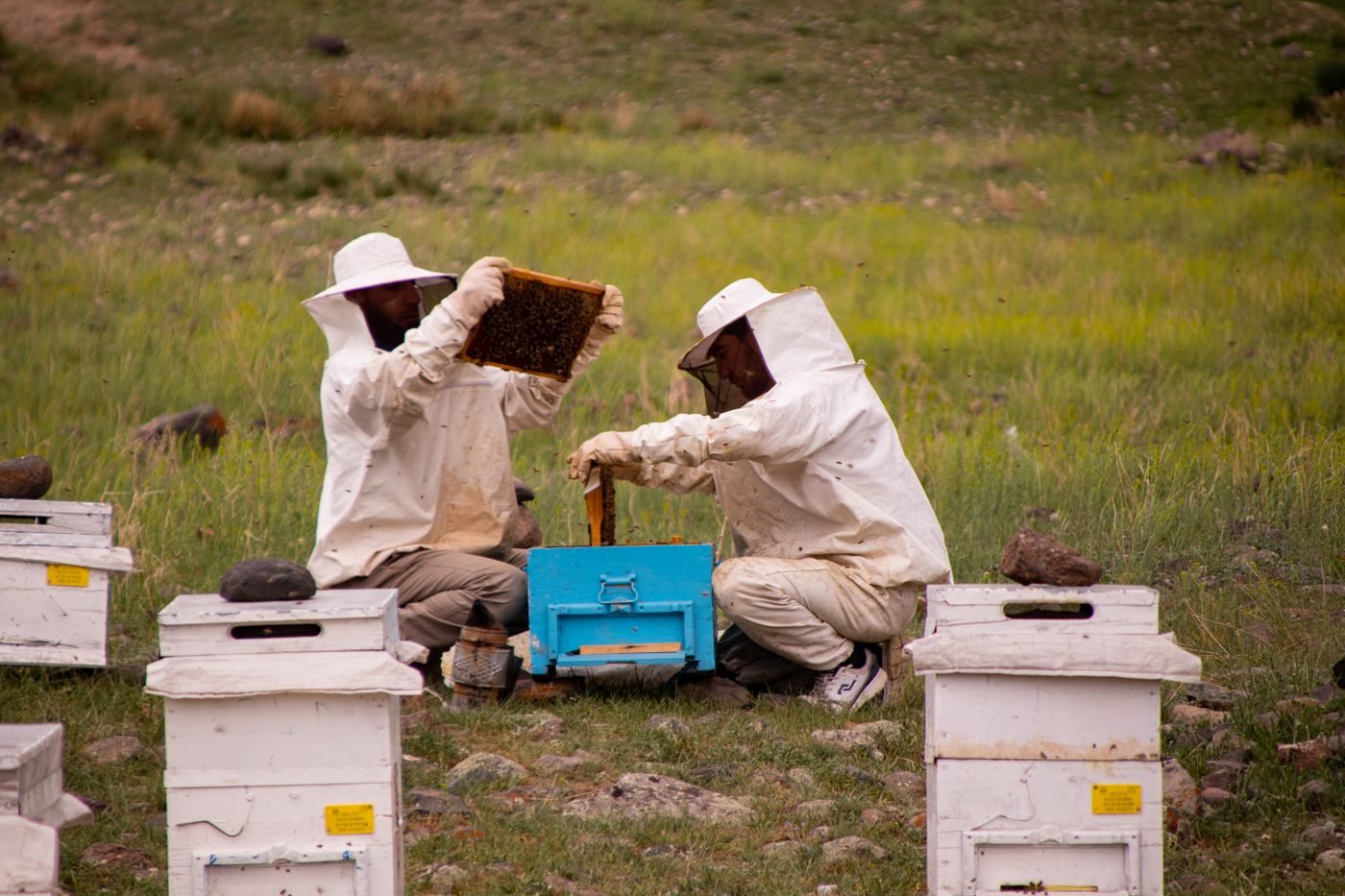
Kenyan bees, mostly Apis mellifera scutellata, defend their nests hard, and a disturbed colony will follow you. A thin single-layer suit lets a sting reach skin wherever the fabric presses against you: shoulders, knees, backside as you crouch. That teaches a new keeper that beekeeping hurts, so inspections get skipped, and unopened hives are how colonies get lost. A ventilated or double-layer suit holds the fabric off the skin, which is the point of the garment.
Look for four things: a rigid dome or fencing veil that never touches your face, a zip running right around the hood with a flap behind it (the zip line is where bees actually get in), elasticated cuffs and ankles, and a light, smooth fabric, because dark fuzzy cloth reads as predator fur to a defensive colony.
Add gumboots with the trousers worn over them, never tucked in, and gloves: leather gauntlets while you learn, thin nitrile later, because feel makes you gentler and gentle handling means fewer stings. A ventilated suit costs several times a market-stall suit and lasts many seasons, which is why it is the cheaper purchase. Confirm current options on our price list.
The Smoker and the Hive Tool
The smoker is the most important tool in beekeeping, and the most commonly bought in the wrong size. Cool white smoke masks the alarm pheromone guard bees release and sends the colony down onto the honey, which occupies them while you work. Hot, thin or ashy smoke does the opposite and taints the honey.
Buy a large stainless smoker with a heat shield and a strong bellows, because a small one goes out halfway through an inspection. Fuel it with dry natural material: sisal fibre, grass, maize cobs, coffee husks, wood shavings. Never plastic, treated timber or anything with a fuel smell, because smoke flavour ends up in the honey. Light a small hot core, pack the chamber loose above it, and test the smoke against your wrist first.
The hive tool is a flat steel lever with a scraper at one end and a hook at the other, for prising apart boxes glued with propolis and scraping off burr comb. Never use a panga or a screwdriver: both crush bees and split woodwork. Add a soft bee brush and a bucket of water with washing soda for cleaning hands and tools between hives, which limits disease spread.
Colony Management: The Kit Between Inspections
A few inexpensive items separate a managed apiary from a collection of boxes. A queen excluder, a grid sized so workers pass and the larger queen cannot, keeps brood out of your honey supers, so what you harvest is clean honey rather than comb full of larvae. A catcher box or bait hive rubbed with beeswax lets you capture swarms instead of buying colonies. Frames and foundation, or wax-rubbed starter strips on top bars, keep the bees building straight comb. A feeder carries colonies through a long dearth, so the hive is strong when the flow returns. And a record card per hive, noting eggs or queen seen, brood pattern, stores and space added, turns guesswork into a management system.
Harvesting: Take Only Sealed Honey
The most valuable habit in Kenyan beekeeping is to harvest only capped comb. Bees cap a cell with wax once they have dried the nectar to a moisture level that will not ferment. Uncapped honey is unripe: jars of it ferment, bubble, push their lids and cost you the customer.
So harvest the supers, never the brood nest, and take only combs that are largely sealed, leaving enough stores to reach the next flow. Work in the late afternoon when foragers are home, smoke lightly, brush bees off rather than shaking hard, and carry combs away covered so you do not start a robbing frenzy.
From here, cleanliness is food processing rather than farming. Honey absorbs moisture and odours from the air, so the harvest room should be dry, closed and free of smoke and paraffin fumes. Use food-grade plastic or stainless steel for everything that touches honey, never galvanised or aluminium, whose surfaces react with the acids in honey. The discipline we describe for milk handling and hygiene applies here.
Extractors: Buy, Share or Hire
A centrifugal extractor is a drum holding a cage of frames, spun by crank or motor so honey flies out against the wall and drains to a tap. It only works on wired or fully drawn frames, which means Langstroth, not top bars.
The question is not whether an extractor is good, but whether it should be yours. It is the most expensive item in the chain and sits idle most of the year, so the maths is simple: below roughly ten to fifteen producing hives, hire, share within a group, or take your supers to a keeper who has one. Above that, buying pays back quickly, because reused drawn comb lifts every later harvest.
If you do buy, insist on food-grade stainless steel rather than painted mild steel, a tap wide enough not to clog with wax, and a frame that can be bolted down, since an unbalanced load walks a light extractor across the floor. Ask us to price the size that matches your hive count, not the biggest drum in the shop.
Settling Tanks, Straining and Packaging for Sale
Extracted or crushed honey is not finished honey. It carries wax flecks, propolis, the odd bee part and a great deal of trapped air. Run it through a coarse strainer straight into a settling tank: a food-grade tank with a tap set a little above the base. Left in a warm room for a day or two, wax and air rise into a foam and heavy debris drops. Skim, then draw clear honey off the tap.
Do not chase clarity with heat, which above blood temperature damages aroma and darkens the colour. Crystallisation is not a fault either: it is a sign of natural honey, reversed by gentle warming in a water bath.
Packaging is where smallholder honey earns its price or loses it. Use clean dry jars with a tamper-evident seal, fill by weight rather than by eye, and label with net weight, harvest month, apiary location and your contact. Kenyan buyers pay a premium for single-origin honey with a name and a place on the jar, so moving from loose sales in reused containers to branded retail jars is the largest price uplift open to a new producer.
Keeping Bees Versus Running a Honey Business
Keeping bees is owning hives that happen to have colonies in them. Running a honey business rests on four things: colony numbers, records, processing quality and a market lined up before you harvest.
Colony numbers come from swarm catching and splitting strong hives rather than buying bees, which makes bait hives the cheapest growth capital in the trade. Records tell you which hives carry the apiary and which are dead weight. Processing quality sets your price per kilo. And honey sold in bulk at the gate earns a fraction of the same honey jarred, labelled and sold to a shop or a repeat customer.
Occupancy matters most of all to a Kenyan beekeeper's income. Twenty hives with half of them empty earn less than ten that are all strong, fed through the dry season and harvested twice. Get the equipment right, inspect regularly because you own a suit you are not afraid of, and honey stops being a windfall and becomes a crop. Talk to us about the wider livestock and poultry equipment that sits alongside an apiary.
Key Takeaways
- Log hives catch swarms, top bar hives suit small keepers, Langstroth suits anyone scaling to sell honey.
- Only wired Langstroth frames survive an extractor, so only Langstroth returns drawn comb for a faster refill.
- Site hives on ant-proofed stands in afternoon shade, near clean water, away from homes and sprayed crops.
- A ventilated suit with a rigid veil is cheaper over its life than the thin suit that teaches you to fear your bees.
- Buy a large smoker, fuel it with dry natural material, and use a hive tool, never a panga.
- Harvest capped comb from supers only, leaving enough stores for the dry season.
- Below roughly ten to fifteen producing hives, hire or share an extractor rather than buying one.
- Settle and skim rather than heating, then jar by weight with a proper label.
Frequently Asked Questions
Which is better in Kenya, the Langstroth or the Kenya Top Bar hive?
Neither is better in the abstract. The Kenya Top Bar hive is cheaper, easier for one person to manage and ideal for a few hives producing for the household or local sale. The Langstroth costs more and needs more skill, but its wired frames can be spun and returned as drawn comb, which is what makes commercial yields possible. If you intend to sell honey seriously, start Langstroth.
Do I really need a bee suit, or can I harvest at night?
Harvesting at night with no protection is how most Kenyan hives are ruined: you cannot see what you are cutting, you take brood along with honey, and you get stung enough to avoid the hive for another year. A suit, gumboots, gloves, a smoker and a hive tool let you work in the late afternoon and take only sealed honey.
How much beekeeping equipment do I need to start?
A workable starter set is hives on ant-proofed stands, one good suit with veil and gloves, a large smoker, a hive tool, a bee brush, a food-grade bucket, a strainer and a settling tank with a tap. Add jars and labels before your first harvest, not after. Prices move with stock, so check our price list or ask on WhatsApp for the current figure.
Should I buy a honey extractor?
Not at first. An extractor is the most expensive item in the chain and sits idle most of the year. Below roughly ten to fifteen producing Langstroth hives, hire one, share one within a group, or process at a neighbour's. Buy when waiting for someone else's machine starts costing you honey.
Why did my honey ferment in the jar?
Almost always because it was harvested before the bees capped it, so its moisture content was too high, or because it was jarred in damp containers or a humid room. Harvest only capped comb, work in a dry closed room, settle and skim before jarring, and seal the jars the same day you fill them.