
The sweet potato vines came off the field in a heap the size of a small car. By the third day the goats had eaten the leaves and left every stem, and the bottom of the heap was warm, wet and starting to smell. The pigs got a pumpkin each, rolled it around the pen, and ate the half they managed to break open.
That is what unprocessed feed looks like on most Kenyan farms: grown, carried, and then a third of it walked into the manure pit. The animal did not refuse it because it was bad. It refused it because it was the wrong size.
A chopper fixes size, and size decides intake, waste, and whether you can mix roughage with the concentrate you paid cash for. This article covers what to chop and why, which machine suits which feedstuff, how to match the drive to your herd, how to keep the blades cutting, and how to run a feed prep area that does not poison the animals it feeds.
Why Chopping Changes What the Animal Actually Eats
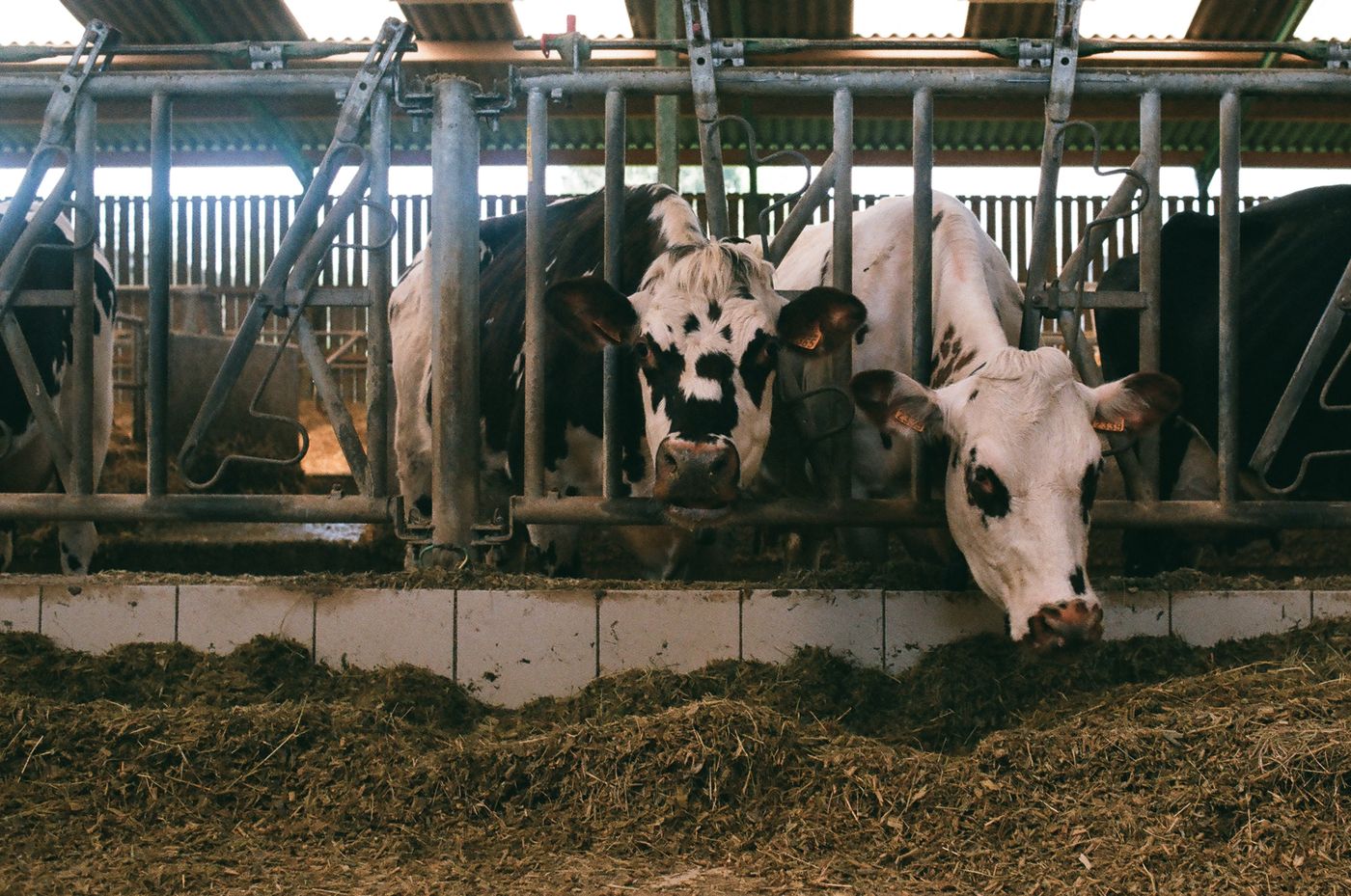
Livestock sort. A cow offered whole napier eats the leaf and the soft top, then leaves the lower stem, which is where much of the bulk was. A goat is worse: it strips leaves and abandons anything it has to work at. A pig cannot bite cleanly into a whole pumpkin, and a chicken can do nothing with a vine except stand on it.
Chopping removes the choice. When stem, leaf and tuber arrive in pieces of similar size, the animal eats the mixture rather than picking through it. Refusals drop, and more of what you harvested goes through the animal instead of under it. Chopped material also packs into a trough, wets evenly and carries concentrate on its surface, which long material never does.
Piece size is species-specific, and farms go wrong in both directions. Cattle and goats are ruminants, and rumination depends on fibre long enough to form a mat in the rumen and trigger cud chewing. Chop napier and vines for them at roughly two to five centimetres. Reduce it to powder and you lose that mat: the animal chews less, produces less saliva, and rumen acidity climbs. Pigs have no rumen and want small pieces they can chew and swallow quickly, so tubers and pumpkin go in as chips or slices and vines are cut short. Poultry need greens near crumb size, because a bird cannot bite a piece off a strip.
Two feedstuffs carry a specific warning. Fresh cassava roots, peels and leaves contain cyanogenic glucosides that release hydrogen cyanide when the tissue is damaged. Chopping is the first step in making cassava safe, not the last: chopped cassava must be spread thinly and wilted or sun-dried for at least a day before it reaches pigs or cattle, and bitter varieties need longer. Kitchen waste has its own rules, covered below.
A Chaff Cutter and a Vegetable Chopper Do Different Jobs
Farmers often ask for "a chopper" and mean one of two quite different machines.
A chaff cutter is throat-fed. Stems go in lengthwise through a chute, rollers or your hands push them toward a set of knives on a flywheel or cylinder, and the knives shear the bundle into short lengths. It is superb at stalky, fibrous material: napier, maize stover, sorghum, dry hay. Our guide on how to choose a chaff cutter covers sizing that machine.
Feed it sweet potato vines and the trouble starts. Vines are soft, tangled and wet, and they do not stack in a chute. They wrap around the feed rollers and the shaft, the knives smear them rather than shear them, and every few minutes someone stops the machine to clear it. A pumpkin will not go through the throat at all.
A vegetable chopper, also sold as a root cutter or root slicer, is hopper-fed. Material drops from above onto a rotating disc or drum carrying blades, which slice whatever lands on them into chips, slices or short pieces and throw the cut material out of a discharge chute. Because there is no throat, bulky and irregular loads are fine: whole pumpkins, cassava roots, sweet potatoes, cabbages, banana pseudostems, and tangled vines. The blades do the cutting on their own, so wrapping is far less of a problem.
So the rule is simple. Stalks go through a chaff cutter; bulk and tubers go through a vegetable chopper. A mixed zero-grazing unit growing napier and sweet potato often ends up with both. A pig unit built around tubers, pumpkins and vines needs the vegetable chopper first. The vegetable chopper we stock is listed at 13,000 KSH, while chaff cutters start from 28,000 KSH and climb with size and drive.
Manual, Electric or Engine: Match the Drive to the Herd
The cutting head is rarely the constraint on a chopper. The drive is.
Manual choppers are hand-cranked. They are cheap, need no power, and are the safest of the three because the blades only move as fast as the arm turning them. That arm is also the limit: a few tens of kilograms an hour before the person slows down. For a handful of goats, a couple of sows or a backyard flock, that is enough.
Electric choppers run a single-phase motor, typically in the one to two horsepower range for a farm unit, and work wherever there is a socket. They are quiet, cheap per hour, start instantly and need little attention beyond keeping water out of the motor. Their weakness is obvious: no power, no chopping, and a farm that feeds at dawn and dusk cannot wait for the line to return.
Engine-driven choppers, on a petrol or diesel engine or belted off a stationary engine, give the highest throughput and the most freedom. They chop in the field, at a distant shed, or through a week without electricity. They cost more to buy and run, and they are loud and produce fumes, so they belong outside the animal house.
The sizing arithmetic is worth doing on paper rather than by feel. Work out the fresh mass you have to chop each day, then divide by a realistic throughput to get minutes at the machine. A mature zero-grazed cow on napier and vines commonly eats in the region of fifty to seventy kilograms of fresh material a day, so a three-cow unit prepares well over a hundred kilograms daily. A growing pig takes a few kilograms of fresh vegetable matter on top of its concentrate. Add it up, then set the target: the whole daily chop should fit inside about an hour, because it has to happen before morning milking and again in the evening.
Two more numbers matter. Brochure throughput assumes a full hopper and a sharp blade; real farms get less, so plan on two thirds of the rating. And the herd you expect in three years should still chop in under an hour on the machine you buy today. Our article on setting up a zero-grazing dairy unit covers where the chopper and feed store sit in the layout.
Blade Care: The Edge Decides Throughput, Power and Feed Quality
Every complaint about a chopper, from low output to overheating to a motor that keeps tripping, traces back to the blade more often than to anything else.
A sharp blade shears. It parts the tissue cleanly, leaves the cut face closed and the juice inside, and takes little power to do it. A blunt blade crushes. It bruises the piece, squeezes juice onto the disc and into the housing, throws a wet paste into every corner of the machine, and demands more torque from the motor. That is why an electric chopper with a dull blade runs hot and trips the breaker while the same machine with a fresh edge runs cool all morning.
Sharpen on a schedule rather than when output collapses. On a disc chopper with two or more blades, sharpen all of them by the same amount so the disc stays balanced. A disc with one blade ground shorter than the others vibrates, and vibration loosens bolts and kills bearings. Keep the original bevel angle. On a bench grinder use light passes with a dip in water between them; an edge that turns blue has lost its temper.
Check the clearance. Many choppers slice against a fixed counter-blade or shear plate, and the gap between the moving edge and the fixed edge is what makes the cut clean. As blades wear, the gap opens, the machine starts tearing instead of cutting, and sharpening alone will not fix it. Reset the gap to the maker's figure every time the blades come off.
Dirt is the enemy of an edge. Soil and sand on tubers blunt a blade faster than a week of chopping clean vines. Wash roots before they go in, or at least knock the soil off them.
After the last load, run the machine empty for a moment to clear the disc, then wash down the disc and the housing. Plant juice is mildly acidic and dries hard. Left overnight it corrodes bare steel and glues the next morning's chop to the disc.
Mixing Chopped Roughage With Concentrate
Chopping earns its keep when you mix. The aim is a ration the animal cannot sort, so that every mouthful carries roughage and concentrate together.
Order matters. Chop the roughage first, spread it on a clean concrete floor or in a mixing trough, then sprinkle the weighed concentrate over the surface and turn the pile with a fork or shovel until no clumps of meal remain. Wet chopped material takes the meal on its surface and suppresses dust. Dry chopped stover needs a light sprinkle of water first, or the concentrate sifts to the bottom.
Weigh, do not guess. A bucket marked at the weight of your concentrate and a sack scale for the roughage turn a vague ration into a repeatable one. The ratio depends on the animal and its stage: a cow in early lactation gets more concentrate than a dry cow, a finishing pig more than a sow. Your nutritionist or extension officer sets the ratio; the chopper and the scale make it deliverable.
Mix only what will be eaten within a few hours. Wet chopped material with concentrate on it is a fermentation starter, and in Kenyan daytime temperatures a mix made at seven in the morning is warm and sour by mid-afternoon. Prepare for one feeding at a time, feed it fresh, and clear the trough before the next feed goes in.
For pigs, mix chopped and wilted vines or cooked tubers with the bran or concentrate and feed immediately; the equipment side of that unit is covered in our guide to pig farming equipment. For poultry, finely chopped greens are a supplement to a balanced mash, never a replacement for it, and they go in a separate trough so a wet chop does not spoil the dry feed.
Hygiene in the Feed Prep Area
Feed prep areas go wrong in the same few ways: wet chop left lying, feed mixed on a floor that also carries manure, rats and flies drawn to the scraps, and kitchen waste that was never sorted.
Build it to drain. A concrete floor with a fall to a drain, a roof over it, and a wall or clear distance between it and the manure heap, the calf pen and wherever sick animals are treated. Wash the floor down after every session. A raised bench for sorting keeps roots and vines off the floor and grit out of the hopper.
Nothing mouldy, nothing hot. Discard anything mouldy, rotting or heating in the heap. Mouldy feed carries mycotoxins that harm every species and are hardest on pigs and poultry. Never chop rotten pieces to hide them in the mix; the toxins do not chop out.
Deny the rats. Chopped tubers are a buffet for rodents, which foul feed with urine and carry disease between pens. Sweep after each session, keep concentrate in lidded bins, and do not leave roughage in an open heap overnight.
Cassava gets its own space. Chopped cassava needs somewhere to spread thinly in the sun for its wilting day, off the ground and away from the animals. Peels from the kitchen count as cassava too.
People carry as much as rats do. A tap and soap at the prep area, and footwear that does not walk from the manure pit into the feed store, cost almost nothing. Prepare feed before handling sick stock, not after.
A chopper, a scale, a marked bucket, a drained slab and a routine that cleans as it goes turn vines, roots and peelings from a nuisance into a ration. The chopper is the cheapest part.
Key Takeaways
- Animals refuse feed by size before they refuse it by quality. Chopping removes their ability to sort and cuts refusals.
- Chop to the species: two to five centimetres for cattle and goats so they can chew cud, chips and short pieces for pigs, near crumb size for poultry.
- Stalks go through a chaff cutter; vines, tubers, pumpkins and kitchen waste go through a hopper-fed vegetable chopper. Mixed units often need both.
- Size the drive by arithmetic: daily fresh mass divided by two thirds of rated throughput, answer under an hour, room for the herd to grow.
- A blunt blade crushes, wastes juice, overloads the motor and jams. Sharpen all blades equally, keep the bevel, reset the shear gap, wash roots first.
- Mix concentrate onto freshly chopped roughage by weight, one feeding at a time, and clear the trough before the next.
- Wilt cassava for at least a day after chopping. Sort and boil all kitchen waste for pigs, with no meat in it, ever.
Frequently Asked Questions
What is the difference between a chaff cutter and a vegetable chopper?
A chaff cutter is throat-fed: stems go in lengthwise and knives on a flywheel or cylinder shear them into short lengths, which suits napier, maize stover and hay. A vegetable chopper, also called a root cutter, is hopper-fed: material drops onto a rotating bladed disc or drum that slices it, which suits tubers, pumpkins, cabbages, banana stems and tangled sweet potato vines that would wrap and jam a chaff cutter. Stalks go through a chaff cutter, bulk and tubers go through a vegetable chopper.
How fine should I chop feed for cattle, pigs and chickens?
Cattle and goats are ruminants and need fibre long enough to chew cud on, so chop napier and vines to roughly two to five centimetres. Pigs have no rumen and want small pieces they can chew and swallow quickly, so tubers and pumpkin go in chips or slices and vines are cut short. Poultry need greens chopped near crumb size because a bird cannot bite a piece off a strip. Decide the species before you decide the setting.
Can I feed fresh cassava to pigs or cattle after chopping?
Not straight away. Fresh cassava roots, peels and leaves contain cyanogenic glucosides that release hydrogen cyanide when the tissue is cut. Chopping is the first step in making cassava safe, not the last. Spread the chopped material thinly and wilt or sun-dry it for at least a day before feeding, longer for bitter varieties, and introduce it gradually.
Is it safe to feed kitchen waste to pigs in Kenya?
Only if it is sorted and boiled. Remove plastic, bones, glass and every scrap of meat, especially pork, then boil the swill thoroughly before it goes to the pigs. African swine fever survives in raw pork and has been carried into pig units through uncooked swill. Vegetable peelings, stale ugali and fruit waste are fine once cooked; anything mouldy or rotting goes to the compost, not the trough.