Feed is somewhere around seventy per cent of the running cost of a Kenyan poultry operation. That single fact should make feed wastage the first thing anybody looks at, and yet it is almost always the last, because wastage does not arrive as a bill. It leaks a handful at a time, gets trodden into the litter, and disappears.
Nobody can tell you exactly what you are losing without measuring it, and we are not going to invent a percentage. What we can tell you is where it goes, in the order that it matters, and what each fix costs. Most of them cost nothing at all.
Where Feed Actually Goes
Feed leaves your operation by five routes, and only one of them is the bird.
Billing out. Chickens do not eat delicately. They sweep their beaks sideways through feed, flicking what they do not want out of the pan and onto the floor. This is instinct, it cannot be trained out, and it is the largest single source of waste in most houses. Everything about feeder design and management is really about limiting how much a bird can throw.
Spillage. Feeders knocked, tipped, or overfilled so feed sits above the lip where any movement sends it over.
Pests. Rats, wild birds and insects eating what you paid for. Rodents also spread disease and foul what they do not eat, so this loss is larger than the volume suggests.
Spoilage. Feed that gets damp and moulds, in the feeder or in the store. Mouldy feed is not just wasted, it is dangerous, because mycotoxins damage the liver and immune system and hit young birds hard.
Selective feeding. Birds pick out the pieces they like from a mash and leave the fine particles, which then accumulate, go stale and get discarded. The bird also ends up eating an unbalanced ration, so growth suffers as well.
The Fix That Costs Nothing: Fill Level
If you change one thing after reading this page, change this.
Never fill a feeder more than about one third full. A brim-full pan or trough is an invitation for birds to sweep feed over the edge, and everything above the lip is at risk. A feeder filled to a third holds the feed low in the pan where the lip acts as a barrier against the sideways sweep of a beak.
The instinctive objection is that this means filling more often. It does. It is still cheaper than the feed you lose, and with a tube feeder holding a reserve above the pan, the reserve does the refilling for you automatically, which is precisely what tube feeders are for.
Height, and Why It Matters as Much as Fill Level
A feeder on the floor is a feeder half wasted. Birds stand in it, scratch through it, and drop litter and droppings into it, and you then throw away fouled feed.
Hang or stand feeders so the lip of the pan is level with the birds' backs. At that height a bird must reach slightly downward to feed, which is an awkward angle for the sideways sweep that throws feed out. It also puts the pan above the level at which litter gets kicked in.
Because birds grow, this is not a one-time adjustment. Raise feeders and drinkers weekly through the cycle. It takes a few minutes and it is one of the highest-return few minutes in poultry keeping. A feeder set correctly for two-week-old birds is much too low by week five.
Choosing Feeders That Waste Less
Feeder design does real work here.
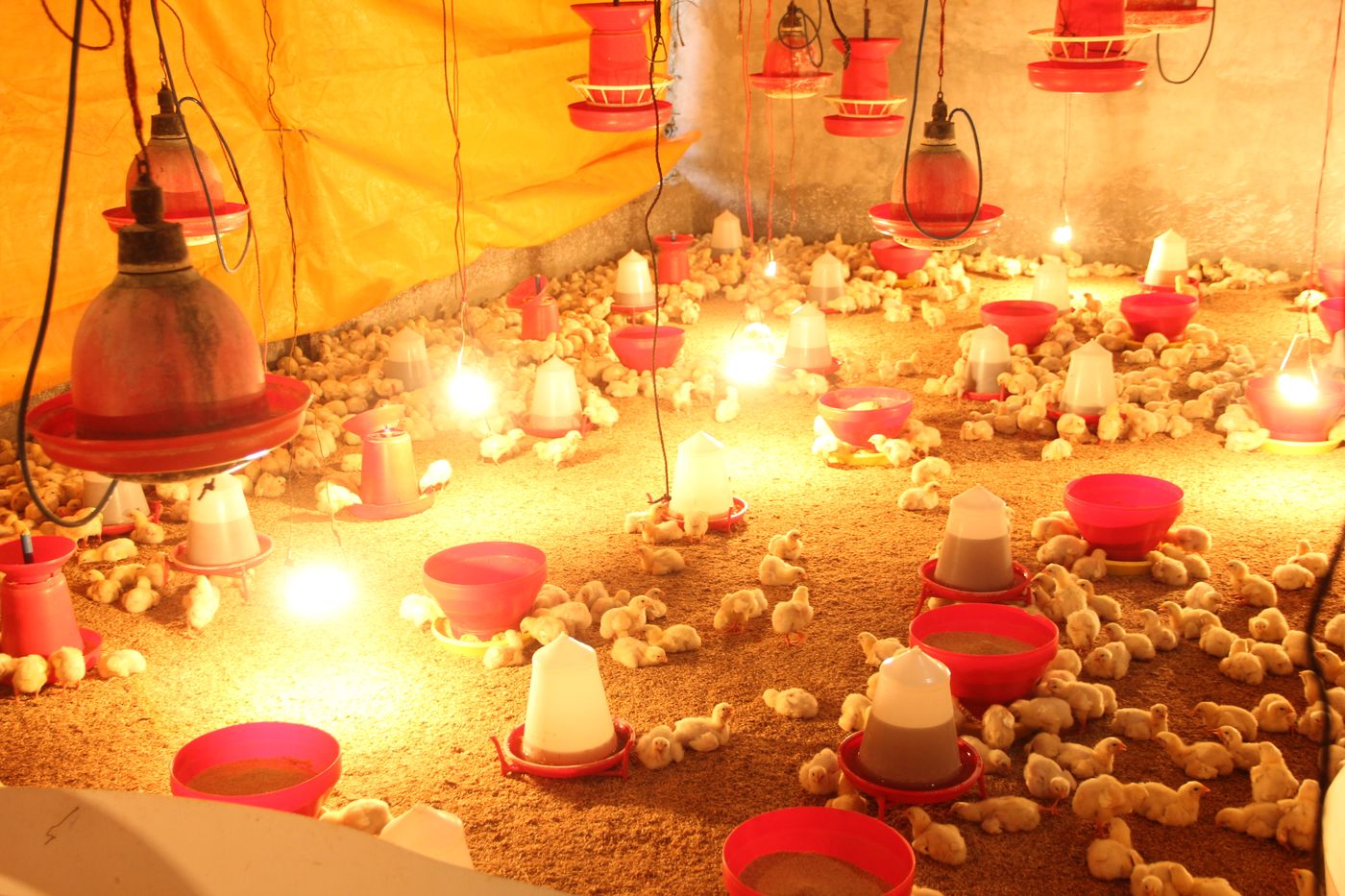
Tube feeders hold a reserve above a lipped pan and release feed as birds eat. Because the pan self-regulates to a shallow level, they are inherently better at limiting waste than an open trough that somebody fills to the brim. They also save labour, which matters if you are away during the day.
Anti waste grilles, the grid that fits over a pan, stop birds standing in the feed and scratching it out, and restrict how far a beak can sweep. Many feeders come with one. A surprising number of farmers remove it because it makes filling slightly slower. Leave it on.
Pan feeders in the commercial style are designed specifically to minimise waste at scale, with a shallow feeding lip and a controlled feed level.
Open troughs have their place, particularly for chicks that need to find feed on a flat visible surface, but they are the worst performer for waste once birds are big enough to sweep. Move birds off troughs onto tubes as they grow.
The lip profile matters. A pan with an inward-curving lip returns flicked feed to the pan instead of the floor. Look at the rim shape when buying, not just the capacity.
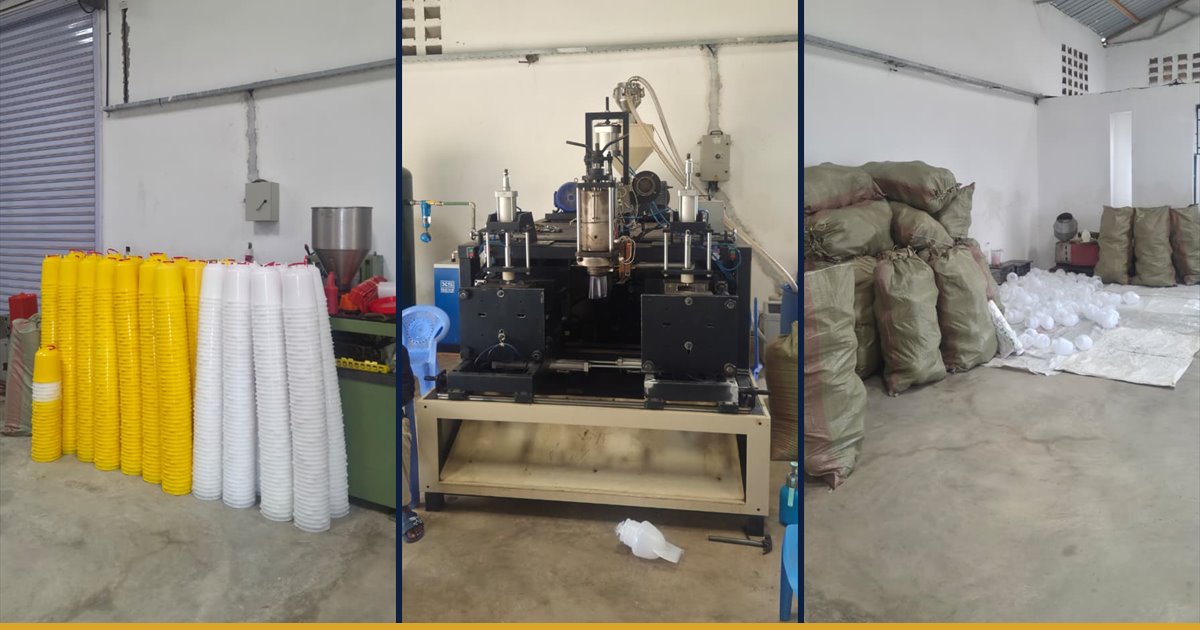
We mould feeders ourselves as well as importing them, and the full range with current prices is on the price list and the poultry equipment page. Our guide on how feeders are made and how to judge one covers what to inspect before buying.
Feed Form: Mash, Crumble and Pellet
The physical form of the feed changes how much of it survives to the bird.
Fine mash is the most prone to waste. It blows, it sifts through grilles, and it invites selective feeding where birds pick out the larger particles and leave the fines. Those rejected fines are both wasted feed and the part of the ration carrying much of the mineral and vitamin content, so the bird gets an unbalanced diet as well.
Crumble and pellet hold together. Each mouthful is the complete balanced ration, selective feeding becomes impossible, and less is lost to wind and sifting. Birds also eat pelleted feed faster, spending less time at the feeder.
Pelleted feed usually costs more per kilogramme. Whether it pays depends on your own numbers, and the way to find out is to weigh feed in and monitor bird performance over one full cycle on each. If you are running mash, at minimum make sure the feeder type suits it: a fine mash in an open trough at the wrong height is close to worst case.
Storage, Pests and Spoilage
Feed that never reaches the feeder is still lost feed.
Store bags off the ground on pallets and away from walls, so air circulates and damp does not wick up into the bottom bags. A concrete floor is not dry.
Keep the store dry and ventilated. Damp feed moulds, and mycotoxins in mouldy feed cause real production losses and liver damage that people usually blame on disease.
Use oldest stock first and buy quantities you will actually use within a reasonable period. Vitamin content degrades over time even in perfectly stored feed, so a bargain on a large quantity you will take four months to use is not necessarily a bargain.
Take the rodent problem seriously. Rats eat a genuinely surprising volume, foul far more than they eat, and carry disease into the house. Seal entry points, keep the surrounding area clear of cover, and store feed in closed containers rather than open bags.
Empty or cover feeders overnight where practical. Feed left in open pans through the night feeds rodents and wild birds, not your flock.
Feeder Space, and the Waste You Cannot See
Too few feeders causes a subtler loss than spillage. When birds must compete for feeder space, the dominant birds eat first and the timid ones eat last and less. The flock finishes uneven, with a spread of sizes, and uneven flocks are worth less whether you are selling broilers by weight or expecting uniform lay.
Allow roughly four to five centimetres of feeding space per growing bird. A standard round tube feeder serves somewhere in the region of twenty-five to forty birds depending on model and age. Spread feeders through the house so no bird walks far, and if you see crowding or birds waiting, add another feeder rather than filling the existing ones fuller.
The Short Version
Fill to a third. Hang at back height and raise weekly. Keep the grille on. Match feed form to feeder type. Store off the ground, dry, oldest first. Deal with rodents properly. Give enough feeder space that nobody queues. And weigh what goes in, so you know whether any of it is working.
None of that requires new equipment except in the cases where your feeders are genuinely the wrong type for the age of your birds. If you want to work out whether they are, tell us your flock size and stage on WhatsApp and we will go through it with you.
Key Takeaways
- Never fill a feeder more than a third full. Everything above the lip is at risk from the sideways sweep of a beak.
- Hang feeders so the pan lip is level with the birds' backs, and raise them weekly as the flock grows.
- Leave the anti waste grille on. Removing it to make filling quicker is a false economy.
- Crumble and pellet resist selective feeding and blow away less than fine mash, so the bird gets the complete balanced ration.
- Store bags off the ground on pallets, dry and ventilated, oldest first, and take rodents seriously.
- Weigh feed in and record bird weights out. Without measuring you cannot tell whether any change helped.
Frequently Asked Questions
How much feed do chickens waste?
It depends entirely on your feeders, their height, fill level, feed form and pest control, and nobody can tell you your figure without measuring your house. What is certain is that feed is around 70 per cent of running cost, so anything you recover matters. Weigh feed in and record bird performance out, because that is the only way to know whether a change worked.
What is the best way to stop chickens wasting feed?
Three habits that cost nothing. Fill feeders no more than a third full, because a brim full pan lets birds sweep feed over the edge. Hang feeders so the pan lip is level with the birds' backs and raise them weekly. And leave the anti waste grille on if your feeder came with one, since it stops birds standing in the feed and restricts how far a beak can sweep.
Which poultry feeder wastes the least feed?
Tube feeders with a lipped pan and an anti waste grille perform best for growing birds, because the reserve above keeps the pan at a shallow self regulating level. Commercial pan feeders are designed specifically for low waste at scale. Open troughs waste the most once birds are big enough to sweep, though they remain right for chicks that must find feed on a flat visible surface.
Is pelleted feed better than mash?
For waste, yes. Fine mash blows away, sifts through grilles and invites selective feeding, where birds pick out larger particles and leave the fines that carry much of the mineral and vitamin content, so the bird also ends up on an unbalanced diet. Crumble and pellet hold together, so each mouthful is the complete ration. Pellets cost more per kilogramme, so test over a full cycle against your own numbers.
How should poultry feed be stored?
Off the ground on pallets and away from walls so air circulates and damp cannot wick into the bottom bags, in a dry ventilated store, oldest stock used first. Buy quantities you will use within a reasonable period, since vitamin content degrades over time. Seal the store against rodents and use closed containers rather than open bags.
How many feeders do I need for 100 chickens?
Allow roughly four to five centimetres of feeding space per growing bird, which usually means about three tube feeders for 100 birds, spread through the house so none has to walk far. Too few feeders causes a hidden loss: dominant birds eat first and timid birds eat last and less, so the flock finishes uneven and is worth less.