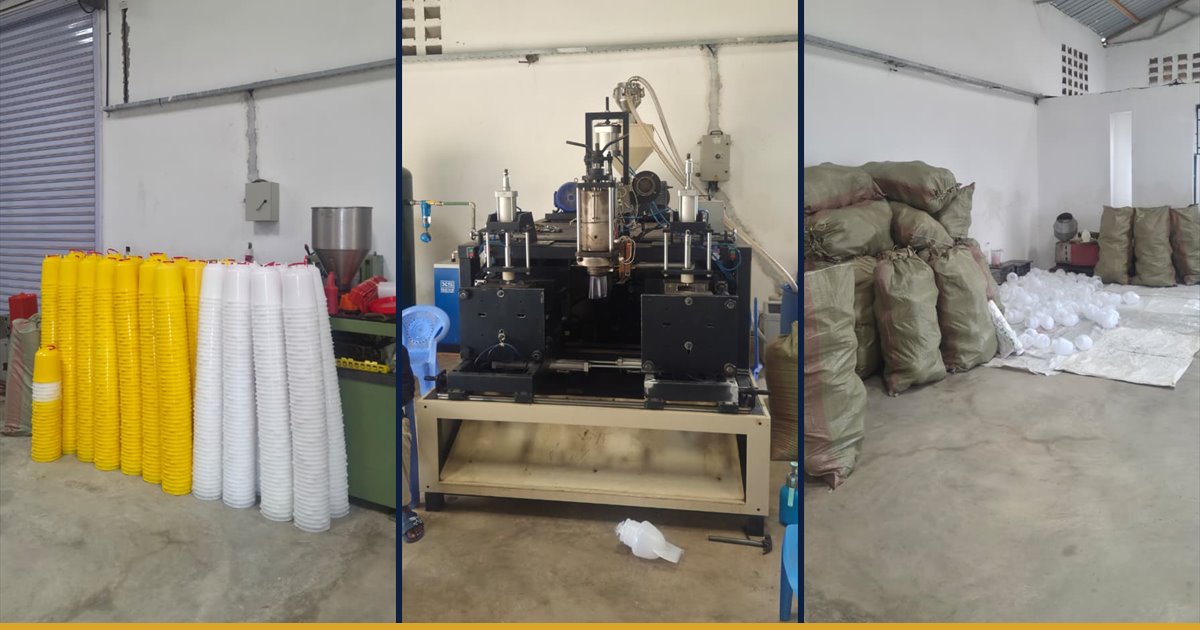
Most poultry feeders sold in Kenya are imported. They arrive in a container, pass through two or three hands, and reach the farmer with nobody in the chain able to tell you what the plastic actually is or what happens when it cracks in year two. That is the normal way this trade works, and it is why a feeder that looked identical to another one in the shop falls apart after one flock.
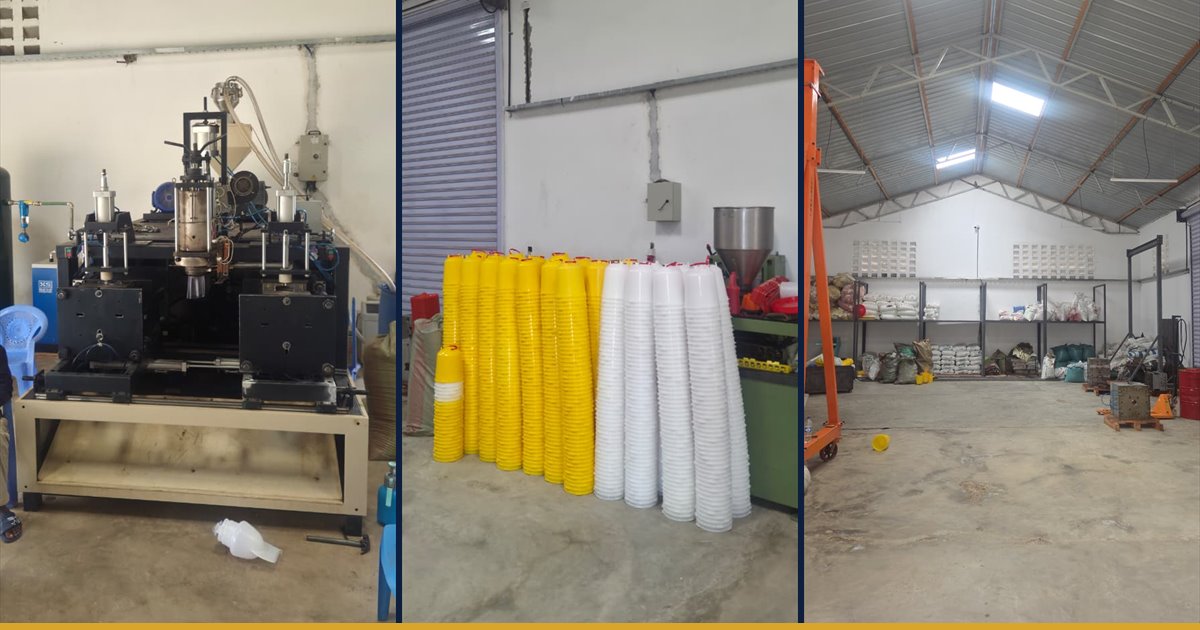
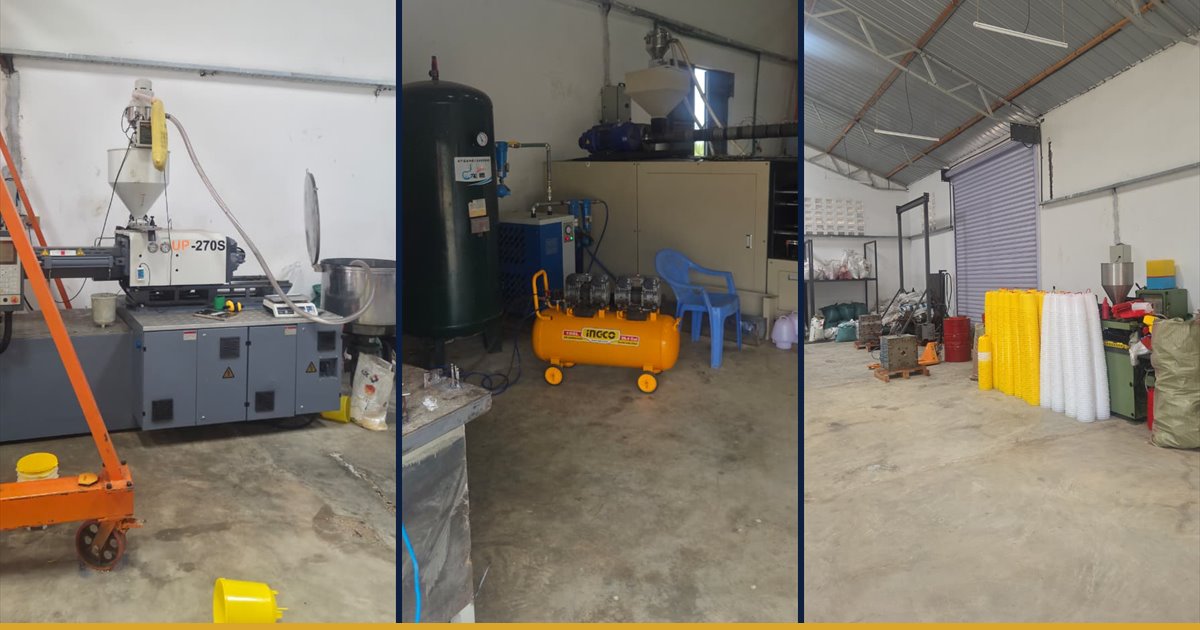
Fuga sits on the other side of that. We mould poultry feeders and drinkers ourselves, at our own plant, alongside the equipment we import. This article explains how a plastic poultry feeder is actually made, what separates a feeder built to last from one built to a price, and how to inspect one before you hand over money. Whether you buy from us or from somebody else, the checks at the end of this page will save you money.
How a Plastic Poultry Feeder Is Made
Almost every plastic poultry feeder on the Kenyan market is made by one of two processes, and knowing which is which tells you a lot about the item in your hand.
Blow moulding makes hollow things. A tube of hot, soft plastic called a parison is dropped between two halves of a mould, the mould closes on it, and compressed air inflates the plastic outwards until it takes the shape of the cavity. Because the plastic is stretched rather than forced, blow moulding is how you get a large hollow body with a thin, even wall: the cone of a tube feeder, the body of a drinker, a jerrycan. It is fast and it suits big, light, hollow parts.
Injection moulding makes solid, precise things. Plastic granules are melted and forced under high pressure into a closed steel mould, where they cool into an exact shape. It gives you tight tolerances, crisp threads and strong small parts, which is why nipple valves, adjusters, clips, grilles and trays are injection moulded rather than blown.
A complete feeder is usually both. The hollow cone or hopper is blown, and the base pan, the lid, the hanging clip and any anti-waste grille are injection moulded, then assembled. Our plant runs both processes, along with the compressed air plant that feeds the blow moulding line and the chiller that cools the moulds, which is the part of a moulding shop nobody photographs but without which nothing runs at a usable speed.
What Actually Makes a Feeder Last in a Kenyan Poultry House
A poultry feeder lives a harder life than people assume. It is knocked by birds, dragged across a rough floor, washed with disinfectant, refilled by someone in a hurry, and in many houses it spends part of the day in direct sun through an open side. Four things decide whether it survives that.
Wall thickness, and how even it is. This is the single biggest difference between a cheap feeder and a good one, and it is the easiest to hide. Two feeders can weigh the same and look the same, but one has the plastic distributed evenly and the other has a thick base and a thin shoulder. Lift the feeder and look through the wall against the light. Bright patches are thin spots.
Ultraviolet stability. Kenyan sun destroys unprotected polymer. Plastic that has not been stabilised against ultraviolet light goes chalky on the surface, then loses its flex, then cracks when a bird knocks it. A feeder that has faded badly and feels powdery to the thumb has already lost most of its strength, whatever it looks like from a distance.
How much reground material is in the mix. Every moulding shop reuses its own offcuts, and that is normal and sensible. The problem starts when a producer buys in cheap mixed scrap of unknown origin to cut cost. Each melting cycle shortens the polymer chains, and short chains mean brittle plastic. This is invisible in the shop and obvious six months later.
The rim and the hanging point. These are where feeders actually break. The lip of the pan takes constant beak and body contact, and the hanging boss carries the entire loaded weight, swinging. A well-made feeder has visibly more material at both. Turn it over and look.
Feeder Types and the Sizes We Carry
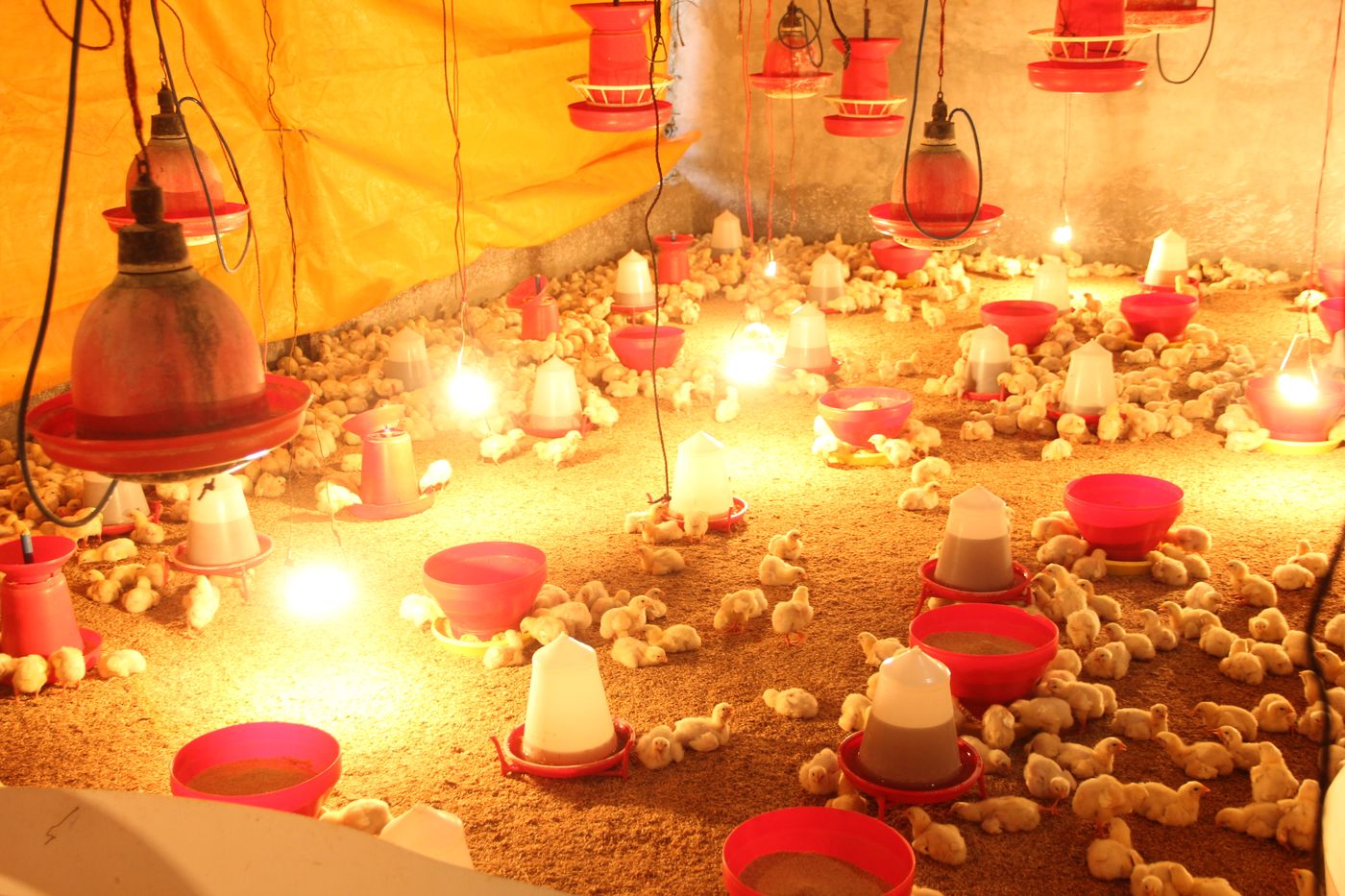
We stock feeders from chick trays up to twelve kilogramme hoppers, and the right one depends far more on the age of your birds than on the size of your flock.
| Type | Typical capacity | Best for |
|---|---|---|
| Chick tray / baby feeder | Shallow, open | Day-old to about two weeks, when chicks must find feed on a flat surface |
| Trough feeder | Linear, open | Brooding and young birds, easy access along the length, easy to scrub |
| Tube feeder, 1.5 to 3 kg | 1.5 to 3 kg | Growers and small flocks, one fill lasts most of a day |
| Tube feeder, 5 to 9 kg | 5 to 9 kg | The workhorse size for layer and broiler houses |
| Hopper / funnel feeder, 12 kg | 12 kg | Larger flocks and keepers who are away during the day |
| Pan feeder | Round, 500 mm class | Commercial houses, low waste, feeds a large number of birds per unit |
Current prices for every size sit on our price list, which runs off the same stock system our branches use, so what you read is what the counter will quote you. The full poultry range is on the poultry equipment page.
Locally Made Versus Imported
We sell both, so we have no reason to pretend one is always better. They are genuinely different propositions.
The honest case for imported equipment is that some of it is very good, particularly at the commercial end where pan feeding systems and automated lines come from factories that make nothing else. If you are running a serious broiler operation, some of what you need is not made in Kenya at all.
The honest case for locally made is availability and recourse. A moulded part made forty kilometres away can be replaced this week, not next quarter. If a batch has a fault, there is a named business in Kenya that has to answer for it, and a farmer who is unhappy can walk into a branch. Spares stay available because the mould still exists and can be run again. With an imported feeder, when the importer stops carrying that model, the spares stop too, and a feeder with no replacement pan is scrap.
There is also the plain economic point. Money spent on a locally moulded feeder pays Kenyan wages and an electricity bill in Kenya. We would not ask anybody to buy on that basis alone, but where the products are comparable, it is a reasonable tie-breaker.
How to Inspect a Feeder Before You Buy It
Six checks, none of which take more than a minute at the counter.
One, hold it up to the light. Look through the wall of the cone or hopper. You want an even glow, not bright thin patches. Thin patches are where it will split.
Two, flex the rim. Press the lip of the pan inward with your thumb. It should give slightly and spring straight back. If it stays deformed, the plastic is too soft. If it makes a dry cracking sound, it is too brittle and probably heavy on reground material.
Three, check the hanging point. Look for extra thickness where the handle or hook attaches, and for a moulded boss rather than a thin flat tab. This is where a loaded feeder tears.
Four, run a thumbnail across the surface. A chalky white streak on a supposedly new feeder means the plastic has already begun to degrade in the sun, which usually means it has been sitting outside on a shop veranda for a long time.
Five, sit the pan on a flat surface. It should not rock. A warped base was cooled too fast and will not sit level on your floor, which means feed spilling to one side.
Six, ask what the pan costs on its own. The base pan wears out before the cone does. If the seller cannot sell you a replacement pan, you are buying a disposable item, whatever they say about quality.
Talk to Us About Volume
Because we mould rather than only import, we can talk sensibly about larger orders, consistent supply for a farm expanding in stages, and repeat runs for agrovets and stockists who need the same item available all year rather than whenever a container lands. If you are equipping a new house, buying for a group or a cooperative, or stocking a shop, send us the numbers and we will work through it with you properly.
For material specifications, current warranty terms and anything you need in writing for a tender or a cooperative purchase, ask and we will put it in writing rather than have you rely on a web page.
Key Takeaways
- Feeder cones and hoppers are blow moulded; pans, clips and grilles are injection moulded. The two fail in different ways.
- Even wall thickness is the biggest difference between a feeder that lasts and one that splits. Hold it up to the light and look for thin patches.
- Ultraviolet damage from Kenyan sun is the second killer. Chalky, powdery plastic has already lost its strength.
- Buy the feeder for the age of the bird, not the size of the flock. Chicks need flat and open, growers need tubes.
- If the seller cannot sell you a replacement pan, you are buying a disposable item whatever they claim about quality.
Frequently Asked Questions
Does Fuga manufacture poultry feeders in Kenya?
Yes. We mould poultry feeders and drinkers at our own plant, running both blow moulding for the hollow cones and hoppers and injection moulding for the pans, clips and fittings. We also supply imported commercial feeding equipment that is not made locally, and we say clearly which is which.
How can I tell if a poultry feeder is good quality?
Hold it up to the light and check for even wall thickness with no bright thin patches, press the pan rim to confirm it springs back rather than staying bent or cracking, check for extra material at the hanging point, run a thumbnail over the surface to see whether it leaves a chalky streak, and make sure it sits flat without rocking. Then ask whether a replacement pan is sold separately.
What size poultry feeder do I need?
Match it to the age of the bird. Day-old chicks need shallow trays or troughs they can see feed on. Growers move to 1.5 to 3 kg tube feeders, and most layer and broiler houses run 5 to 9 kg tubes as the workhorse size. Twelve kilogramme hoppers suit larger flocks or keepers who are away during the day.
Is a locally made feeder better than an imported one?
Not automatically, and we sell both. Imported equipment is often excellent at the commercial end. The real advantage of locally made is availability and recourse: spares stay available because the mould still exists, replacements arrive in days rather than a quarter, and there is a named Kenyan business that has to answer if a batch is wrong.
How much does a poultry feeder cost in Kenya?
Prices run from a couple of hundred shillings for chick trays and small tube feeders up to the low thousands for large hoppers and commercial pan feeders. Every current price is published on our price list, which runs off the same stock system our branches use, so the figure you read is the figure the counter quotes.