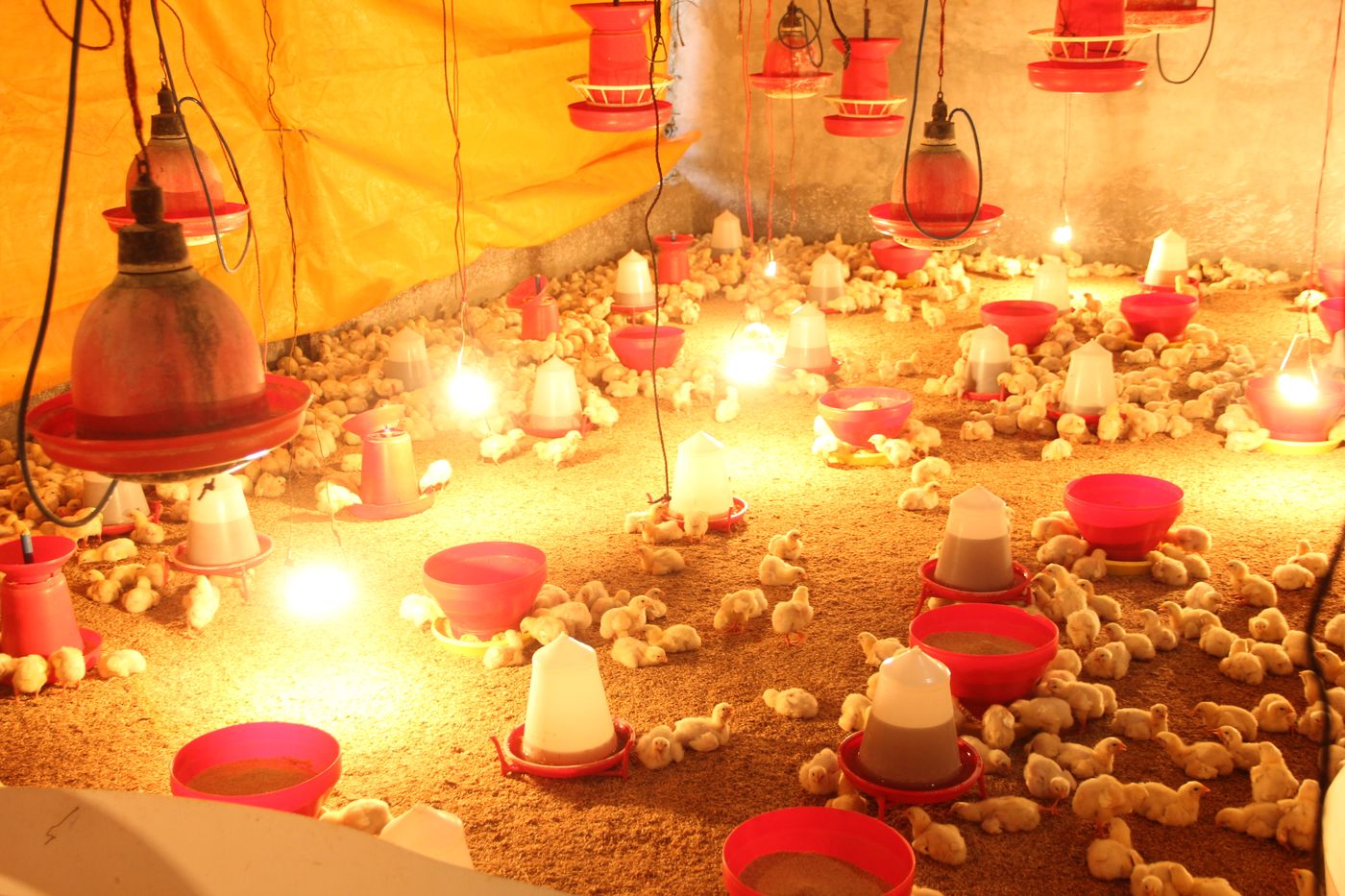
A drinker is the cheapest item in a poultry house and the one most capable of ruining a flock. Every bird uses it, several times a day, and warm standing water is the fastest route a pathogen has to reach all of them at once. Get the drinker wrong and you do not lose one bird, you lose performance across the whole house.
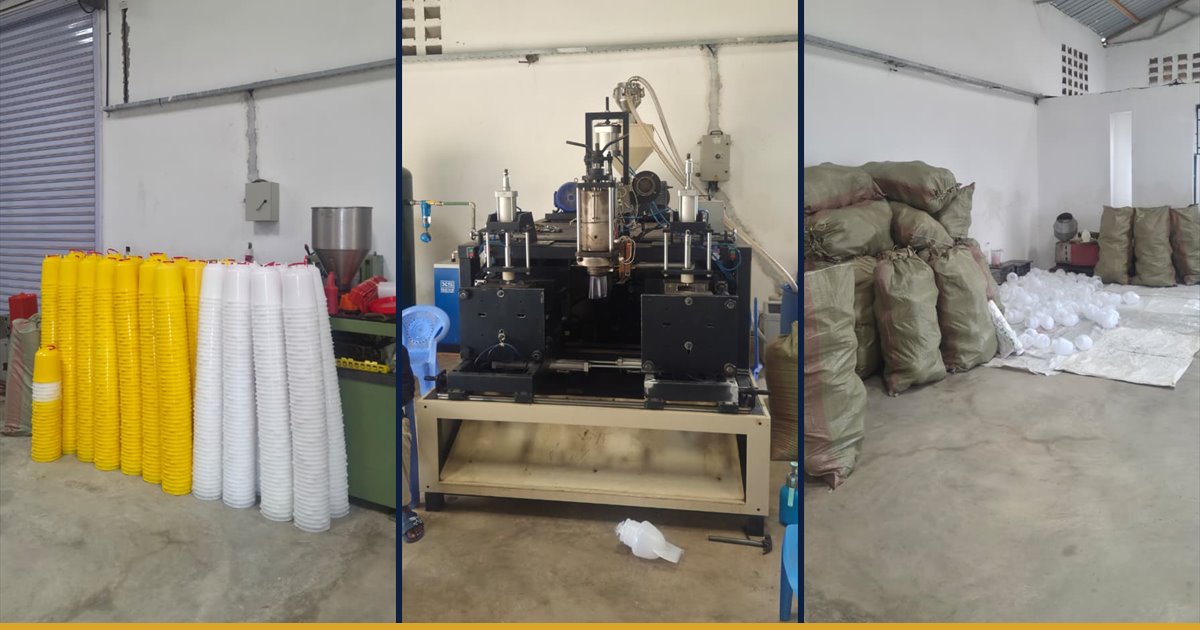
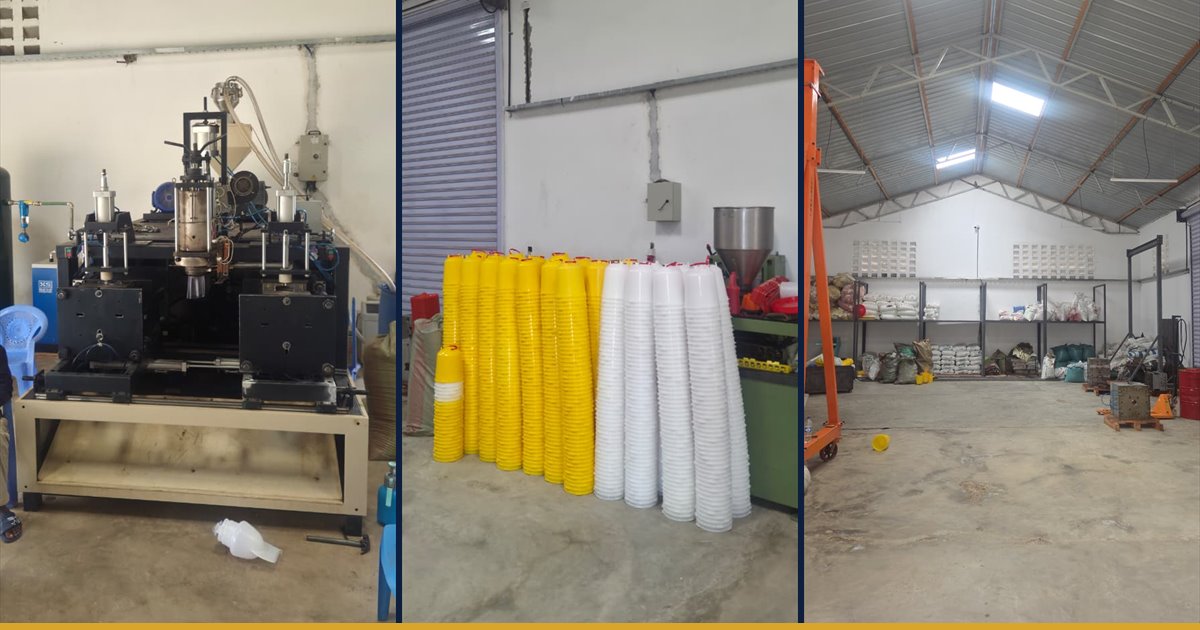
We mould poultry drinkers at our own plant in Kenya, alongside feeders, and we also import the automatic systems that we do not make. That gives us a fairly clear view of both sides. This page explains how a drinker is made, why some crack in a season while others outlast three flocks, and how to choose between the drinker types on the market.
How a Poultry Drinker Is Made
A drinker is a hollow object, so the body is blow moulded. A soft tube of plastic is dropped between the two halves of a steel mould, the mould closes, and compressed air inflates it against the cavity walls until it cools into shape. That is why a good drinker feels light for its size: the wall is thin, even, and under tension rather than solid.
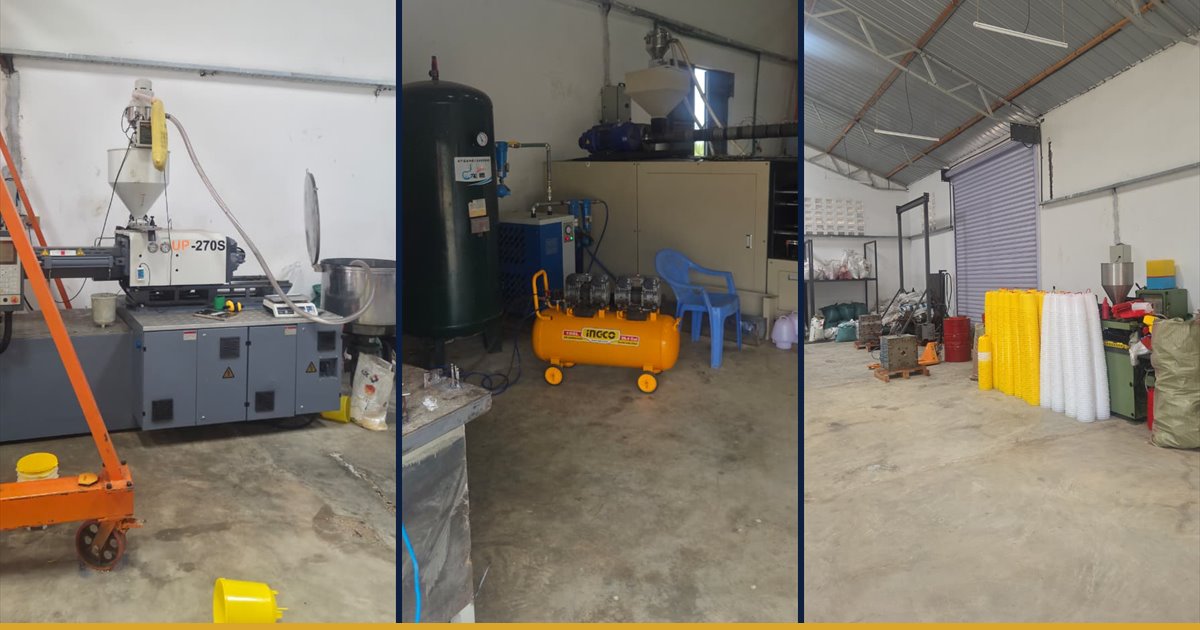
The parts that have to be dimensionally exact are injection moulded instead, forced under pressure into a closed mould. On a drinker that means the valve seat, the float components, the threaded collar, the hanging clip and, on nipple systems, the nipple itself. Those parts have to hold water pressure and seal repeatedly, which a blown part cannot do.
Behind both processes sits equipment that never appears in a catalogue but decides the quality of everything that comes off the line: a compressed air plant that has to deliver clean, dry, stable pressure, and a chiller circulating cold water through the moulds. If the cooling is inconsistent, parts come out warped and stressed. If the air is wet, the wall thickness varies. A moulding shop is really an air and water business with plastic attached.
Why Drinkers Fail, and What That Costs You
Drinkers fail in four predictable ways, and each has a cost beyond the price of the replacement.
The valve sticks open. Water runs continuously into the litter. Wet litter means ammonia, which burns the birds' respiratory tracts and opens the door to disease, and it means coccidiosis conditions. One stuck valve overnight can undo a week of good management. This is the failure that matters most and the one people notice last.
The body cracks at the rim or the neck. Usually a thin spot in the blown wall, or ultraviolet damage from a drinker that spent months in the sun. It leaks slowly, so the litter is damp without anybody identifying why.
The hanging point tears. A full ten-litre drinker is a ten-kilogramme weight swinging on a moulded tab. If that tab is thin, it eventually tears, and the drinker comes down in the middle of the night.
Biofilm takes hold. Not a manufacturing failure but a maintenance one, and worth naming here because it defeats good equipment. The slimy film that grows on the inside of a bowl or inside a water line shelters bacteria and neutralises medication and vitamins you add to the water. A farmer who cannot understand why a treatment is not working often has a biofilm problem, not a drug problem.
Drinker Types: Choosing the Right System
| Type | How it works | Best suited to |
|---|---|---|
| Chick fountain / baby drinker | Small jar inverted into a shallow trough | Day-old to two weeks. Shallow enough that chicks cannot drown |
| Manual drinker, 1.5 to 3 L | Filled by hand, gravity fed into a rim | Small flocks, brooding, backyard keeping |
| Manual drinker, 6 to 10 L | Same principle, larger reserve | Growers and small layer units, fewer refills per day |
| Automatic bell drinker | Hose or header tank feeds a valve that maintains the rim level | The sensible default for most semi-commercial houses |
| Nipple drinker line | Birds peck a valve, releasing a drop at a time | Larger broiler batches where dry litter drives results |
| Cup nipple | Nipple with a small catch cup below it | Where you want nipple hygiene but with a visible water surface |
For most Kenyan keepers running fifty to five hundred birds, an automatic bell drinker is difficult to beat. It is affordable, birds need no training, and one hose from a raised tank removes the daily carrying of buckets, which is where most of the labour in a small house actually goes.
Nipple lines earn their money at larger scale. Nothing sits in an open bowl, so the water stays clean and almost nothing spills into the litter. Dry litter means fewer foot pad lesions, less ammonia and a healthier house. The trade-offs are a higher setup cost, the need for a header tank or pressure regulator, and a few days while young birds learn to peck.
We carry all of these, including nipples in several patterns and the adjusters, grabs, connectors and pipe that make a line work. Prices for every item are on the price list, and the range is on the poultry equipment page. If you want the full comparison, our guide to choosing feeders and drinkers goes through sizing per bird.
How to Inspect a Drinker Before You Buy
Work the valve, twice. On any automatic drinker, operate the float or valve by hand. It should move freely and seat cleanly with no grinding. Do it a second time after letting it sit. A valve that feels gritty when new will stick when it is full of dust.
Hold the body up to the light. Look for even translucency. Bright thin patches in the wall are future cracks, usually appearing near the widest curve.
Check the hanging boss. There should be visibly more material where the drinker hangs. A thin flat tab carrying ten litres is a failure waiting for a date.
Look inside for mould release residue and flash. Rough plastic flash around the rim or the valve seat means the mould is worn or was not closing properly. Flash inside a bowl also gives biofilm somewhere to anchor.
Ask whether spares exist. Can you buy the valve, the float, the seal, the clip separately? On a well-supported product, yes. If not, you are buying a whole new drinker the first time a two-hundred-shilling part fails.
Check it sits or hangs level. A warped bowl will hold water deeper on one side and drip on the other.
Keeping Drinkers Clean, Which Matters More Than Which One You Buy
Rinse and scrub open drinkers daily. You are removing biofilm, and a rinse alone does not do it; the inside of the bowl needs physical contact with a brush or cloth. Once a week, wash with a suitable disinfectant and rinse thoroughly before refilling, because residue in the water will put birds off drinking.
Nipple systems stay far cleaner at the bird end, but the lines and the header tank still need flushing periodically, and that is exactly the part people forget because they cannot see inside it. Set a date rather than waiting for a problem.
Keep drinkers away from feeders so splash does not turn feed into mouldy paste, and raise them as the birds grow so that the rim sits level with the birds' backs. A drinker at floor height collects droppings and litter within hours.
Buying From a Manufacturer
Because we mould rather than only import, we can supply consistently rather than in whatever quantities a container happened to bring, we can keep spares available because the mould still exists, and there is a named Kenyan business that has to answer if a batch is wrong. For farms expanding in stages, cooperatives buying together and agrovets who need the same item on the shelf all year, that predictability is usually worth more than a few shillings on the unit price.
If you need material specifications or warranty terms in writing for a tender or a group purchase, ask us directly and we will provide them properly rather than leaving you to rely on a web page.
Key Takeaways
- The body of a drinker is blow moulded; the valve, float and threads are injection moulded. The valve is what you are really buying.
- A valve that sticks open floods the litter overnight, and wet litter means ammonia, respiratory damage and disease.
- For most Kenyan keepers running 50 to 500 birds, an automatic bell drinker is the sensible default. Nipple lines pay off at larger scale.
- Plan about two to two and a half centimetres of rim per bird, or eight to twelve birds per nipple, then check for queueing on a hot afternoon.
- Daily scrubbing beats rinsing. Biofilm shelters bacteria and neutralises any medication or vitamins you add to the water.
Frequently Asked Questions
Does Fuga manufacture poultry drinkers in Kenya?
Yes. We blow mould drinker bodies and injection mould the fittings at our own plant, and we also import the automatic drinker systems we do not make ourselves. We are clear on our product pages about which items we manufacture and which we supply.
Should I use bell drinkers or nipple drinkers?
For most small and semi-commercial Kenyan flocks a bell drinker is the better choice: cheaper, no training needed, and simple to clean. Nipple lines cost more and need a header tank or regulator, but nothing sits in an open bowl, so water stays cleaner and litter stays dry. That matters most in larger broiler batches where litter quality drives your results.
How many drinkers do I need for 100 chickens?
As a starting point, allow around two to two and a half centimetres of drinker rim per bird, which usually works out at about three bell drinkers for 100 growing birds, or roughly eight to twelve birds per nipple on a nipple line. Then check in practice: if birds are pushing or queueing at the hottest part of the afternoon, add one more.
Why do my poultry drinkers keep cracking?
Usually one of two causes. Either the blown wall has a thin patch, which splits near the widest curve, or the plastic has been degraded by ultraviolet light after sitting in the sun, which turns it chalky and brittle so it cracks the first time a bird knocks it. Check for even translucency against the light before buying, and store spares out of direct sun.
How often should poultry drinkers be cleaned?
Scrub open drinkers daily, not just rinse them, because biofilm only comes off with physical contact. Give them a disinfectant wash weekly and rinse thoroughly before refilling. Nipple lines stay much cleaner at the bird end but the lines and header tank still need flushing on a set schedule, since you cannot see inside them.