A knapsack sprayer looks like a simple thing: a tank, a pump, a lance, a nozzle. That simplicity is exactly why the market is full of sprayers that leak onto the operator's back within a season. There is very little to a sprayer, so the corners that get cut are the ones that matter, and they are all hidden inside.
Fuga manufactures sprayers in Kenya under our Sharpa line, and we also supply battery and motorised sprayers that we import. This article covers how a sprayer is actually built, the parts that decide whether it lasts, what the different sprayer classes are for, and why calibration matters more to your chemical bill than the sprayer's price does.
What a Sprayer Is Made Of, and Where It Fails
A manual knapsack sprayer is really four systems, and each fails differently.
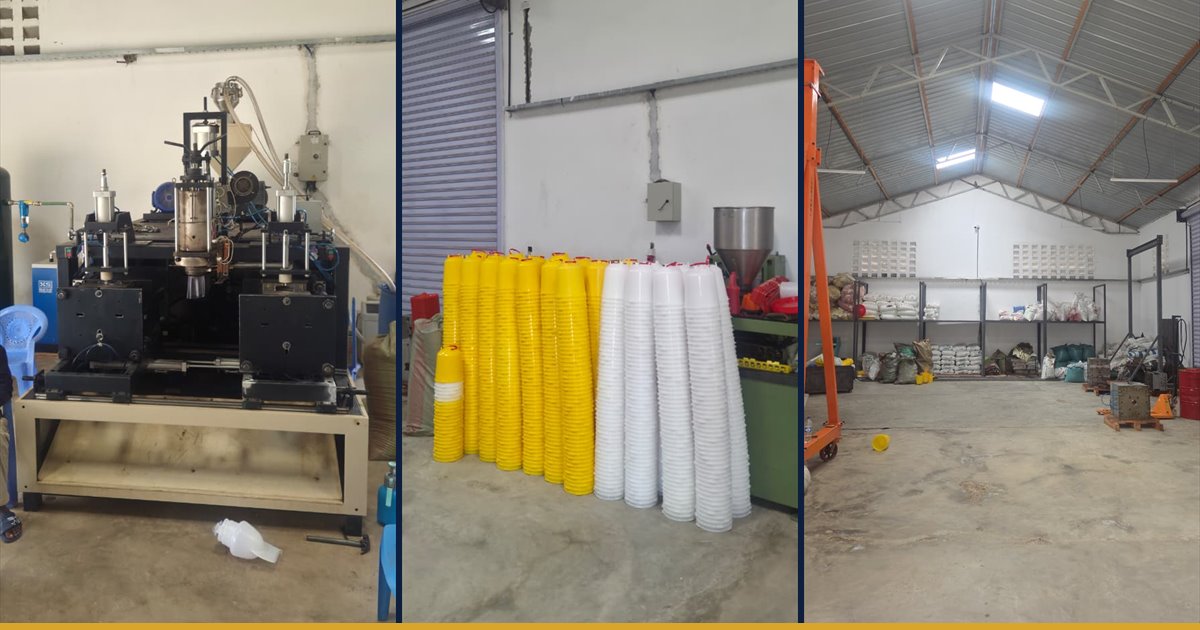
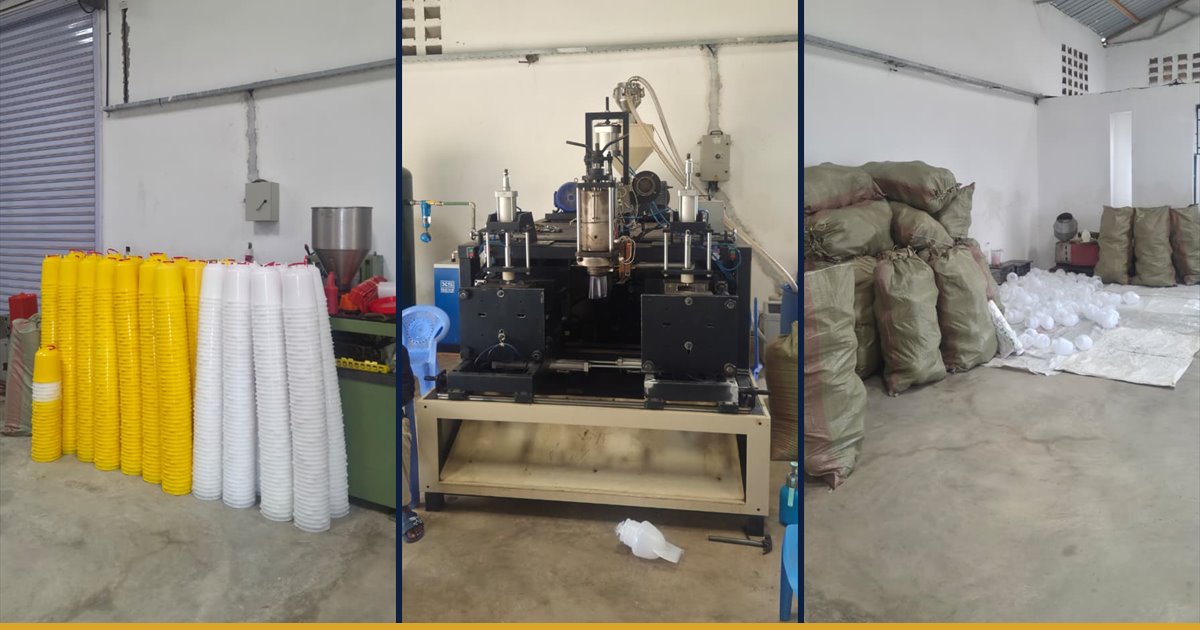
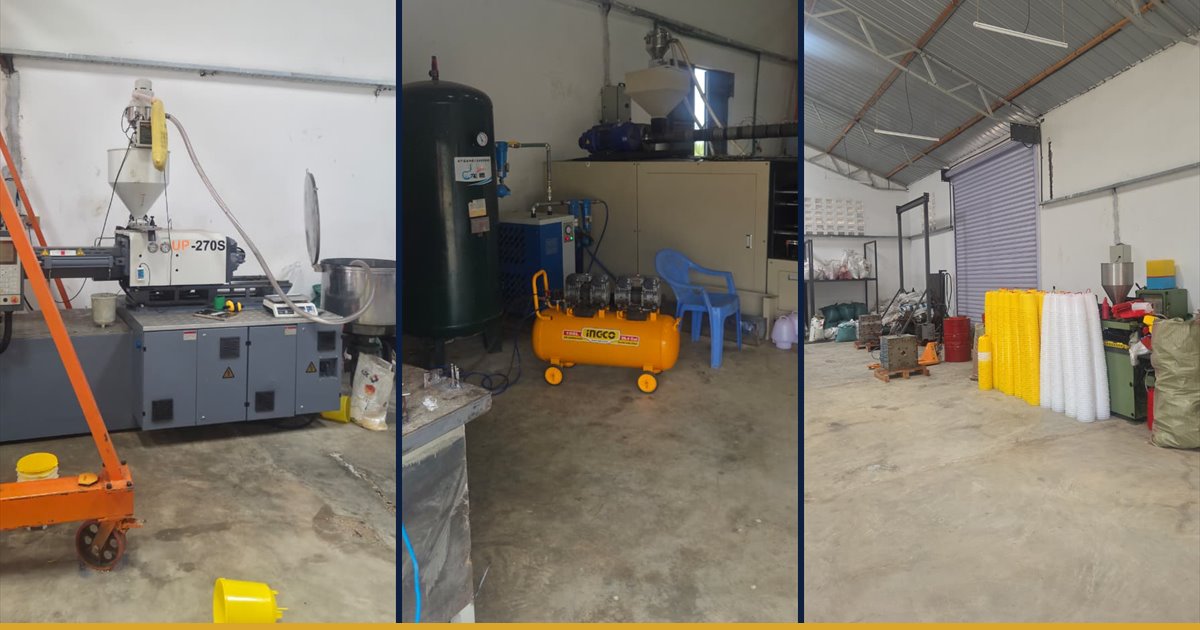
The tank. Blow moulded, because it is a large hollow body. What matters is even wall thickness and ultraviolet stability. A tank that has gone chalky in the sun has lost its impact strength, and the first knock against a fence post splits it. The other tank issue is the filler neck and strainer: a wide neck with a proper basket strainer keeps grit out of the pump, and grit in the pump is the origin of most sprayer problems.
The pump. Either a piston pump or a diaphragm pump, and the choice is not cosmetic. A piston pump generates higher pressure, which suits fine misting for fungicides and insecticides where coverage of the leaf underside matters. A diaphragm pump runs at lower pressure but tolerates abrasive and wettable powder formulations far better, because there is no sliding seal for grit to score. If you spray mostly herbicides and wettable powders, a diaphragm pump will outlive a piston pump.
The seals and the lance. Injection moulded and machined parts, and the place where cheap sprayers give themselves away. Seals must resist the solvents and surfactants in agricultural chemicals, not just water. A seal that swells or hardens after a few tanks of herbicide is the reason a sprayer starts weeping down the operator's back, which is both a chemical exposure problem and a waste problem.
The nozzle. The cheapest part and the one that decides your result. More on this below, because it deserves its own section.
The Nozzle Decides Your Result, Not the Sprayer
This is the part most farmers never think about and it has more effect on outcome than any other single choice.
A nozzle controls droplet size and pattern. Fine droplets give excellent coverage and stick to leaves well, which is what you want for contact insecticides and fungicides. They also drift on wind, which wastes chemical and risks damaging a neighbour's crop. Coarse droplets resist drift and suit systemic herbicides, where you need the chemical on the target and coverage matters less because the plant moves it internally.
The pattern matters too. A flat fan lays an even band and is the correct choice for herbicide over a bed or a row. A cone pattern throws droplets in all directions and gets into a crop canopy, which is what you want for insect and disease control. Using a cone nozzle for herbicide is one of the most common causes of streaky, uneven weed control in Kenyan fields.
Nozzles also wear. A brass or plastic nozzle that has passed a few hundred litres has a slightly larger orifice than it started with, and it is now applying more chemical than you think, unevenly. Nozzles are a consumable. Ours are inexpensive and listed individually on the price list, and replacing them annually is one of the cheapest improvements available to a serious sprayer operator.
Sprayer Classes and What Each Is Actually For
| Class | Typical size | What it suits |
|---|---|---|
| Hand / trigger sprayer | 0.5 to 2 L | Seedlings, kitchen garden, spot treatment, greenhouse benches |
| Pressure sprayer | 2 to 10 L | Small plots, nurseries, poultry house disinfection |
| Manual knapsack | 16 to 20 L | The standard Kenyan smallholder tool. No fuel, no battery, no failure modes |
| Battery knapsack | 16 to 20 L | Larger acreage without the fatigue. Consistent pressure, which manual pumping never gives |
| Motorised knapsack / mist blower | 20 L class | Tall crops, orchards, coffee, large acreage, where reach matters |
| Boom knapsack | 20 L with boom | Even coverage over rows and beds, materially faster than a single lance |
The honest guidance is that most smallholders are correctly served by a good manual 20-litre knapsack and a set of proper nozzles, and would get more from spending on nozzles and calibration than on upgrading the sprayer. The point at which a battery sprayer starts paying is when the acreage is large enough that operator fatigue is changing the quality of the spray by the end of the day, because a tired operator pumps less and walks faster, and both reduce the dose reaching the crop.
Motorised mist blowers are a different tool rather than a better one. They excel where you need to project spray into a canopy that a lance cannot reach. Our guide to motorised mist blowers covers that case, and the general knapsack sprayer guide covers buying.
Buying a Sprayer: What to Check
Pump the empty sprayer and listen. It should build pressure smoothly and hold it. A pump that feels loose at the top of the stroke or bleeds down quickly has a seal or valve problem already.
Check the strainer. Is there a basket strainer in the filler neck, and a second filter before the nozzle? Both should be present and removable for cleaning. A sprayer with no strainer is a sprayer that will block.
Look at the straps and the back plate. You will carry twenty kilogrammes on this for hours. Wide, adjustable straps and a shaped back plate are not luxury, they are what stops the operator cutting the job short.
Ask what spares are stocked. Pump seal kits, lances, nozzles, hoses, trigger valves. If the seller cannot list them, the sprayer is disposable. We list ours individually because a sprayer should be repaired, not replaced.
Check the lance and trigger. The trigger should have a positive lock, and the lance should feel solid at the joint. Most weeping starts at the trigger valve.
Calibration: The Part Everybody Skips
A sprayer applies whatever your walking speed, pressure and nozzle combine to deliver, and if you have never measured it, you do not know your application rate. That means every chemical you buy is being applied at a rate you are guessing at, which is why some fields get under-dosed and re-infested while others get over-dosed at real cost and real risk.
Calibration is a twenty-minute exercise you do once per sprayer and nozzle combination, and it converts your chemical bill from a guess into a number. It is the single highest-return habit available to anyone spraying regularly, and it costs nothing but a measuring jug, a watch and a tape measure.
Why Local Manufacture Matters for Sprayers Specifically
Sprayers are a consumable-heavy product. Seals perish, nozzles wear, hoses harden, triggers weep. A sprayer is only as good as the availability of the two-hundred-shilling part that is currently stopping it working.
That is the practical case for buying a sprayer from a business that manufactures and stocks the line rather than one that imported a container of a model it may never carry again. When the lance on a Sharpa needs replacing, we sell the lance. When the nozzle wears, we sell the nozzle. A sprayer that can be repaired for a few hundred shillings, indefinitely, is a substantially cheaper sprayer than a slightly cheaper one that becomes scrap when a seal fails.
If you are buying for a cooperative, a group of farmers or a stockist shelf, talk to us about quantities and consistent supply, and ask for specifications in writing if you need them for a tender.
Key Takeaways
- Fuga manufactures sprayers in Kenya under the Sharpa line, and supplies battery and motorised sprayers alongside them.
- Piston pumps give higher pressure for fine misting; diaphragm pumps tolerate wettable powders and abrasive formulations far better.
- The nozzle decides your result more than the sprayer does. Flat fan for herbicide, cone for insect and disease control.
- Nozzles are consumables. A worn orifice applies more chemical than you think, unevenly, and replacing them annually is cheap.
- Never use a herbicide sprayer for anything else. Residue is almost impossible to wash out and will damage the next crop.
Frequently Asked Questions
Does Fuga manufacture sprayers in Kenya?
Yes. We manufacture sprayers under our Sharpa line, including the 20 litre manual knapsack with a metallic pump assembly, and we stock Sharpa lances and nozzles as separate serviceable parts. We also supply battery and motorised sprayers that we import, and we are clear about which is which.
Which is better, a piston or a diaphragm sprayer pump?
It depends on what you spray. A piston pump reaches higher pressure, which suits fine misting for fungicides and insecticides where you need coverage of the leaf underside. A diaphragm pump runs at lower pressure but handles wettable powders and abrasive formulations much better because there is no sliding seal for grit to score. If you mostly spray herbicides and powders, choose diaphragm.
What nozzle should I use for herbicide?
A flat fan nozzle producing coarser droplets. The flat fan lays an even band across a bed or row, and coarse droplets resist drift so the chemical lands on target. Using a cone nozzle for herbicide is one of the most common causes of streaky, uneven weed control, because a cone throws droplets in all directions rather than in a controlled band.
How much is a knapsack sprayer in Kenya?
Manual knapsack sprayers sit at the low end, battery sprayers in the middle, and motorised knapsacks and boom sprayers at the top. Current prices for every model, plus lances, nozzles and spares individually, are published on our price list, which runs off the same stock system our branches use.
Do I need to calibrate my sprayer?
Yes, and almost nobody does. Your application rate is set by walking speed, pressure and nozzle together, so if you have never measured it you are guessing at the dose for every chemical you buy. Calibration takes about twenty minutes per sprayer and nozzle combination and needs only a measuring jug, a watch and a tape measure.
Why buy a sprayer from a manufacturer rather than an importer?
Sprayers are consumable heavy. Seals perish, nozzles wear, hoses harden and triggers weep. A sprayer is only as good as the availability of the small part currently stopping it working. Because we manufacture and stock the Sharpa line, the lance, nozzle and seals stay available, so the sprayer can be repaired for a few hundred shillings indefinitely rather than becoming scrap.