
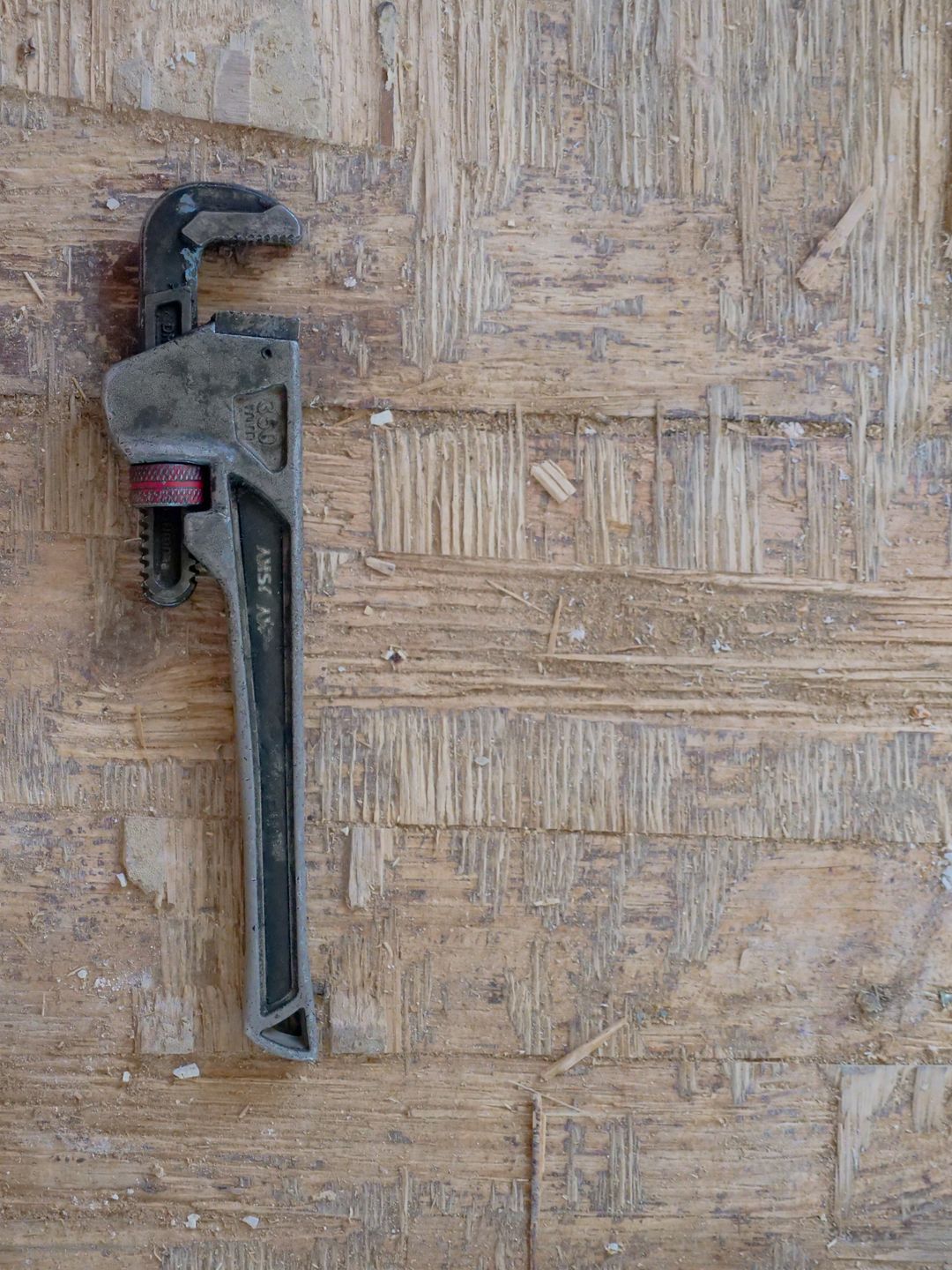
Use the 8 inch (200 mm) pipe wrench for small pipe up to about 1 inch, the 18 inch (450 mm) for most farm plumbing up to about 2.5 inch, and the 24 inch (600 mm) for 3 inch pipe and stubborn old joints. A longer handle adds leverage, not grip, so choose the smallest wrench that fits.
Picture a pump on a tank stand, a year after it was installed. The union on the delivery pipe has seized, the pump is not delivering, and somebody fetches the biggest wrench in the store. A hard pull later there is a hairline crack in the pump port, and a job that needed ten minutes now needs a new pump body.
The size of a pipe wrench is a decision about leverage and capacity, and the wrong choice damages the thing you are trying to fix. This guide covers what each of the three common sizes can grip, how leverage works, how to use the wrench so it grips instead of slipping, where it must not be used, and how it differs from pump pliers. For the wider picture, see our guide to pliers and which job each one does, and our hand tool starter kit.
What Is a Pipe Wrench Designed to Do?
A pipe wrench is a gripping tool for round, rough steel: galvanised iron (GI) pipe, black steel pipe and the rough threaded fittings that join them. It has a fixed jaw, called the heel jaw, built into the handle, and a movable hook jaw that you set with a knurled adjusting nut. Both jaws carry hard serrated teeth.
The clever part is that the hook jaw floats. When you pull the handle, the hook jaw tilts and bites harder into the pipe, so the more you pull the tighter it grips. That is why a pipe wrench can turn a smooth round pipe that no spanner could hold, and also why it leaves toothmarks. The teeth are meant to cut into steel, which is exactly why they ruin soft or finished surfaces.
Which Size Pipe Wrench for Which Pipe?
Wrench makers publish a capacity for each size: the largest nominal diameter of steel pipe the jaws can open around. The figures in the table below are the published capacities for a heavy-duty straight pipe wrench from RIDGID, a long-established maker, and they are a sound guide to the three sizes sold at Fuga. A wrench from another maker may be rated a little differently, so check any rating stamped on the handle, and always measure your own pipe.
| Wrench | Typical steel pipe capacity | Good for | Watch out for |
|---|---|---|---|
| 8 inch / 200 mm | Up to about 1 inch | Small GI pipe, nipples, taps, short pump pipe stubs, working in tight spaces | Too short to free a seized joint; do not extend the handle |
| 18 inch / 450 mm | Up to about 2.5 inch | Most farm plumbing: 1.5 and 2 inch GI delivery pipe, metal tank outlets, borehole riser joints | Easy to overtighten 1 inch fittings with it |
| 24 inch / 600 mm | Up to about 3 inch | Large GI pipe, long runs of riser, seized old threads | Heavy and awkward in tight spots; far too much leverage for small pipe |
Check the size of your pipe before you choose. GI pipe is sold by nominal bore, so a pipe called 1 inch is not exactly 1 inch across; it is slightly bigger outside. The pipe should sit deep in the throat of the jaws with a little room to spare, not at the very end of the adjustment.
Why Does a Longer Handle Matter So Much?
Torque, the twisting force on the pipe, equals the force of your pull multiplied by the distance from the pipe to your hand. Triple the handle length and you triple the torque for the same effort. That is why a 24 inch wrench frees a joint that an 8 inch wrench will not touch, and also why it is dangerous on small work.
Small pipe and fittings are not built to take that much twist. A half-inch nipple, a cast iron pump port or a brass union can crack or strip long before the wrench runs out of strength. The rule is to pick the smallest wrench that fits the pipe, and to step up to the next size only when the right-sized wrench cannot free the joint and you have checked there is no other reason, such as a cross-threaded fitting, why it will not move.
Threads on pipe fittings are tapered, so they seal as the joint is drawn up. Wrap the male thread with PTFE sealing tape, screw the joint in by hand, then tighten a turn or two beyond hand-tight until it is snug and stop. Extra force does not improve the seal; it only puts stress on the fitting that shows up later as a leak.
How Do You Use a Pipe Wrench Without Slipping or Damage?
Isolate first. Close the valve, relieve the pressure and drain the section you are working on. If a pump feeds the line, switch it off at the isolator before you touch any pipe near it. Any work on the mains supply or wiring belongs to a licensed electrician, not to you.
Set the jaw. Clean the pipe and the teeth so they bite on steel, not on mud or old thread tape. Place the wrench so the pipe sits deep in the throat, then turn the adjusting nut until the jaws almost close around the pipe while the hook jaw can still rock a few millimetres. A wrench set too tight cannot tilt and so cannot grip; one set too loose slips.
Pull in the grip direction. A pipe wrench grips only when force is applied in one direction, the way the open mouth between the jaws leads. In the other direction it releases. Pull the handle toward you instead of pushing it away, which keeps your body behind the tool and your knuckles clear of the pipe. If the wrench skates over the surface, you have the direction wrong, so flip the wrench over.
Back up the joint. When you tighten or loosen one fitting on a pipe, use a second wrench on the other fitting turning the opposite way. This stops you twisting a whole run of pipe, loosening a joint further down or putting a strain on a pump or tank connection. Stop when the joint is snug, not when you run out of strength.
Where Does the Wrench Go on Pumps, Tank Connectors and GI Pipe?
Plumbing on a farm is a mixture of metal and plastic, and the pipe wrench belongs only on some of it. The table shows the common cases.
| Part | Pipe wrench? | What to do |
|---|---|---|
| GI pipe and rough steel fittings | Yes | Right-sized wrench on the pipe; back-up wrench on the fitting |
| Pump casing and ports | No | Hold the pipe stub, never the casing; cast iron and aluminium crack under shock |
| Hex nuts and hex-bodied unions | No | Use a spanner on the flats; teeth round the corners |
| Brass fittings | Rarely | Brass is soft; use the hex flats, or pad the jaws with a cloth if you must grip |
| Plastic tank connectors and bulkheads | No | Hand-tight with PTFE tape and a gentle extra turn at most |
| PVC, PPR and HDPE threaded joints | No | Hand-tight; teeth crush plastic and crack the female thread |
| PPR welded joints | No | Fuse with a heat welding machine, not a wrench |
On pumps, the common mistake is to grab the casing. Put the wrench on the pipe stub or the metal nipple instead, and use a back-up wrench on the nipple while the union is tightened. Our guides to PPR plumbing on the farm and joining HDPE pipe explain how the plastic side of the system is joined without a wrench, and the PPR welding machine page shows the tool used for fusing PPR pipe.
Tank connectors deserve extra care. A plastic bulkhead fitting has a thin wall and a moulded thread, and a pipe wrench will crack it long before it turns. Hand-tight with a gasket or tape and a quarter turn more is normally enough. A tank that leaks at the fitting more often needs the fitting seated properly than needs more force.
Pipe Wrench or Pump Pliers: Which One Do You Need?
Pump pliers, also called tongue-and-groove or water pump pliers, have a slip joint that lets you step the jaws wider in several positions. They are quicker to set than a pipe wrench and handy in tight spaces, but they have much shorter handles and little leverage.
| Tool | Strength | Limit |
|---|---|---|
| Pump pliers | Fast to set; holds small round or hex parts; good for hose and tap connections | Short handle: cannot make or break a tight GI thread |
| 8 inch pipe wrench | Positive grip on small pipe; fits tight spaces | Limited reach and torque on seized joints |
| 18 inch pipe wrench | The farm all-rounder for GI pipe | Easy to overtighten small fittings |
| 24 inch pipe wrench | Frees big or seized joints | Heavy; overkill for small pipe |
Use the pliers for small, light work and the wrench when you need a thread drawn up or broken free. Do not use pliers as a substitute for the right wrench on GI pipe: they slip, round the pipe and chew your knuckles.
How Do You Keep a Pipe Wrench Working?
A pipe wrench is simple, but it only grips as well as its teeth and its adjusting nut allow. Brush mud and rust out of the teeth with a wire brush, and wipe the jaws dry after borehole or tank work. Put a drop of oil on the adjusting nut and the threads of the hook jaw so the nut still turns after a wet season.
Check the wrench before each job. Retire or replace it if the teeth are worn smooth, the hook jaw is cracked or spread open, the nut strips, or the handle is bent. A cracked jaw can fail under load and throw you off balance. Do not use a pipe wrench as a hammer, and keep it dry in storage: short rains bring damp, and damp brings rust. Hang it by the handle in the workshop where it stays dry.
How Do You Protect Your Hands and the Pipe?
Pipe wrench injuries are almost always slips. The jaws let go, the handle swings back, and a hand or face meets a pipe or a wall. Stand with your feet planted and your weight behind the pull, and check the ground first, because wet concrete and muddy borehole surrounds are exactly where people slip. Keep your fingers out of the throat of the jaws and out of the gap between the handle and the pipe.
Wear gloves and eye protection. Old galvanised pipe flakes rust and scale when it is gripped, and a seized joint can give way suddenly. If a joint will not move, do not keep adding force: soak the thread with penetrating oil, give it time, tap the fitting gently, and try again with a back-up wrench. Never work on a line that is under pressure or on a pump that is still connected to power, and keep children well away from the work area.
Your Pipe Wrench Checklist
| Question | Check |
|---|---|
| Pipe size | Measured, and within the wrench's rated capacity |
| Material | Steel or GI only; plastic and cast casings get no teeth |
| Isolated | Power off, valve closed, line drained and depressurised |
| Jaw set | Pipe deep in the throat; hook jaw can rock slightly |
| Direction | Pulling toward you, in the grip direction |
| Back-up | Second wrench holding the other fitting |
| Tightness | Snug, with sealing tape; no cheater pipe |
| Condition | Teeth clean and sharp, nut free, no cracks |
Pipe Wrenches and Pliers at Fuga
Prices change, so we do not print them here. See each product page or the Fuga price list for current prices and stock.
| Item | Where it fits |
|---|---|
| Pipe Wrench 8"/200mm | Small pipe, taps and tight spaces |
| Pipe Wrench 18"/450mm | General farm GI plumbing |
| Pipe Wrench 24"/600mm | Large pipe and seized joints |
| Pump Pliers | Small, quick gripping jobs |
| PPR Welding Machine | Joining PPR pipe without a wrench |
Measure your pipe, match the wrench to it, isolate the line, and stop when the joint is snug. For a full range of hand tools, see our workshop and industrial tools, or WhatsApp 0716 961 018 with your pipe size and the job and we will help you pick a wrench.
Key Takeaways
- Use the 8 inch wrench up to about 1 inch pipe, the 18 inch up to about 2.5 inch and the 24 inch up to about 3 inch.
- A longer handle gives more leverage, not a better grip, so choose the smallest wrench that fits the pipe.
- Isolate the line first, set the jaw so the hook can rock slightly, and pull toward you in the grip direction.
- Use a second wrench as a back-up, and stop when the joint is snug with sealing tape.
- Never use a pipe wrench on plastic fittings, tank connectors, pump casings or hex nuts.
- Pump pliers suit small, quick jobs but cannot make or break a tight GI thread.
- Keep the teeth clean, oil the adjusting nut, and retire a wrench with a cracked or spread jaw.
Frequently Asked Questions
What size pipe wrench do I need for a 1 inch pipe?
An 8 inch (200 mm) pipe wrench is rated for steel pipe up to about 1 inch, so it fits, but for a tight joint an 18 inch wrench gives you more leverage. Choose the smallest wrench that fits comfortably and is strong enough to free the joint.
Can I use a pipe wrench on PVC, PPR or plastic tank fittings?
No. The teeth crush plastic and crack the threads, and the leverage can split a thin fitting. Tighten plastic threads by hand with PTFE tape and at most a gentle extra turn, and fuse PPR pipe with a welding machine instead.
What is the difference between a pipe wrench and pump pliers?
A pipe wrench has a long handle and a floating hook jaw that grips harder as you pull, so it can make or break a GI thread. Pump pliers have short handles and adjustable slip joint jaws, which makes them quick for small gripping jobs but poor on tight threads.
Why does my pipe wrench keep slipping?
Usually the jaw is set too loose or too tight, the teeth are clogged or worn smooth, or you are pulling in the wrong direction. Clean the teeth, set the jaw so the pipe sits deep and the hook can rock slightly, and flip the wrench if it skates.
Can I put a pipe on the handle for extra leverage?
It is not recommended. An extension can double the torque, bend or snap the handle and crack the fitting you are working on. If an 18 inch wrench cannot free a joint, step up to the 24 inch wrench or ask a plumber.


