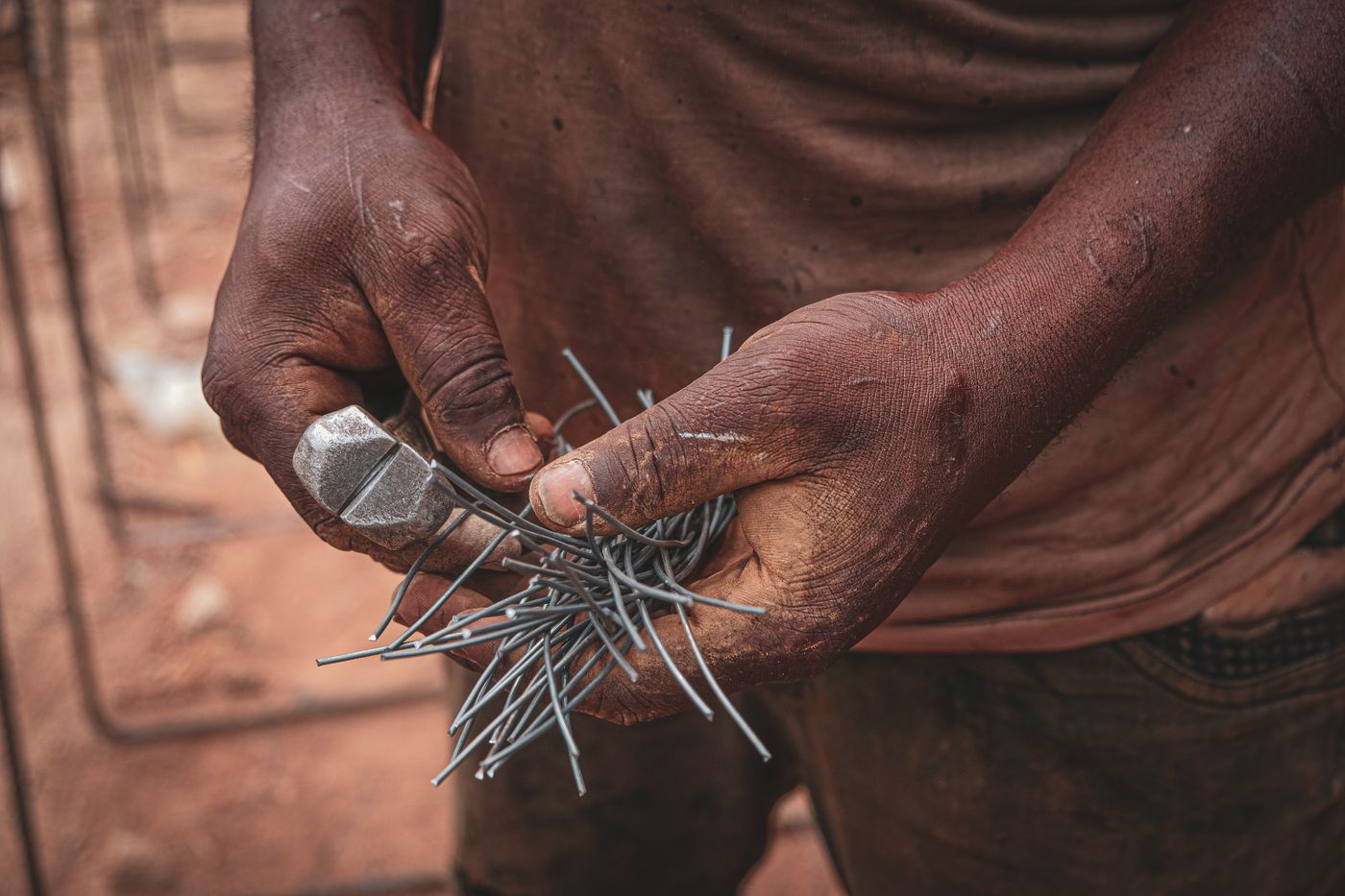
Every fundi has watched it happen. Someone grabs whatever hammer is nearest, a light claw hammer to break a concrete block, or a heavy mason hammer to drive small roofing nails, and within minutes there is a bent nail, a cracked handle, a bruised thumb, or a chip of steel flying off the hammer face. The wrong hammer does not just do the job badly. It wears out the tool and it injures the person using it.
Hammers look simple, which is why people rarely think about choosing one. But a claw hammer, a mason or club hammer and a sledge hammer are designed for very different jobs, with different head weights, face shapes and handles. On a farm, where the same person may be building a chicken house in the morning, cutting a hole in a block wall at midday and driving fence posts in the afternoon, having the right one to hand saves time and accidents.
This guide explains the main hammer types sold in Kenya, what each is designed for, how to choose the weight, how to use them properly, the safety rules every user should know, and how to look after them so they last.
Anatomy of a Hammer
Every hammer has the same basic parts. The head is the heavy steel part that does the work. Its face is the striking surface, slightly domed on a good claw hammer so that a glancing blow does not mark the wood or bend the nail as easily. The other end of the head may be a claw for pulling nails, a second face, or a wedge-shaped peen. The handle, wooden, fibreglass or steel, carries the force from your arm to the head, and its length decides how much leverage and speed you get.
Head weight is usually given in ounces for claw hammers and in pounds for mason and sledge hammers. As a rough guide, 16 ounces is about 450 grams, and 1 pound is about 450 grams too, so a 16 ounce claw hammer and a 1 pound head weigh about the same.
The Claw Hammer: Nails and Timber
The claw hammer is the carpenter's hammer. One end has a flat or slightly domed face for driving nails; the other has a split claw for pulling them out. It is the right tool for building chicken houses, rabbit hutches, roof trusses, door frames, timber fences and shelving.
Choosing the weight. A 16 ounce claw hammer is the all-round choice for most farm and household work: heavy enough to drive common wire nails in a few blows, light enough to control for small nails and to use all day. A 24 ounce hammer drives large nails into hardwood faster and suits framing and heavy timber work, but it tires the arm sooner and is clumsy for fine work. If you only buy one, buy a 16 ounce hammer with a comfortable handle.
Pulling nails properly. Slide the claw under the nail head, then rock the hammer back on its head. For long nails, put a small block of wood under the head as a fulcrum; it gives more leverage and stops the hammer denting the surface. Do not use the claw as a pry bar for heavy demolition; that is how claws snap and handles break.
A claw hammer is not for striking chisels, masonry, steel or concrete. Its hardened face can chip when it meets something harder than a nail, and a flying chip of steel can blind you.
The Mason or Club Hammer: Chisels and Blocks
The mason hammer, often called a club or lump hammer, has a short handle and a heavy, double-faced head, typically 2 to 3 pounds. It is designed to strike cold chisels, bolsters and masonry chisels, to break and trim blocks and stones, and to tap blocks into place when laying. On a farm it is the tool for cutting a doorway into a block wall, chasing a channel for a pipe, breaking a concrete slab or setting kerb stones.
The short handle gives control in a confined space, and the heavy head gives each blow plenty of force without a big swing. A 2 pound head suits lighter chisel work and someone who is not using it all day; 3 pounds hits harder for breaking and heavy cutting. Our guide to block laying and mason tools shows where it fits in a builder's kit.
The Sledge Hammer: Posts, Breaking and Heavy Work
A sledge hammer has a long handle, used with both hands, and a heavy head, typically from about 6 to 16 pounds. The long handle lets the head build up speed through a full swing, so it delivers far more energy than a hand hammer. Farm uses include driving fence posts and steel stakes, breaking rock and old concrete, knocking apart stubborn timber joints and straightening heavy steel.
Heavier is not always better. A 14 or 16 pound sledge breaks concrete efficiently in strong, practised hands, but it is exhausting and hard to aim for most people. For driving fence posts and general use, an 8 to 10 pound head is more manageable, and you will land more accurate blows. Our guide to farm fencing posts and wire covers post driving in more detail.
Sledge hammer heads are often sold separately from handles, so a broken handle does not mean replacing the whole tool. Our guide to rehandling hammer and axe heads explains how to fit a new handle and wedge it properly.
Which Hammer for Which Job
For a lot of breaking work, such as removing a large concrete floor or cutting many openings in walls, a hammer is the slow way. A power tool such as a rotary hammer or demolition breaker does the same work in a fraction of the time; our guide to the rotary hammer versus demolition breaker explains when it is worth stepping up.
Handles and Quality: What to Look for in the Shop
Hammer handles come in three main materials. Wood absorbs shock well, is comfortable and can be replaced cheaply, but it can shrink and loosen in very dry weather and swell in wet. Fibreglass handles resist weather and absorb vibration reasonably well, and they rarely loosen, though a damaged fibreglass handle cannot be repaired. Steel handles are very strong and the head is often forged in one piece with the handle, so it cannot come loose, but they pass more shock to the hand unless they have a good rubber grip.
Whatever the material, pick the hammer up before you buy it. It should feel balanced, with the weight in the head, not the handle. The head should sit square on the handle and be firmly fixed, with no movement at all when you try to twist it. The face should be smooth and evenly finished, without cracks, pits or rough casting marks, and on a claw hammer the claw's V should be sharp and narrow enough to grip a small nail head.
Very cheap hammers sometimes have soft heads that dent and mushroom quickly, or brittle heads that chip. A hammer is a tool you may use for twenty years, so it is worth paying a little more for a well made one, and keeping the receipt in case of a defect.
Using a Hammer Properly
Good technique makes any hammer more effective and less tiring. Hold a claw hammer near the end of the handle, not up by the head; the longer lever gives more speed for less effort. Start a nail with light taps while holding it between finger and thumb, then move your hand away and drive it with firm, controlled blows from the elbow and wrist, letting the weight of the head do the work. Keep your eye on the nail head, not the hammer.
With a mason hammer and chisel, hold the chisel firmly and keep the blows square onto its head. A rubber hand guard on the chisel protects the holding hand if you miss. With a sledge, stand with feet apart and firmly placed, slide the top hand down the handle as you swing, and let the weight fall rather than forcing it. Never swing a sledge where someone is standing behind or beside you.
Safety Rules Every Hammer User Should Know
Wear safety glasses whenever you strike steel, masonry or concrete. Chips fly off the work and sometimes off the tools, and eye injuries from hammering are common and serious. Our guide to workshop safety and PPE covers eye protection and gloves.
Never strike two hammer faces together, and never strike a hardened tool with a hardened hammer face in a way it was not designed for. Hardened steel can shatter. Throw out or regrind any chisel whose head has mushroomed over into a ragged rim; those ragged edges are what break off and fly. Replace any hammer with a cracked, chipped or deeply dented face.
Check the handle before every use. A loose head can fly off mid-swing. Wooden handles shrink in dry weather and swell in wet; if the head moves, re-wedge it or fit a new handle before use. Never use a hammer with a split or splintered handle.
Your Hammer Buying Checklist
| Job | Hammer to choose |
|---|---|
| General nailing, coops, hutches | 16 oz claw hammer |
| Framing, large nails in hardwood | 24 oz claw hammer |
| Chisel work, cutting blocks | 2 to 3 lb mason hammer with a concrete chisel |
| Fence posts, stakes | 8 to 10 lb sledge hammer |
| Breaking concrete and rock | 12 to 16 lb sledge, or a demolition breaker for big jobs |
| Every hammer | Sound handle, tight head, undamaged face, safety glasses |
Hammers and Chisels, With Prices
These prices are from the Fuga price list at the time of writing; check the site or call a branch for current prices and stock.
| Item | Stock code | Price |
|---|---|---|
| CLAW HAMMER 16OZ | 6605 | KSh 250 |
| CLAW HAMMER24OZ | 6606 | KSh 300 |
| MASON HAMMER 2LB | 6607 | KSh 240 |
| MASON HAMMER 3LB | 6609 | KSh 350 |
| SLEDGE HAMMER HEAD 8LB | 6638 | KSh 700 |
| SLEDGE HAMMER 16LB | 6832 | KSh 1,500 |
| Concrete Chisel (THT4421216) | 6874 | KSh 550 |
Use a claw hammer for nails, a mason hammer for chisels and blocks and a sledge for posts and breaking, wear eye protection and keep handles tight. See our concrete chisel, our hand tool starter kit guide and the full workshop and industrial tools range, or WhatsApp 0716 961 018.
Key Takeaways
- Choose the hammer by what you are striking: claw for nails, mason for chisels and masonry, sledge for posts and breaking.
- A 16 oz claw hammer is the best single all-round buy; 24 oz suits framing and large nails.
- A 2 to 3 lb mason hammer drives chisels and cuts blocks; an 8 to 10 lb sledge is easier to aim for posts than a 16 lb one.
- Check that the head is tight, the face undamaged and the handle sound before every use.
- Wear safety glasses for steel and masonry, never strike two hammer faces together, and discard mushroomed chisels.
- Store hammers dry and off the floor so heads do not rust and wooden handles do not loosen.
Frequently Asked Questions
What size claw hammer should I buy?
A 16 ounce claw hammer suits most farm and household carpentry: heavy enough for common nails, light enough to control. A 24 ounce hammer drives large nails into hardwood faster but tires the arm and is clumsy for small work.
Can I use a claw hammer to hit a chisel?
No. A claw hammer's hardened face can chip when it strikes hardened steel or masonry, and the chips can cause eye injuries. Use a mason or club hammer to strike cold chisels and masonry chisels.
What weight sledge hammer is best for driving fence posts?
For most people an 8 to 10 pound sledge is easier to swing accurately for posts and stakes. Heavier 14 to 16 pound sledges suit breaking concrete and rock in strong, practised hands.
Why does my hammer head keep coming loose?
Wooden handles shrink in dry weather and swell when wet, which loosens the head. Re-wedge the head or fit a new handle before using it again, and store hammers dry. Never use a hammer with a loose head, because it can fly off mid-swing.