Watch someone start out and you will usually see the same pattern. The first purchase is a big shiny set in a moulded plastic case, sixty pieces, most of which will never be touched. Six months later the case is in a corner, and the tools actually being used are four items bought separately because the ones in the set bent, slipped or lied.
A working kit is not assembled by buying a box. It is assembled by working out which tools the job genuinely needs, buying those properly, and buying the rest only when a job demands them.
This is the order that tends to make sense, why each tool is on the list, and the honest split between what is worth paying for and what is not.
Start With Measuring, Because Everything Inherits Its Errors
A perfect cut in the wrong place is still waste. Accuracy is upstream of every other skill, which is why the measuring tools come first even though they feel like the least exciting purchase.
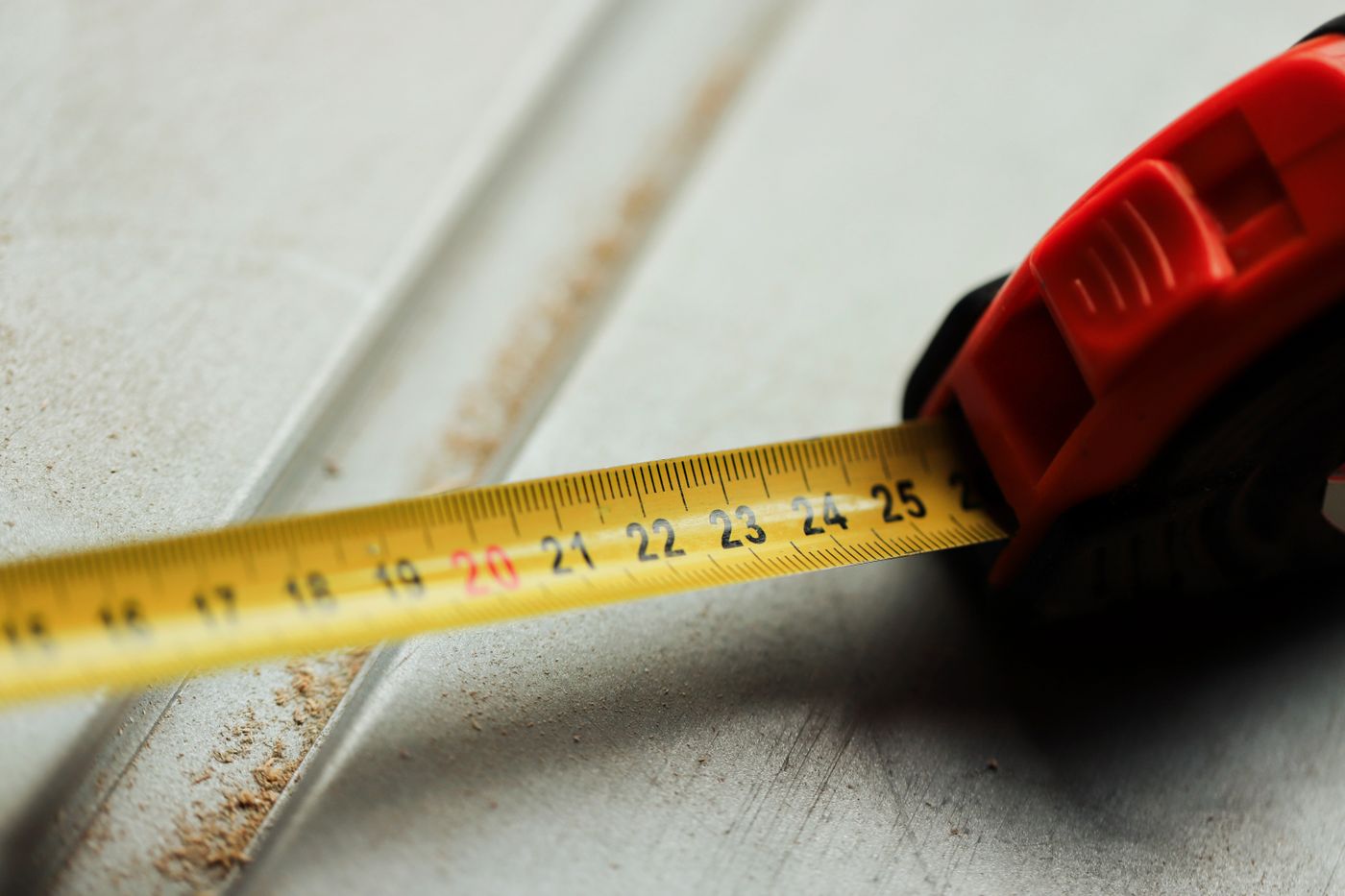
A tape measure of five metres covers almost everything in general work. Look for a blade with a decent standout, meaning it stays rigid unsupported for a metre or more, because that is what lets you measure alone. The little hook on the end is supposed to be loose by exactly the thickness of the hook, so it reads correctly whether you push it against something or hook it over an edge. That is a feature, not a fault, and tightening it up ruins the tape.
A square is what turns measurement into a mark you can cut to. Without one, right angles are guesses, and errors in a frame compound at every corner until the last piece will not fit.
A spirit level decides whether the work looks right to the eye. Here is a test worth doing before you buy and every few months after: set the level on a surface, note where the bubble sits, then turn it end for end in exactly the same spot. It should read identically. If it does not, the level is out, and every wall, shelf and door frame you set with it carries that error permanently.
Buy the tape, the square and the level properly. They are the cheapest tools on the list and the only ones whose errors get built permanently into the work. A hammer that is merely adequate costs you effort. A level that is wrong costs you the job.
Striking: Matching Mass to the Job
Hammers are chosen by weight, and the weight is chosen by what you are hitting.
A claw hammer of roughly 450 to 570 grams is the general carpentry choice. Heavy enough to sink a nail in a few blows, light enough to control all day. Too light and you bend more nails than you drive, because a nail bends when the blow lacks the mass to move it and the energy goes sideways.
A mason hammer has a squarer face and a chisel end, meant for dressing block and stone rather than for nails. A sledge hammer is for demolition and driving stakes, and comes in a wide weight range. The temptation is to buy the heaviest available, which is a mistake, because a sledge you cannot swing accurately for twenty minutes is less useful than a lighter one you can.
On any striking tool, the handle deserves more attention than the head. It must be tight in the eye, straight, and free of splits. A loose head is genuinely dangerous, and the moment to deal with it is the moment you notice movement, not after it has flown off. Steel and fibreglass handles avoid the problem at the cost of transmitting more shock to the wrist.
Cutting and Shaping
A handsaw is still worth owning even in a workshop full of power tools, because it needs no cable, makes no dust cloud, and is faster than setting up a machine for one cut. Modern hardpoint saws have induction hardened teeth that stay sharp far longer than traditional saws but cannot be resharpened, so they are used until blunt and replaced.
The panga is the most widely owned cutting tool in the country and the most casually maintained. It cuts on a slicing action rather than a chop, and a properly sharpened one does more work with less effort and less risk, because a blunt blade bounces off what it should cut. Straight and curved patterns suit different work: curved for grass and light bush, straight for general clearing.
Chisels matter if you do any joinery. They are one of the few tools where quality is immediately obvious, because the whole value is in steel that takes and holds an edge. Cheap chisels blunt on the first hardwood and need constant attention. Keep them out of the general toolbox where the edges get knocked against everything else.
Gripping, Turning and Fastening
A set of screwdrivers in both slotted and cross head patterns, in the sizes you actually meet, beats a large novelty set every time. The critical thing is that the tip fits the screw properly. A tip that is too small or worn rounds out the screw head, and a rounded screw in a finished assembly is a genuinely irritating problem to solve.
Pliers earn their place: combination pliers for general gripping and cutting, and long nose for reaching into places fingers do not go. Adjustable spanners and pipe wrenches cover plumbing and general nuts, and the pipe wrench in particular is a tool where jaw hardness matters, because soft jaws round off the very fittings they are meant to grip.
One habit worth forming early: pull a spanner towards you rather than pushing it away. If the fastener suddenly gives, pulling means you stagger backwards, while pushing means your knuckles arrive at whatever is behind the bolt at speed.
Buy for the job in front of you. A tool bought because it might be useful one day usually is not. A tool bought because today's job needs it gets used for years, and you already know it fits the work you actually do.
Keeping Steel Alive in This Climate
Rust is the main thing that takes hand tools out of service here, and it is almost entirely preventable.
Moisture is the enemy, and it arrives in ways people do not always notice. Coastal humidity is obvious. Less obvious is condensation: steel cools overnight, and warm morning air deposits moisture on it. Tools left on a bare concrete floor draw damp up from the slab. Tools put away damp after a rainy job rust in the box.
The countermeasure costs almost nothing. Keep an oily rag in the toolbox and wipe bare steel down before closing the lid. Store the box off the floor. Dry tools before they go away rather than after. For anything with an edge, a light film of oil also stops the edge corroding, which is the first thing that goes.
Handles need attention too. Wooden handles dry out and shrink in hot conditions, which is what loosens hammer heads. A little linseed oil on a wooden handle once in a while keeps it from drying and splitting, and takes seconds.
What Not to Buy Yet
Large socket sets, unless you work on engines. Specialist joinery tools, until you take joinery work. Anything cordless, until you have somewhere to charge it reliably and a job that keeps you away from a socket.
And the sixty piece case. Those sets are priced on piece count, which means the money is spread across sixty items rather than concentrated in the eight you will use. The four tools you reach for every day deserve the whole budget.
We stock hand tools individually as well as in sets: tapes, squares, levels, claw, mason and sledge hammers, pangas, handsaws, chisels, screwdrivers, pliers, pipe wrenches and spanners, alongside the power tool range, across our branches. If you tell us the work you take on, we will help you build the kit in the order that suits it rather than the order that empties the shelf. The range is on the workshop and tools page, with current pricing on the price list.
Key Takeaways
- Buy measuring tools first and buy them properly. Their errors get built permanently into the work.
- Check a spirit level by turning it end for end in the same spot. The bubble must read the same both ways.
- Match hammer weight to the job. A 450 to 570 gram claw hammer covers general carpentry, and the handle matters more than the head.
- Spend on anything that measures, holds an edge, or could injure you if it failed. Save on consumables and occasional tools.
- Rust is the main killer of hand tools here. Wipe down, oil lightly, store off the floor, never put tools away damp.
- Skip the large piece count sets. The money is spread across items you will never touch.
Frequently Asked Questions
What hand tools should I buy first?
Measuring and marking before anything else: a five metre tape, a square and a spirit level. Every later tool depends on those three being right, because a perfect cut in the wrong place is still waste. After that a claw hammer, a handsaw, a set of screwdrivers, pliers and an adjustable spanner will cover most general work.
Which tools are worth paying more for?
Anything that measures, anything that must hold an edge, and anything that could injure you if it failed. Tapes, squares and levels must be accurate or every job carries their error. Chisels and saws must hold an edge. Hammer handles and jack stands must not fail under load. Consumables and tools used occasionally can be bought cheaply without much consequence.
How do I stop my tools rusting in Kenya?
Keep them dry and lightly oiled. Rust needs moisture, and coastal humidity, cold night air condensing on steel, and tools put away damp are the three common causes. Wipe tools down before storing, keep a lightly oiled rag in the box and pass it over bare steel, and never leave tools on bare concrete overnight, which draws moisture.
What size claw hammer is best?
Around 450 to 570 grams for general carpentry, which is heavy enough to drive a nail in a few blows without wearing out your arm. Lighter hammers need more blows and bend more nails. Much heavier hammers are for framing and demolition rather than general work. The handle matters as much as the head: it must be tight, straight and free of splits.
Is a cheap spirit level accurate enough?
Not reliably, and it is easy to check. Put the level on a surface, note the bubble, then turn it end for end in the same spot. The bubble should read the same both ways. If it does not, the level is lying to you in one direction, and every wall, shelf and frame you set with it inherits that error.