This is the decision that quietly sets the ceiling on how well a poultry house performs. Not the breed, not the feed brand, not the house design. The watering system, because it determines how clean the water is, how dry the litter stays, and how much of your day disappears into washing bowls.
Both systems work. Both are sold everywhere in Kenya. They suit genuinely different situations, and the wrong choice is expensive in ways that are hard to trace back to the drinker.
How Each One Works
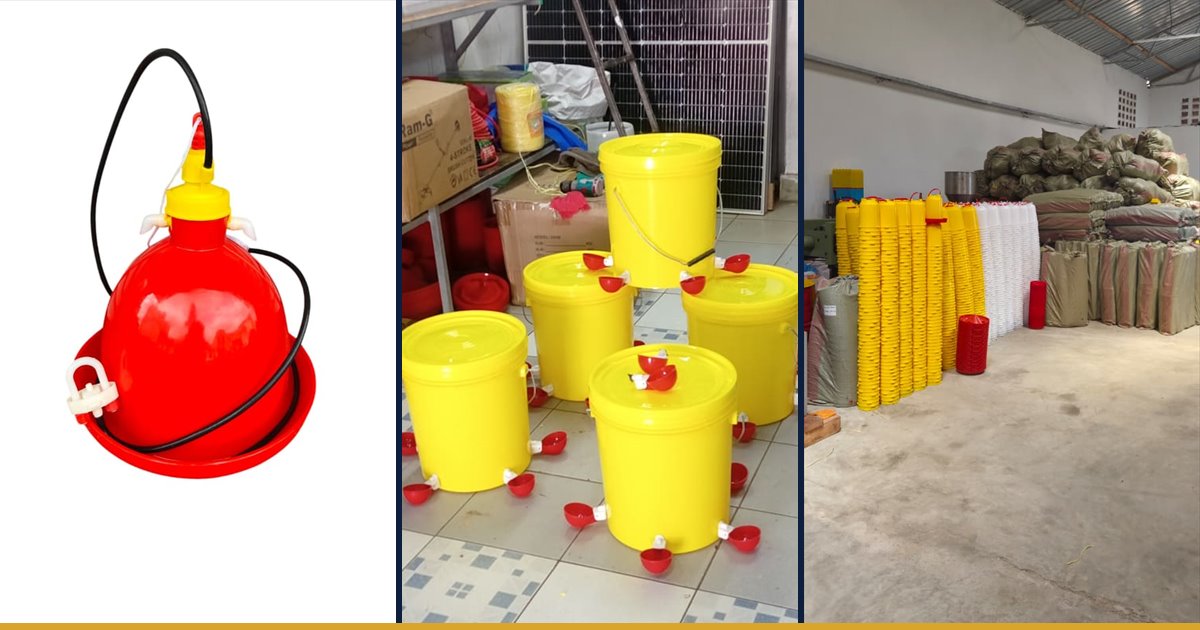
A bell drinker, sometimes called a plasson or automatic hanging drinker, is a bell-shaped bowl suspended from the roof and fed by a hose from a raised tank or the mains. A valve inside maintains the water level at the rim. Birds drink from an open water surface, exactly as they would from a puddle, so no training is needed at all.
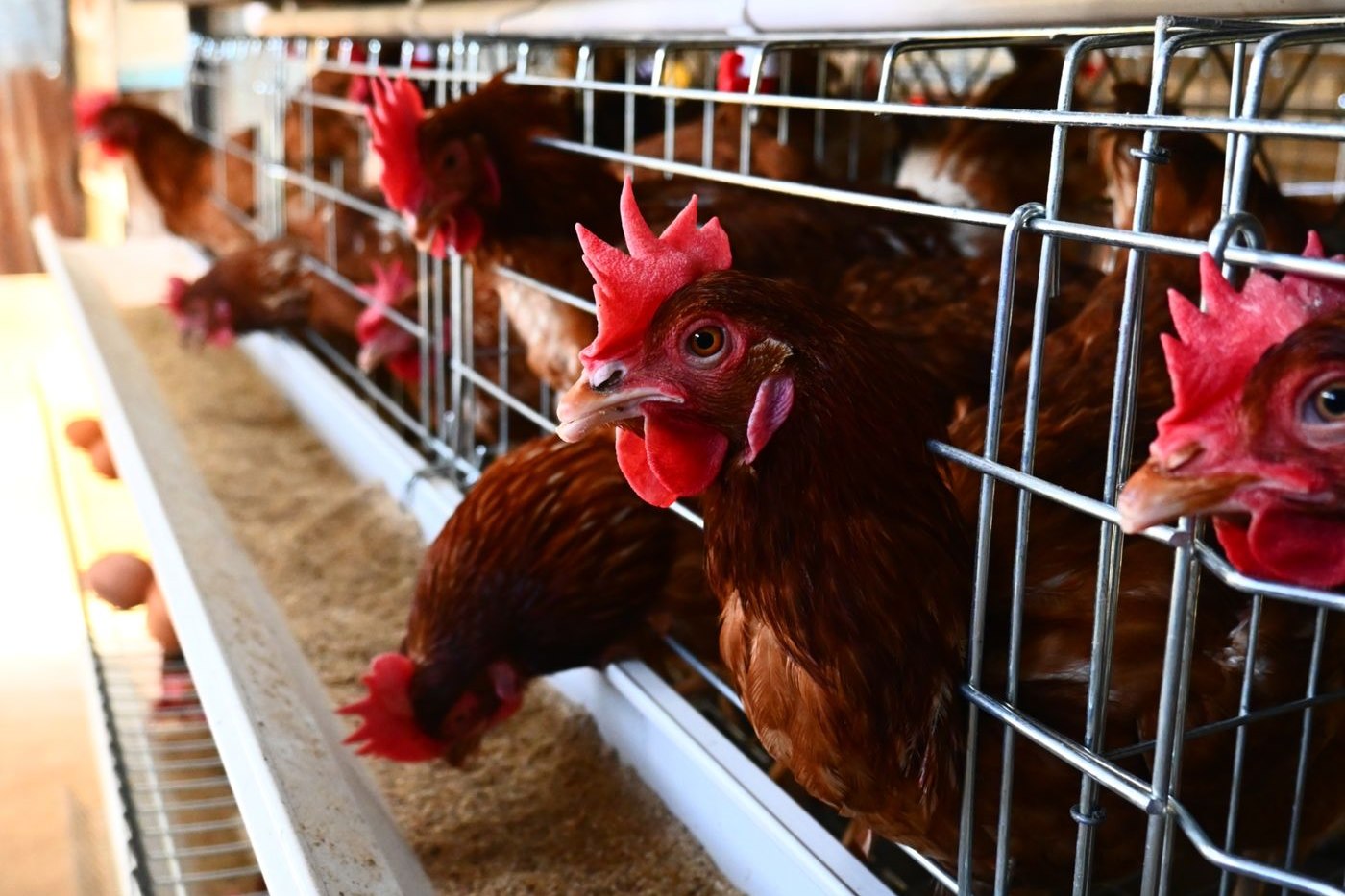
A nipple drinker is a horizontal pipe carrying valves at intervals along it. A bird pecks the pin protruding from the valve and a drop of water is released. There is no open water anywhere in the system. Variants include the plain nipple, where the drop goes straight into the bird's beak, and the cup nipple, which has a small catch cup below to hold what would otherwise fall.
The Honest Comparison
| Bell drinker | Nipple line | |
|---|---|---|
| Purchase cost | Low. A few hundred to a couple of thousand shillings per unit | Higher. Nipples, pipe, regulator, fittings and a header tank |
| Training needed | None. Birds drink instinctively | A few days for young birds to learn the peck |
| Water cleanliness | Open bowl collects litter, dust, droppings and feed | Closed system. Water is not exposed until the bird drinks |
| Litter dryness | Spillage is constant, and wet patches form under each drinker | Very little spillage when correctly set up and adjusted |
| Daily labour | Every bowl scrubbed daily. This is real work | Almost none at the bird end. Lines flushed on a schedule |
| Medication dosing | Uneven. Birds drink different amounts from different bowls | Even across the house through the line |
| Failure mode | Valve sticks open and floods the litter | Nipple blocks, and birds go without water silently |
| Water quality tolerance | Tolerant. Grit settles in the bowl | Sensitive. Needs filtration if your water carries sediment |
The Case for Bell Drinkers
For most Kenyan keepers running fifty to five hundred birds, the bell drinker is the correct answer, and there is no shame in that.
It is cheap enough to buy spares, so a cracked bowl is not a crisis. Birds need no training, which matters when you are moving chicks in or mixing ages. It works on gravity from a raised tank without any pressure regulation, which suits farms with no mains pressure and intermittent supply. And critically, you can see the water. A blocked nipple is invisible; an empty bell drinker is obvious from the doorway.
That visibility is worth more than people credit. The most dangerous watering failure is the one nobody notices, and open bowls fail loudly.
The Case for Nipple Lines
The argument for nipples is not really about water. It is about litter.
Wet litter is the root of a long list of poultry problems. It produces ammonia, which burns the lining of the birds' respiratory tracts and opens the door to respiratory disease. It creates the damp conditions coccidiosis needs. It causes footpad dermatitis and hock burn, which downgrade broiler carcasses. And it is heavy, unpleasant work to replace.
An open bell drinker spills continuously. Birds drink and shake, they knock the bowl, and each drinker sits above a permanently damp patch. Multiply that by the number of drinkers and the days in a cycle, and litter quality is being steadily degraded all cycle long.
A properly set up nipple line, at the correct height and pressure, spills very little. Litter stays dry, ammonia stays low, birds stay healthier, and you are not carrying out wet litter every few days.
The second real advantage is medication. When you dose through the water, birds on a nipple line all receive roughly the same concentration. With bells, the bird drinking from the bowl nearest the tank and the one at the far end of the house may get quite different doses, and a bowl that has collected litter is dosing the bird with something other than what you intended.
What Actually Goes Wrong With Each
Bell drinkers. The valve sticks open and floods the house, usually overnight. Biofilm builds inside the bowl, sheltering bacteria and neutralising any medication or vitamins you add. The bowl collects litter and droppings within hours of cleaning. Hanging tabs tear under the weight of a full drinker. And they demand daily scrubbing, which is the failure mode nobody admits to: the system is fine, but on a busy week it does not get done.
Nipple lines. Nipples block, particularly where water carries sediment, and a blocked nipple is silent. Pressure is set wrong, so nipples either drip continuously or deliver too little. Biofilm builds inside the pipe where nobody can see it, and it will defeat your medication just as effectively as a dirty bowl. Young birds fail to learn the peck and dehydrate in the first days. And the whole system depends on a regulator and a header tank that must be maintained.
Both systems fail. The difference is that bell drinker failures announce themselves and nipple line failures do not, which is why nipple houses need a deliberate daily walk with your eyes on the birds rather than on the equipment.
Sizing Either System
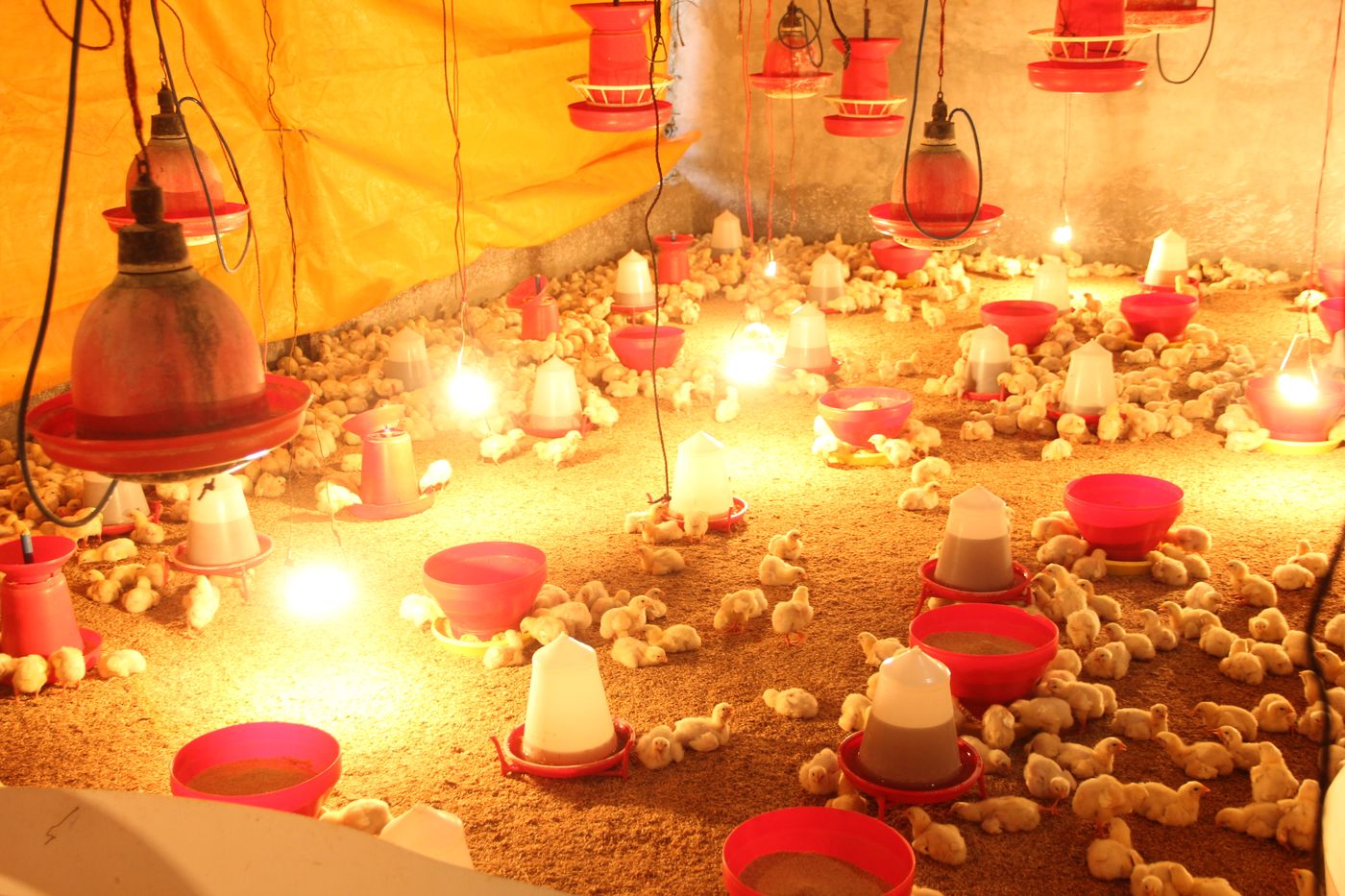
For bell drinkers, allow roughly two to two and a half centimetres of rim per bird, which works out at about three drinkers per hundred growing birds. For nipple lines, plan roughly eight to twelve birds per nipple, fewer in hot conditions.
Then ignore the arithmetic and check reality. Walk into the house at the hottest part of the afternoon, which is when demand peaks. If birds are queueing, pushing or standing at the drinkers, you need more regardless of what the calculation said. A hot house in Kanamai needs materially more drinking capacity than the same flock in Eldoret.
Never let a house run short of water for even a short period. Birds recover from a missed meal. They do not recover well from missed water, and laying birds will drop production for days afterwards.
A Sensible Middle Path
You do not have to choose once and forever, and most good Kenyan houses do not.
Brood chicks on small fountains or chick drinkers, because day-old chicks must find water instantly and cannot be relied upon to learn a nipple in their first hours. If you are running a nipple house, introduce the nipple line alongside the fountains during the first week so birds learn while they still have a fallback, then withdraw the fountains.
Cup nipples are a genuine compromise worth considering. You get the closed system and the clean water, but with a small visible reservoir, so birds find water easily and you can see at a glance that the line is working.
And keep a few manual drinkers regardless of your system. When the power fails, the pump stops or a line needs work, being able to carry water to the birds within minutes is the difference between an inconvenience and a loss.
What We Stock
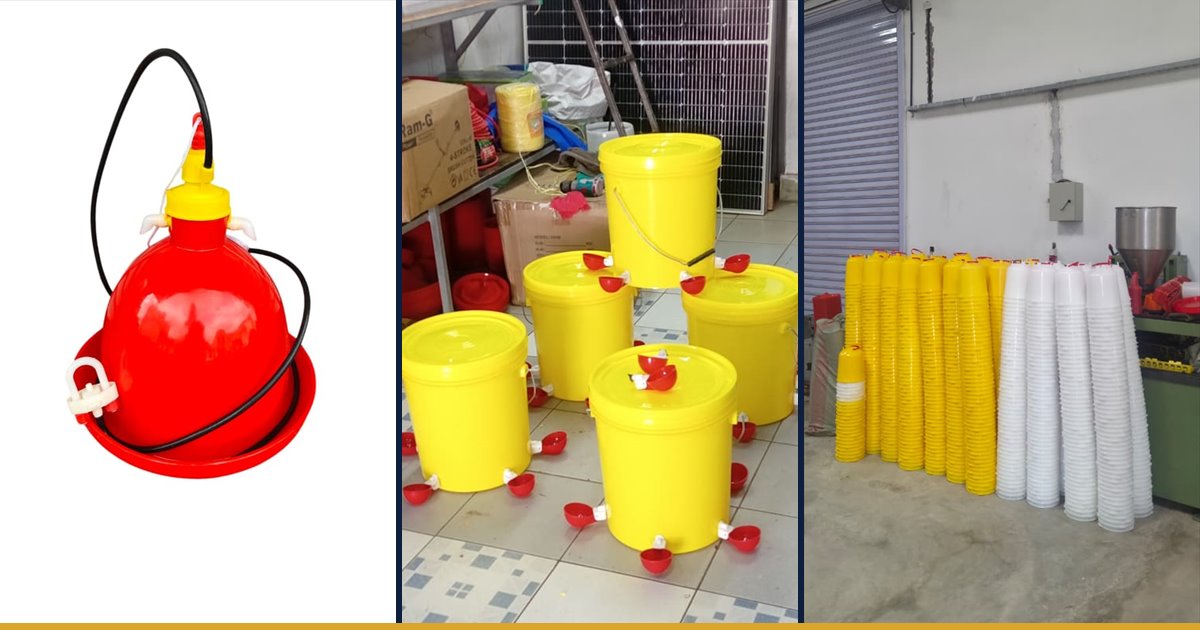
We carry manual drinkers from 1.5 to 10 litres, automatic bell drinkers, nipples in several patterns including screw, grab, cup and side varieties, plus the adjusters, connectors, grabs and pipe that make a line work. Because we mould drinkers ourselves, spares stay available rather than disappearing when a container stops coming.
Everything is listed individually with current prices on the price list, and the range is on the poultry equipment page. Our guide to how drinkers are made covers how to judge build quality, and choosing feeders and drinkers covers the pair together.
Tell us your flock size, bird age and house layout on WhatsApp and we will work out which system fits and exactly what it needs, including the fittings people forget until the day they are installing.
Key Takeaways
- For most Kenyan keepers running 50 to 500 birds, a bell drinker is the correct answer: cheap, no training, and you can see the water.
- The real argument for nipples is not water, it is litter. Dry litter means less ammonia, less coccidiosis and fewer footpad problems.
- Nipple height is the whole game. Too low and it spills, too high and small birds quietly drink less. Raise it weekly.
- Bell drinker failures announce themselves. Nipple failures are silent, so nipple houses need a deliberate daily walk.
- Nipples dose medication evenly across a house. Bell drinkers do not, and a bowl full of litter doses the bird with something else.
Frequently Asked Questions
Are nipple drinkers better than bell drinkers?
Not universally. Nipples keep water cleaner and litter drier, which matters most in larger broiler batches where litter quality drives results, and they dose medication evenly. Bell drinkers are cheaper, need no training, work on gravity without pressure regulation, and let you see at a glance that birds have water. For most flocks of 50 to 500 birds the bell drinker is the better practical choice.
How high should nipple drinkers be?
The bird should reach up at roughly a 45 degree angle with its head extended. Too low and birds spill water everywhere, which destroys the dry litter advantage you paid for. Too high and smaller birds cannot reach and quietly drink less, which slows growth before anyone notices. Raise the line weekly as the flock grows and check it every week.
How many birds per nipple drinker?
Plan roughly eight to twelve birds per nipple, and fewer in hot conditions. For bell drinkers, allow about two to two and a half centimetres of rim per bird, which works out at roughly three drinkers per hundred growing birds. Then check reality: walk the house at the hottest part of the afternoon and add capacity if birds are queueing.
Can chicks use nipple drinkers?
Not reliably in their first hours, and dehydration in the first days is a serious risk. Brood chicks on small fountains or chick drinkers so they find water instantly. If you run a nipple house, introduce the nipple line alongside the fountains during the first week so birds learn while they still have a fallback, then withdraw the fountains.
Why is my poultry litter always wet?
Usually drinker spillage. Open bell drinkers spill continuously as birds drink, shake and knock the bowl, so a damp patch forms under each one. Check drinker height, since a drinker below the birds' back level gets knocked constantly, and check for a valve stuck part open. Wet litter causes ammonia, coccidiosis conditions and footpad damage, so it is worth chasing down.
Do nipple drinkers block?
Yes, particularly where water carries sediment, and a blocked nipple is silent, so birds can go without water unnoticed. Filter your water if it carries grit, flush the lines on a set schedule to control the biofilm you cannot see inside the pipe, and walk the house daily watching the birds rather than the equipment.