Choose a jembe or panga by the job first, then by steel and weight: a lighter head for beds and weeding, a heavier one for breaking hard ground, and a blade that takes a file edge without chipping. File the jembe at about 30 degrees and the panga at 20 to 25, and re-handle the moment a head moves.
Ask any farmer which tool they own most of, and the answer is a jembe and a panga. Ask which tool they look after least, and the answer is the same. The jembe edge is a rounded, stone-bruised curve that is pushed through the soil by sheer effort. The panga is blunt enough to bruise a stem rather than cut it. Both tools work, and both take twice the effort they should.
The short rains are the season when this shows. Planting, weeding and slashing all arrive together, and a tired worker with a blunt tool is slower and less safe. This guide covers four jobs that most farms skip: choosing the tool, sharpening it, re-handling it and storing it. For the hammer and axe side of handle fitting, see re-handling hammers and axes, and for the wider tool list see our hand tool starter kit.
How Do You Choose a Jembe?
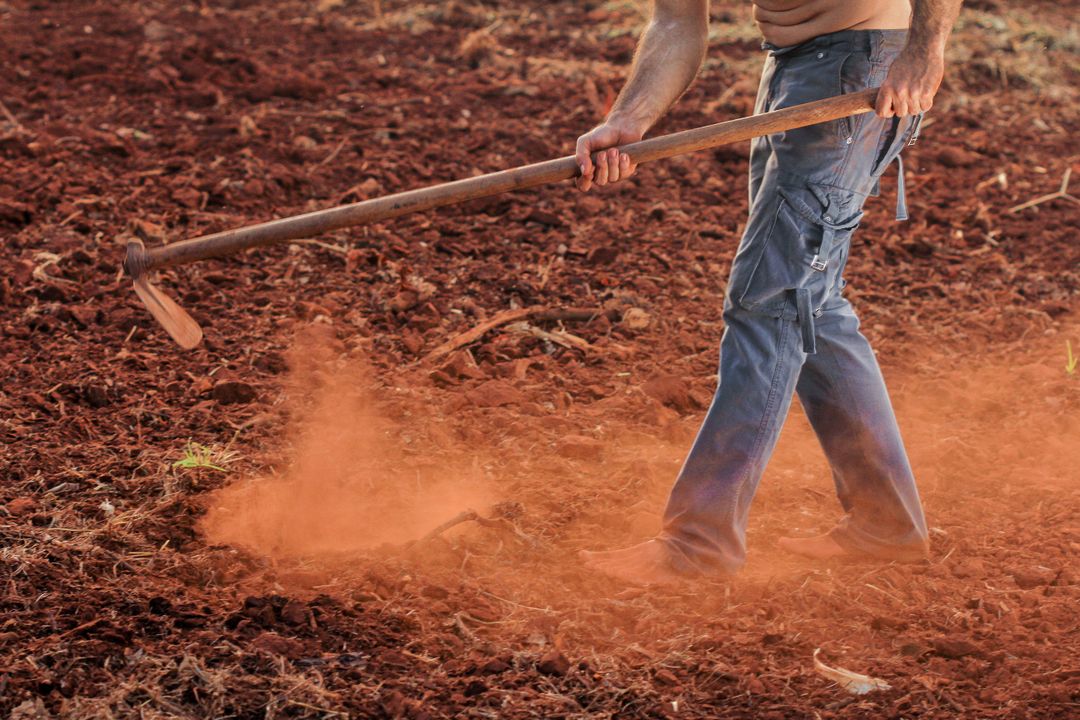
Start with what the jembe will do. Breaking new or compacted ground, ridging and digging out stumps call for a heavier head, because the weight does part of the work as it falls. Weeding, making seedbeds and working a kitchen garden call for a lighter head that you can swing all morning without your back giving out. Jembes are sold by head weight in pounds, and our kitchen garden tools guide explains why a light head suits beds you work every season and a heavy one suits field work.
Then look at the steel. Most jembes and pangas in Kenya are forged or pressed from carbon steel. Many hand-forged tools from jua kali workshops are made from recycled steel such as vehicle leaf springs, which can make excellent tools, but quality depends on the heat treatment, which you cannot see. Two failures show how it can go wrong. Steel that is too soft bends and rolls its edge on the first stone and never holds a sharp line. Steel that is too hard and brittle chips instead of bending. Good tool steel sits between the two: it takes a file, holds an edge and springs back a little under load.
You can check a few things in the shop. Sight along the blade for straightness and even thickness. Look at the edge for cracks, laps in the metal or an edge that is already chipped. Check the eye or socket where the handle fits, because this is where a poorly made head cracks. Run a file across a back corner: it should bite and leave a shiny mark, not skate off without cutting. Fuga stocks a jembe and a panga; the pages give the product code, and the branch can show you the weights and sizes held.
| Job | What suits it | Why |
|---|---|---|
| Weeding, beds and kitchen garden | Lighter jembe head | Less tiring over a long morning; easier to control near crops |
| Breaking new or compacted ground | Heavier jembe head | Weight helps the blade bite as it falls |
| Clearing grass and stems | Panga with a straight, evenly thick blade | Even blade cuts cleanly and does not wander |
| Stony soil | Tougher steel, thicker edge | A thin edge chips or rolls on stones |
How Do You Choose a Panga?
A panga is judged by its blade, its balance and its grip. Choose a blade length that you can swing comfortably for an hour, not the longest one. A blade of even thickness along its length, with a straight spine and a clean edge, cuts better and breaks less. Hold it by the handle and see where it balances: a blade that is heavy toward the tip chops well but tires the wrist, while a more even balance slices well and is easier to control.
Look at the handle. Many pangas have a flat metal tang, and two wooden or plastic scales riveted on either side. The rivets should be flush and the scales tight against the tang with no gaps where water and soil can collect. A loose scale is a warning. A handle that is too small makes you grip hard and tires your hand, while a handle that is too large reduces control.
What Edge Angle Should Each Tool Have?
The edge angle, or bevel, decides how well the tool cuts and how long it lasts. A shallow angle is sharper but weaker. A steeper angle is tougher but cuts less cleanly. The Low Technology Institute sharpening guide (Johnson, 2026) groups tools by their use: knives, billhooks and machetes, which slice and cut, sit at about 20 to 25 degrees, while hoes, shovels, mattocks and axes, which chop and dig, sit at about 30 degrees.
In practice, follow the angle the tool already has. A trick from tool-care guides is to scrape the edge across a concrete slab while standing as you would to use it, then sharpen where the scratch marks show the edge is meeting the work. Do not keep sharpening until the edge disappears; over-sharpening and the wrong angle are two of the common pitfalls the same guide lists, along with overusing a bench grinder.
How Do You Sharpen a Jembe or Panga With a File?
You need a flat bastard or mill file, a vice or clamp, and protection for your eyes and hands. Our guide to hacksaws and files explains file types and how to keep a file clean. Do the job in daylight, in a place where nobody will walk into you.
- Clean and clamp. Knock off soil and rust with a wire brush, then clamp the blade so it cannot move. A tool held in one hand while you file with the other is how people get cut.
- Find the bevel. Lay the file flat on the existing bevel and rock it until it sits evenly. That is your angle. Many jembe edges are ground on one face, so file the face that already carries the bevel.
- Push, do not saw. File in one direction, pushing away from the edge or along it, in smooth even strokes, and count your strokes so each part of the edge gets the same. Keep your free hand behind the file, never in front of the edge.
- Remove the burr. A thin lip of metal will curl over on the opposite face. Run the file lightly flat along that face, once or twice, to knock it off.
- Test and oil. A sharp panga should slice a green stem cleanly instead of crushing it. A jembe does not need to be razor sharp: soil and stones will dull a very fine edge in minutes, so aim for an even, clean bevel. Wipe a thin film of oil on to slow rust.
Avoid a bench grinder or angle grinder unless you know how. Both remove metal fast and can overheat the edge, which softens it, and the Low Technology Institute guide lists overusing a bench grinder as a common pitfall. Wear eye protection and gloves, and file away from your body.
When and How Should You Re-Handle a Jembe or Panga?
Re-handle when the head is loose, the handle is cracked, split or has a worn, slick grip, or when the wood has rotted at the head. A loose jembe head can fly off at the top of a swing, and a cracked handle can snap mid-stroke. Do not wedge a loose head with a nail or a bit of cloth as a permanent fix.
The best handles are straight-grained, dry, seasoned hardwood with no knots or cracks, especially near the head, as our guide to hammer and axe handles explains. A green handle shrinks as it dries and loosens again within weeks. Match the length to the person. A short handle forces you to stoop, which is hard on the back during a day of digging, and a longer handle lets you work with a straighter spine. Try a longer handle on one tool before changing them all.
Most jembe heads have an eye or socket. The method is the one used for a hammer: remove the old handle without fire, because heat can soften the steel; shape the new handle until it fits the eye with even contact, and seat it by striking the handle end, not the head; and lock it with a hardwood wedge. Check how your own head is made before you begin, because the taper and the direction of entry differ between makers, and follow the step-by-step method in the re-handling guide.
For a riveted panga, replace or rebuild the scales. Cut new scales from dense dry hardwood, drill them with the old holes as a guide, rivet them or fix them with bolts and washers, and sand them smooth. A wrap of cord or tape is only a stop-gap. Seal the wood with oil so that it does not swell and shrink in the weather.
How Do You Store Them So They Last?
Storage decides how long a blade lasts. Knock off wet soil, rinse if needed, and dry the tool fully before you put it away, since damp soil on steel is the fastest road to rust. Wipe a thin film of oil along the blade. On the coast and in other humid places, check the tools every few weeks and re-oil them, as our starter kit guide advises for keeping steel alive in this climate.
Hang tools on a rack or nails with the blades off the floor and the edge turned to the wall, or lean them in a dry corner out of rain. Fit a sheath to the panga, which can be a strip of strong leather, folded cardboard bound with tape or a length of old tyre tube, so that the edge is covered whenever it is not in use. Keep tools in a place where children cannot reach them. If you share a store with other tools, put the sharp ones where a hand reaching in the dark will not find them.
What Are the Safety Rules for Both Tools?
- Clear a work area wider than your swing, including overhead and behind you, and keep other people and animals well outside it.
- Stand in a balanced position with both feet planted, and keep your free hand and your legs out of the line of the stroke.
- Wear closed shoes. A glancing jembe strike on a bare foot is a common injury.
- Carry a panga by the handle with the blade pointing down and away from you, in a sheath if you are walking any distance.
- Stop when you are tired. Most accidents come late in the day, when concentration fails.
- Never use a panga or jembe with a loose or cracked head or handle.
Your Jembe and Panga Checklist
| When | Check |
|---|---|
| Buying | Right weight for the job; straight, even blade; no cracks; file bites the corner; handle and eye or tang fit tight |
| Each session | Head tight; handle sound; edge clean; soil knocked off after use |
| Each week in the season | A few minutes with the file at the right angle; burr removed |
| Each season | Handle checked for cracks and loose wedges; rust removed; oil renewed |
| Always | Sheath on the panga; tools hung dry, edge protected, out of children's reach |
Fuga Tools to Look At
Prices change, so we do not print them here. See each product page or the Fuga price list for current prices and stock.
| Item | Where it fits |
|---|---|
| Jembe | Digging, weeding and seedbed work; see the page and price list for the weights held |
| Panga | Clearing grass and stems and general farm cutting |
Pick the tool for the job, keep the edge true with a file, replace the handle before it fails and hang the tool dry. A sharp jembe and panga can halve the effort of a day, and cost nothing but a few minutes. WhatsApp us on 0716 961 018 with the work you are preparing for, or visit any of our six branches. For more tools, browse farm equipment.
Key Takeaways
- Pick the jembe weight by the job: lighter for beds and weeding, heavier for breaking hard or compacted ground.
- Good tool steel takes a file, holds an edge and springs back a little; very soft steel rolls its edge and very hard steel chips.
- File a panga at about 20 to 25 degrees and a jembe at about 30 degrees, keeping the angle the tool already has if it suits the job.
- Sharpen little and often with a file, clamped in a vice, pushing in one direction and removing the burr; avoid a bench grinder unless you know how.
- Re-handle as soon as a head is loose or a handle is cracked, using dry, straight-grained hardwood with the grain running along the handle.
- Dry, oil and hang the tools after use and keep the panga in a sheath, away from children.
Frequently Asked Questions
What angle should I sharpen a jembe at?
About 30 degrees is typical for hoes, shovels and other digging and chopping tools, according to the Low Technology Institute sharpening guide. A jembe does not need to be razor sharp, because soil and stones dull a very fine edge quickly, so keep the existing bevel and aim for an even, clean edge.
What angle should I sharpen a panga at?
About 20 to 25 degrees is the usual range for machetes, billhooks and other slicing tools. A shallow angle cuts more cleanly but is weaker, so go towards the steeper end if your panga chips on tough stems.
Can I sharpen a panga on a grinder?
It is better not to unless you have practice. A grinder removes metal very fast and can overheat and soften the edge, and the Low Technology Institute guide lists overusing a bench grinder as a common pitfall. A flat bastard or mill file, with the blade clamped, is slower but much safer and more controllable.
When should I replace the handle of my jembe?
As soon as the head is loose, the handle is cracked or split, or the wood has rotted near the head. A loose head can fly off at the top of a swing, so do not wedge it with a nail or cloth as a permanent fix.
How do I stop my jembe and panga rusting?
Knock off soil and dry the tool completely after use, wipe a thin film of oil on the blade, and hang it off the floor in a dry place. On the coast and in other humid areas, check the tools every few weeks and oil them again.