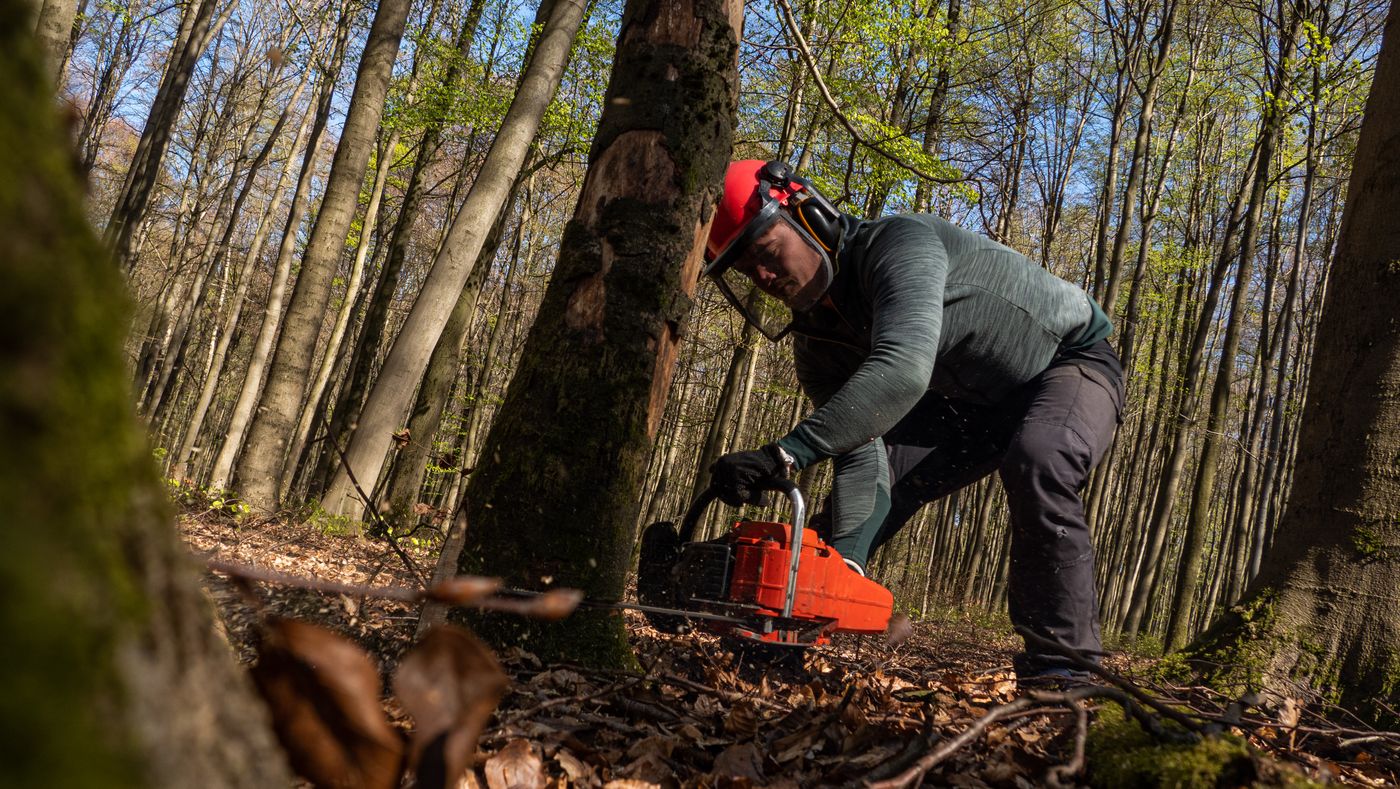
A chainsaw chain should be sharpened with a round file of the size that matches its pitch, held so that about one fifth of the file's diameter sits above the cutter's top plate, at the angle the chain maker specifies, and then the depth gauges checked. Keep the chain tensioned and oiled with proper bar and chain oil, and wear full protective gear every time you cut.
Most Kenyan chainsaw trouble comes from a chain that is blunt, loose or dry long before the engine has any fault. A saw that has to be forced through a log, throws out fine dust instead of chips, or smokes at the bar is telling you the chain needs attention. The machine is rarely the problem.
With the short rains softening the ground and the December rush for firewood, fencing posts and timber just around the corner, this is a good week to look after the cutting end of your saw. This guide covers file sizes, angles, depth gauges, tension, oil and cleaning, then the protective gear and the kickback awareness that make cutting safer. Our chainsaw buyer's and user's guide covers choosing and using the saw itself.
How Do You Know a Chain Is Dull?
Oregon, a major saw chain maker, lists the main signs in its guidance: wood debris that looks like dust rather than chips, and having to force the chain to cut. It also warns that a dull chain increases kickback risk, fuel use and damage. Other signs that experienced users watch for are a saw that pulls to one side in the cut, a burning smell or smoke from the cut with the bar well oiled, and the need to press down hard on the saw.
| Sign | What it usually means |
|---|---|
| Fine dust, not chips | The cutters are rubbing, not slicing; sharpen the chain |
| You must push the saw in | Dull cutters, or depth gauges that are too high |
| Saw pulls or drifts to one side | Cutters on one side are duller or shorter than the other; file both sides evenly |
| Smoke or blue-brown bar and chain | Friction from a dull or dry chain; check the oil supply as well as the sharpness |
| Chain grabs or snatches in the cut | Stop and check tension, sharpness and depth gauges before cutting again |
Oregon's maintenance manual says to sharpen the chain often or as needed, and its sharpening guidance says a chain should be sharpened every time you fill the saw with fuel. For most people that is a few strokes per cutter at each refuelling, which takes minutes and saves far more time in the cut.
What File Size Does Your Chain Need?
Use a round file that matches the chain's pitch and the cutter's design. Pitch is the distance between any three consecutive rivets divided by two. The common pitches are 1/4 inch, .325 inch, 3/8 inch and .404 inch, and the chain's gauge (the drive link thickness) is a separate number such as .050 inch or .058 inch. The pitch is often stamped on the bar or the chain pack, and the saw's manual lists it.
The size matters because the file must fit the curve of the cutter. A file that is too small leaves the cutter with a sharp but weak edge, and one that is too large cuts into the neighbouring parts. If you are not sure, take the old chain to a Fuga branch or a saw dealer and match the file to it.
How Do You Sharpen a Chain With a Round File?
Oregon's manual gives a clear routine, and the main points are these.
Clean and inspect first. Clean oil and grease from the chain so it does not clog the file. Look for cracked or broken cutters, bent or burred drive links, loose rivets and severe wear. A damaged chain should be repaired or replaced, not sharpened.
Tension the chain and hold the bar steady. Sharpening on the saw needs correct tension, and the bar must be held firmly, in a vice or on a stump with the engine off and the chain brake set where fitted.
Hold the file at the right height. Keep one fifth, or 20 percent, of the file's diameter above the top plate of the cutter. A file guide, a simple holder with angle marks, keeps this height automatically and keeps the file level.
Use the correct angle. The chain maker specifies a top-plate filing angle for each chain type, and file guides carry angle lines that you keep parallel with the chain. Many common chains use about 30 degrees, but chains differ, so use the figure for yours, since Oregon lists incorrect sharpening angles among the conditions that raise kickback energy.
File from the inside of the cutter to the outside. Do all the cutters on one side, then turn the saw round and do the other side. Stop when each cutter has a bright, shiny face, and use the same number of strokes on every cutter, so that all the cutter lengths stay equal. Uneven cutters make the saw pull to one side.
Remove damage. If a cutter's chrome surface has been damaged by a stone or nail, file back until the damage is gone.
What Are Depth Gauges and Why Do They Matter?
The depth gauge is the small hook in front of each cutter. It decides how deep the cutter can bite. Each time you file the cutters back, the cutting edge gets lower relative to the depth gauge, so the bite gets shallower and the chain starts to rub instead of cut.
Oregon says to set the depth gauges every three or four sharpenings, or more often if needed. It says to use a depth gauge tool with the correct built-in setting for your chain, and many of its chains carry a stamped number, such as .025 inch, on the gauge. If a gauge stands above the slot in the tool, file it level with the tool using a flat file, and then round off its front edge to its original shape. Never file it lower than the specified setting, because a gauge that is too low increases the bite and the kickback energy.
Do not file the tops of kickback-reducing features such as bumper drive links, bumper tie straps or ramped depth gauges unless the chain's instructions say so. They are part of the chain's safety design.
How Tight Should the Chain Be?
Oregon's manual puts it plainly: more chain and bar problems come from wrong chain tension than from any other single factor. A chain that is too loose can jump off the bar, increase kickback energy and wear the bar and sprocket. One that is too tight overheats, wears the bar and can damage the saw.
Tension the chain before each use and often, such as at each refuelling. With the engine off and gloves on, loosen the bar nuts, hold the bar nose up and turn the tension screw until the lowest tie straps and cutters just touch the bottom of the bar rail on a solid-nose bar. Tighten the rear bar nut first and then the front one, and then pull the chain by hand along the top of the bar. It should feel snug but pull freely.
What Bar and Chain Oil Should You Use?
Use clean bar and chain oil, and never old engine oil. Oregon says to fill the oil reservoir with clean bar and chain oil each time you fill the fuel tank, to make sure the chain, bar and sprocket are always receiving oil during operation, and never to put used or old motor oil in the saw or on the chain. A constant oil supply is vital, since without it there is excessive friction, wear and damage.
New chains should be soaked in oil overnight before the first use, so that the oil gets into all the parts. Run a new chain at part throttle for a few minutes before cutting, and keep the first several cuts light. After sharpening, wipe off any filings and oil the chain thoroughly.
If the chain looks dry or smoking, stop the saw and check the reservoir, the oil outlet and the chain's tension. A blocked oil port in the bar or a clogged outlet is a common reason for a dry chain, and the groove in the bar can fill with sawdust and oil residue, so clean it as part of regular care. Weekly, look at the bar rails to confirm they are square and not badly worn, and check the drive sprocket daily for wear, as Oregon recommends.
Which Protective Gear Do You Need?
A sharp chain cuts better, but it also cuts skin better, so the gear matters. A chainsaw safety bulletin from the Southwest Center for Agricultural Health, Injury Prevention and Education (2018) lists the basic equipment.
| Protective item | What it does |
|---|---|
| Leg protection (chaps or cut-resistant trousers) | Layered fibres that can stop a moving chain before it cuts through |
| Hard hat | Protects from falling branches and carries the visor and ear defenders |
| Eye protection with side shields | Keeps chips and sawdust out of the eyes; a face screen is added where available |
| Hearing protection | Earmuffs or earplugs against engine noise |
| Gloves with a good grip and cut resistance | Control of the saw and protection when handling the chain |
| Boots or shoes with steel toes and non-skid soles | Protect the feet and grip on wet ground |
Our guide to farm and workshop safety gear covers choosing and caring for the rest of the kit. Avoid loose clothing that can catch, and keep children and bystanders well away from the cutting area.
What Is Kickback and How Do You Reduce the Risk?
The same safety bulletin explains that kickback occurs when the teeth on the chain catch on something as they rotate around the tip of the bar. The saw can then kick back violently toward the operator. It can also happen when the nose of the bar strikes another object, starts to bore a cut improperly, or catches the bottom or side of a cut.
You reduce the risk by not using the tip of the bar to cut, keeping both hands on the saw, standing to the side of the cut line, not cutting above shoulder height and cutting at full speed. Binding, when the wood closes on the chain, can also lead to kickback and to the saw being pulled forward. Think about how the log will move as it is cut, and use wedges where needed.
Chain condition is part of this. Oregon lists loose tension, incorrect sharpening angles, a dull chain, excessive depth gauge settings and altered kickback-reducing features among the conditions that increase kickback energy. A well maintained chain is a safer chain. If you are unsure about felling a large tree, get a trained person to do it, and check with the relevant forest or county office on whether a permit is needed before you cut or move timber.
Chainsaw Care Checklist
| When | Check |
|---|---|
| Before each use | Chain tension, oil reservoir full, chain sharp, guards and brake working, protective gear on |
| At each refuelling | A few strokes of the file per cutter, tension, oil level, and let the chain cool before adjusting |
| Every 3 to 4 sharpenings | Depth gauges set with the right tool, and the tops rounded after filing |
| Daily | Drive sprocket for wear, bar groove cleaned, and no chain contact with soil or stones |
| Weekly | Bar rails square and free of heavy wear; chain rivets and links inspected |
| After the job | Clean off sawdust, wipe the saw, and store the chain lightly oiled and dry |
In the rains, take extra care to keep the chain out of mud and stones. Oregon lists letting the chain touch dirt or rocks among the things never to do, because dirt and stones blunt the cutters quickly.
Chainsaw Equipment to Look At
Prices change, so we do not print them here. See each product page or the Fuga price list for current prices and stock.
| Item | Where it fits |
|---|---|
| TOTAL Chain Saw 18" | A chain saw listed at 18 inches; check the manual for its chain pitch, gauge and file size |
| Chainsaw guide | How to choose and use a saw for firewood, pruning and timber |
| Workshop and industrial tools | Files, safety gear and bench tools for chain care |
Match the file to the pitch, file evenly at the right angle, keep the chain tight and oiled, and wear full protective gear. See our workshop and industrial tools, or WhatsApp 0716 961 018 with your saw's make and chain details and we will help you with the right file and spares.
Key Takeaways
- Match the round file to the chain's pitch and hold it so about one fifth of its diameter is above the cutter's top plate.
- Use the filing angle the chain maker specifies, file every cutter evenly from the inside out, and stop at a bright face.
- Check the depth gauges every three or four sharpenings with the right tool, and never file kickback-reducing parts unless told to.
- Dust instead of chips, forcing the saw and drifting to one side all mean it is time to sharpen.
- Tension the chain before use and let it cool before adjusting it; a hot chain that cools becomes too tight.
- Use clean bar and chain oil and never old engine oil, and keep the chain out of soil and stones.
- Wear chaps or cut-resistant trousers, a hard hat, eye and ear protection, gloves and sturdy boots every time you cut.
Frequently Asked Questions
How do I know which file size to use for my chainsaw chain?
It depends on the chain's pitch, which is stamped on the bar or the chain pack and listed in the saw's manual. Oregon sells 5/32 inch files for 1/4 inch and 3/8 inch low profile chain, 3/16 inch for .325 inch, and 7/32 inch for 3/8 inch and .404 inch chain, but always check your own chain's specification.
How often should I sharpen a chainsaw chain?
Oregon advises sharpening the chain every time you refuel, or whenever it makes dust instead of chips or you have to force the saw into the wood. A few strokes per cutter each time is quicker and better than waiting until it is badly blunt.
Can I use old engine oil as chainsaw bar oil?
No. Oregon says never to put used or old motor oil in the saw or on the chain. Use clean bar and chain oil and fill the reservoir each time you refuel.
How tight should a chainsaw chain be?
Snug, but it must pull freely by hand along the bar. Set the tension with the engine off and the bar nose lifted, and do not adjust a hot chain, because it shrinks as it cools and ends up too tight.
What protective gear do I need to use a chainsaw?
At least leg protection such as chaps, a hard hat, eye protection with side shields, hearing protection, gloves with good grip and cut resistance, and sturdy boots with non-skid soles. Do not use the tip of the bar to cut, and keep bystanders well back.