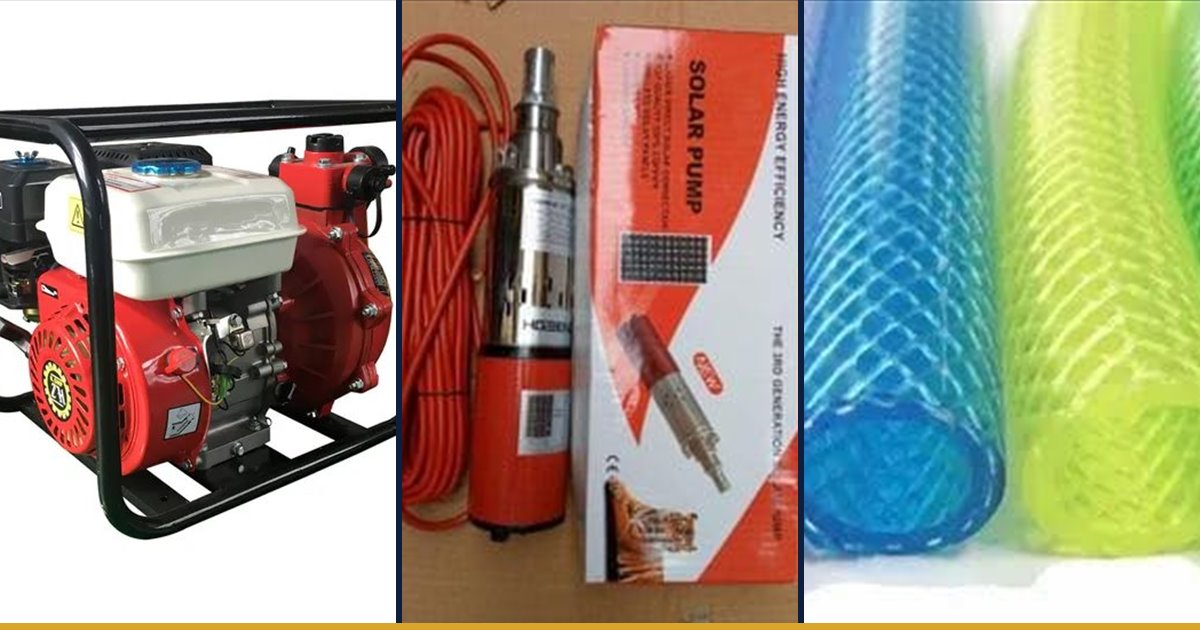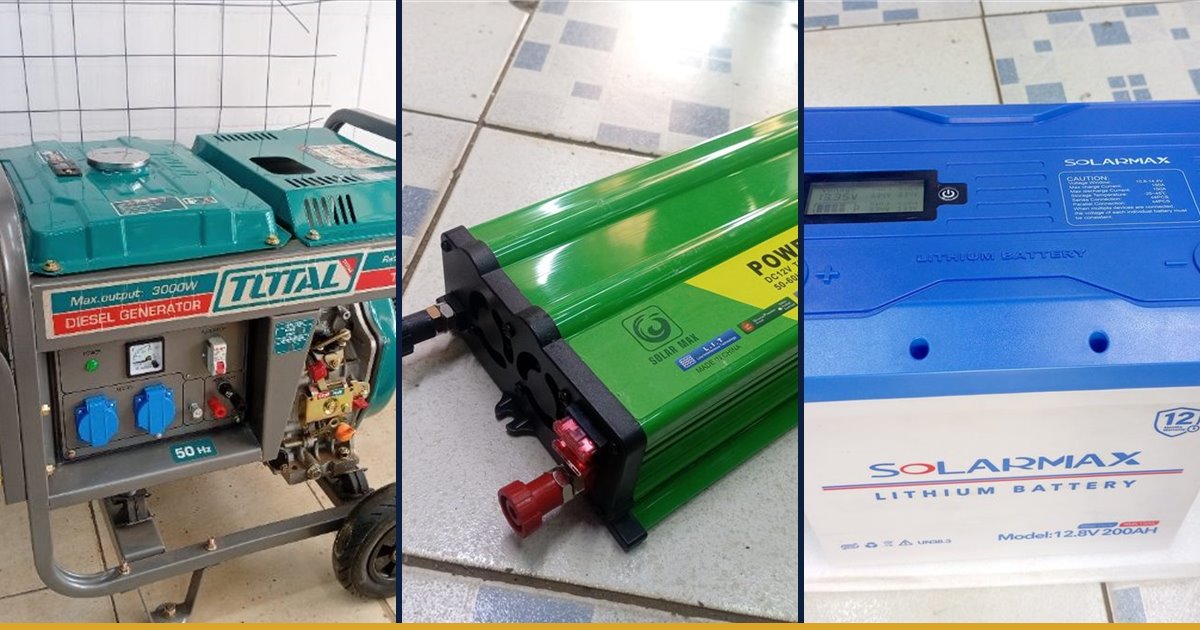
The pump stops on a Thursday. The maize is tasselling, the furrows are dry by noon, and the shop that sold it to you eleven months ago answers politely: no impeller for that model, nobody on the bench who has opened one, no date for the next consignment. The machine was cheaper than the quotation you turned down. This week it costs you the crop.
That is how farm machinery usually fails in Kenya. Not with a dramatic breakage, but with one small part that nobody nearby carries, at the one time of year the machine matters.
The purchase price is the smaller half of the decision. The larger half is what stands behind the machine: the parts, the people who can fit them, and the paperwork that decides who pays when something fails. Judge that half before you hand over money, because afterwards you have no leverage.
What Actually Goes Wrong After the Sale
Ask anyone who has bought equipment for a decade and the same four stories come back.
The orphan machine came in a one-off consignment and was never repeated. Nothing on it interchanges with anything else in the market, so the first failure is terminal: not because the fault is serious, but because the part does not exist in the country.
The seller who is not an engineer has never opened the thing being sold. Plenty are entirely honest and still unable to help: describe a symptom and all they can offer is another machine.
The warranty that evaporates dies on a missing receipt, an invoice with no serial number, a verdict of misuse, or a manufacturer on another continent. It was real. It was never usable.
The failure that lands in peak season is the expensive one. A chaff cutter that jams in a quiet month is an annoyance; the same fault during the three weeks you are conserving fodder is a different number entirely. Machines fail under load, and load arrives when you cannot spare them.
Judge a supplier by their worst day, not their best one. Every seller is helpful while you are holding money. What matters is what they do eighteen months later, when your machine is on their bench and there is nothing left in it for them.
How to Judge a Supplier Before You Pay
You are not really buying a machine. You are buying a relationship with whoever will repair it, and a relationship can be inspected.
Physical premises you can walk into. Standing in a shop tells you what a catalogue cannot: whether spares are behind the counter or in a photograph, and whether the stock is deep or a single sample of everything.
How long they have been trading, and through what. Ask directly, then ask for something checkable: a registration, a branch that has held the same building for years, customers you can call. Any supplier survives a good season. One that has traded through bad ones has already proved what you are betting on.
Spares for that model, on the shelf, today. The most useful question in the purchase, and it has to be specific: show me the impeller and mechanical seal for this pump, or the blades and belt for this chaff cutter. Stocking wear parts is a commitment to the model. Ordering them is a commitment to nothing.
A workshop, and people in it. Ask where repairs happen, then ask to see it. If every repair goes to an unnamed third party, your downtime belongs to someone you will never meet.
Parts sold separately. A seller who will only sell a complete machine has told you what they think of its repairability. Buying a single seal, nozzle or belt across the counter is what keeps a machine alive for a decade.
The machine running under load. A free-running motor proves nothing. A pump should run against a head, a chaff cutter should be fed, a welding plant should hold an arc, an incubator should reach temperature and stay there. Under load is where undersized motors sag and bearings sing.
Warranty in Practice, and What to Get in Writing
A warranty on farm equipment in Kenya almost always means one thing: cover against manufacturing defects for a stated period. It is not insurance against everything that can happen to a machine on a farm.
What it usually does not cover is wear, which is most of what goes wrong: blades, belts, seals, brushes, nozzles, filters, bearings. Nor does it normally survive a pump run dry, the wrong supply voltage, contaminated fuel or an unauthorised repair. That is narrower than most buyers hear, so write the promise down.
Get on the invoice, before you pay: the warranty period and start date, what is covered and excluded, who repairs it and where, whether transport is your cost, and what voids the cover. Add the serial number and photograph the rating plate. A claim without a serial number is a conversation. With one it is a record.
There is also a legal floor beneath whatever the seller offers. Under section 5 of Kenya's Consumer Protection Act, No. 46 of 2012, a supplier is deemed to warrant that goods supplied under a consumer agreement are of reasonably merchantable quality, the implied conditions of the Sale of Goods Act are carried across, and any term purporting to negate them is void. So "goods once sold are not returnable" on a receipt does not extinguish the implied condition.
A right you cannot cheaply enforce is worth less than a supplier who simply fixes it. The law is a backstop, not a plan. Choosing a seller who will answer the phone in year three is the practical version of the same protection.
Our own position is on the FAQ page: a minimum one-year warranty against manufacturing defects, with terms varying by product and manufacturer, which is why we ask you to confirm them at the point of sale.
Parts and Lead Times: the Question That Decides Your Downtime
Every machine has a short list of parts that fail first, and it is rarely a mystery. On a pump it is the mechanical seal, impeller and capacitor. On a knapsack sprayer, seals, check valves and nozzles. On a chaff cutter, blades, belts and bearings.
Ask the supplier to name that list for the model in front of you. One who cannot has not seen the machine come back. Then ask four things: do you hold these now, what does each cost, what is the lead time if you do not, and who pays the freight. Buy the first set with the machine, because a blade bought on the day costs a fraction of the same part bought urgently in a peak week.
This is the honest version of the local versus imported argument. Local manufacture usually means the tooling still exists in the country, part numbers stay stable, and the chain to a replacement is short. Importing is often the only sensible route for complex electronic equipment, which is why our guide to buying an egg incubator deals with imported machines and says so. We make our poultry drinkers, feeders and the Sharpa sprayer range on our own moulding lines in Kenya, and say so when we import instead.
The Real Price: What One Season of Ownership Costs
Compare two quotations on price alone and you are comparing one line out of five. A machine that works a season costs you capital, energy, wear parts, servicing, and the value of the days it is not working.
Energy is usually the largest running line, and it is set when you choose the machine, not later, which is why the diesel, mains and solar decision deserves its own arithmetic in our guides to choosing a water pump and choosing a diesel generator. An underpowered machine that labours through every job burns more fuel and wears faster than the slightly larger one you did not buy.
Downtime is the line nobody writes down and often the biggest. What is an irrigation day worth at flowering? What does a missed hatch cost? Once that daily figure exists, "we can get the part in two weeks" stops being an inconvenience and becomes a quotation of its own.
How to Spot Substandard Equipment on the Shop Floor
Most poor equipment gives itself away in ninety seconds if you know where to look.
Weight and gauge. Lift it. Hollow castings and thin sheet steel on a machine that takes shock loading are the cheapest way to hit a price. Tap a hopper or a guard: you want a dull, solid note.
The rating plate, not the sticker. A proper motor carries a plate with rated power, voltage, frequency, current, speed and an insulation class. A machine whose only claim is a large number on a decal, often a peak figure rather than continuous output, is telling you what it wants you to believe.
Welds, paint and fit. Spatter left in place, paint over mill scale, bolt holes that do not line up, guards held by the wrong fasteners. Where the visible work is careless, the invisible work usually is too.
Bearings and cable. Sealed bearings beat plain bushes on anything that rotates fast. Check too for adequate cable, a proper earth pin and no exposed mains terminals.
On certification, the Kenya Bureau of Standards operates the Standardization Mark as a mandatory scheme for locally manufactured goods, with the mark and permit number shown on the product label, and the voluntary Diamond Mark of Quality for manufacturers meeting a higher bar. Neither proves a unit suits your job, but on a locally made product the absence of a mark is a fair thing to ask about.
The Quotation, the Money and the Handover
A fair quotation is specific enough to argue with. It names the model and specification, gives the unit price and total with the VAT position stated, sets out the warranty terms, prices delivery with a timeline, says whether commissioning is included, lists the likely spare parts with prices, carries a validity period, and shows the supplier's address and company details. Anything naming no model and mentioning no warranty is not a quotation, it is a price. Where prices are published openly, as on our price list, you start from the same number as everyone else.
Pay the company, not a person: the business account or official till, and a receipt matching the invoice with the serial number on it. A deposit is reasonable for equipment made or brought in to order, unusual for shelf stock. Paying the balance on delivery or after commissioning keeps both sides interested until the machine actually runs. Agree in writing who carries transport cost and risk, who offloads, and what happens if it arrives damaged.
Commissioning is not a formality. The machine should be started on your site, on your power, under your load, with the person who will operate it present. Ask for the manual, write the settings somewhere they will not be lost, and agree the first service interval before the installer leaves. Our own technical team installs equipment such as solar water pumps, incubators and milking machines and walks operators through running and basic maintenance.
The Checklist to Take to the Shop
Photograph this and work down it in front of the seller.
- How long have you been trading, and are these your own premises?
- Which parts on this model wear first, and can I see them on your shelf today?
- What does each part cost, and what is the lead time if you are out of stock?
- Will you sell me parts separately, without buying a whole assembly?
- Who repairs this, at which workshop, and how long does a repair take?
- Can I see it running under load before I pay?
- What does the warranty cover, what voids it, and who performs the work?
- Will you write the warranty period and the serial number on my invoice?
- Who trains my operator, and what is the first service interval?
Key Takeaways
- The purchase price is one line out of five. Energy, wear parts, servicing and downtime are decided after the sale, by the supplier you chose.
- The most useful question is specific: show me the wear parts for this exact model, on your shelf, today.
- A seller who will not sell parts separately has told you what they expect the machine's working life to be.
- Insist on seeing the machine run under load. Free running on a bench proves almost nothing.
- A Kenyan warranty normally covers manufacturing defects only. Get the period, exclusions, repair route and serial number in writing.
- Local or imported matters less than the number of links between a broken part and your farm.
Frequently Asked Questions
What should I ask a farm equipment supplier before buying?
Ask which parts wear first on that model, whether they are on the shelf today, what each costs, and the lead time if they are not. Ask who repairs the machine and where, what the warranty covers, and ask to see it running under load. Every one of those answers is a cost you would otherwise meet later.
Does farm equipment in Kenya come with a warranty?
Most reputable suppliers cover manufacturing defects, commonly for a year, and that does not extend to wear, misuse, wrong voltage, contaminated fuel or dry running. Separately, section 5 of the Consumer Protection Act, No. 46 of 2012 deems a supplier to warrant that goods supplied under a consumer agreement are of reasonably merchantable quality, and voids any term that tries to negate it.
Is locally manufactured farm equipment better than imported?
Neither is better in the abstract. Local manufacture usually means a shorter parts chain, stable part numbers and a workshop you can reach. Importing is often the only route for complex electronic equipment such as incubators. The real question is how many links stand between a broken part and your farm.
How do I know if farm equipment is substandard?
Weigh it in your hands, look for a proper motor rating plate rather than a sticker quoting peak power, check welds and paint for spatter and mill scale, and look for sealed bearings rather than plain bushes. On locally manufactured goods the Kenya Bureau of Standards runs the Standardization Mark as a mandatory certification scheme, with the mark and permit number on the product label.
Buying a Machine This Season?
Tell us the job before you tell us the budget: the acreage, the herd, the flock, the head and flow, or the work the workshop has to do. We will quote the machine that fits it, show you the wear parts and what they cost, and say when something is more machine than you need.