A good Friesian cross that gave 18 litres yesterday gives six this morning. She stands with her back arched, refuses her dairy meal, and does not want to walk down the slope to the water point. There is no fever you can feel and no swelling on the udder. A week earlier, a fundi replaced a section of fence beside the feed store, and the offcuts of wire were swept into the corner where the napier is chopped.
That cow may have hardware disease, the farmer's name for what vets call traumatic reticuloperitonitis: a piece of metal swallowed with the feed has worked its way through the wall of the stomach. It is one of the most preventable serious conditions in a dairy unit, and the main preventive tool costs less than a kilogramme of good dairy meal does over a week. Yet many Kenyan farmers have never heard of a rumen magnet, and many who have think it cures the problem after the fact.
This guide explains how cattle swallow metal, why chopped fodder and zero grazing raise the risk, what a rumen magnet does and does not do, when and how it should be given, and the farm habits that keep wire and nails out of the trough in the first place. Diagnosis and treatment of a sick animal are a job for your vet; nothing here replaces a visit.
Why Cows Swallow Nails and Goats Usually Do Not
Goats and sheep are selective feeders. They use their mobile lips to pick leaves and push aside things they do not want. Cattle feed differently. A cow wraps her tongue around a mouthful of grass or chopped fodder and swallows it with very little chewing, planning to bring it back up later as cud and chew it properly then. Anything heavy that comes in with that mouthful, such as a staple, a short length of wire, a nail or a bolt, goes straight down.
The first two compartments of the cow's stomach are the rumen and the reticulum, sometimes called the honeycomb because of the pattern of its lining. Heavy objects sink and collect in the reticulum, which sits low at the front of the abdomen, close behind the diaphragm and only a short distance from the heart. The reticulum contracts strongly and regularly to mix and move feed. A blunt object such as a round stone usually sits there harmlessly. A sharp, straight object such as a nail or a cut end of wire can be pushed point first into and through the wall with each contraction.
Once the wall is pierced, gut contents leak into the abdomen and cause a painful local infection, which is the peritonitis part of the name. If the object keeps travelling forward, it can pass through the diaphragm and reach the sac around the heart, a condition vets call traumatic pericarditis, which is usually far more serious. That is why the timing of prevention matters so much: the useful moment is before a sharp object has started to move.
Why the Risk Is Higher on Kenyan Zero-Grazing Farms
Hardware disease is a problem of farms, not of open grassland, and the way many Kenyan dairy units are run concentrates the risk. Chopped feed is the first reason. When napier, maize stover or sugarcane tops pass through a chaff cutter, any wire or nail that was lying in the cut fodder is chopped into short, sharp pieces and mixed evenly through the feed, where the cow cannot see or avoid it. Our guide to choosing a chaff cutter covers the machine itself; the point here is that whatever goes into the hopper goes into the cow.
The second reason is construction and repair. Zero-grazing units are built and patched with timber, iron sheets, nails, binding wire and barbed wire, often by the same person who later sweeps the feed area. Offcuts of binding wire and bent roofing nails turn up in bedding and fodder for months afterwards. Fence work is the third: old barbed and plain wire left lying in a napier plot or along a road reserve is cut with the grass. Our article on farm fencing posts and wire is a reminder of how much wire a farm handles in a year.
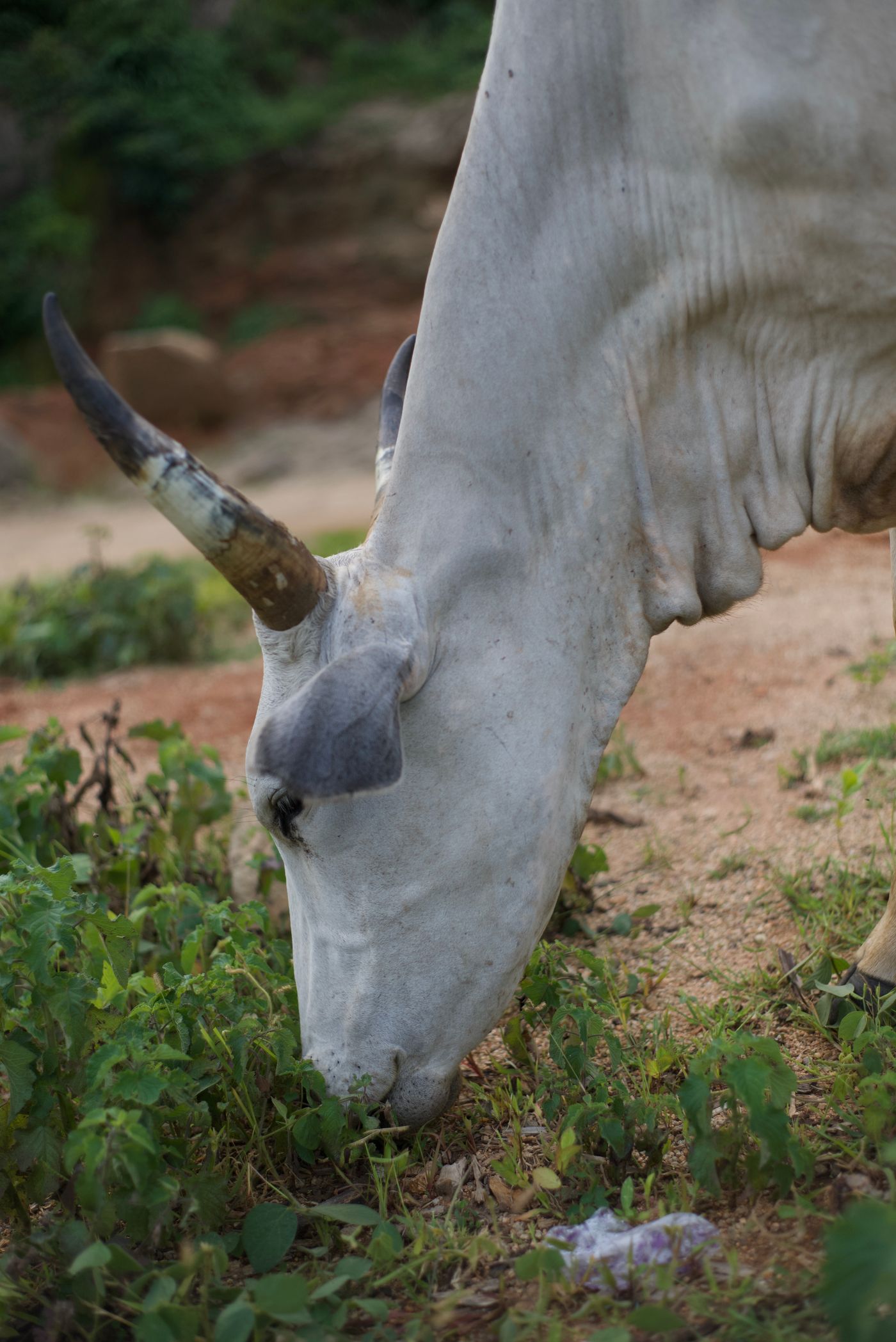
Finally, cattle in peri-urban areas and along roadsides graze among household and building rubbish, as the photo above shows. Plastic bags are a separate and serious problem that a magnet cannot solve, but the same places tend to have bottle tops, wire and nails too.
What a Rumen Magnet Is and What It Does
A rumen magnet, also called a cow magnet, is a smooth, rounded, heavy magnet, usually shaped like a short cylinder or a cage around a magnetic core, sized to be swallowed by an adult bovine. It is given by mouth with a bolus applicator (balling gun). Being heavy, it sinks and settles in the reticulum, exactly where swallowed metal collects, and it normally stays there for the rest of the animal's life.
Once in place, it attracts and holds iron and steel objects such as nails, staples, binding wire and fence wire. Held flat against the magnet, a nail cannot be driven point first into the wall by the contractions of the reticulum. Over the years a magnet in an older cow can collect a surprising cluster of metal, which is often found when cattle are slaughtered.
It is equally important to understand the limits. A magnet only attracts ferrous metal, meaning iron and most steels. It does nothing about aluminium, copper, brass, some stainless steels, glass, stones, plastic bags or twine. It does not pull out an object that has already pierced the wall, and it does not treat infection. It reduces the risk; it does not remove it, which is why the farm habits further down still matter.
When and How a Magnet Is Given
Because a magnet prevents rather than cures, it is most useful given early, before the animal has had years of chances to pick up metal. Many dairy farmers give one to heifers as they approach first breeding or before they join the milking herd, and to any bought-in adult that has no record of having one. Bulls kept for breeding benefit for the same reason. Calves are too small for a standard adult magnet.
A single magnet normally lasts the animal's lifetime, so a record matters: write the date in the cow's card or your herd book, and note it on any sale. You can confirm a magnet is already present with a compass held against the lower left side of the chest, behind the elbow; vets also use metal detectors. If you are not sure, ask your vet before giving a second one.
Giving the magnet is a matter of correct restraint and the right applicator. The animal is held in a crush or firmly restrained with the head raised a little, the bolus applicator is loaded, passed gently over the back of the tongue, and the magnet released so that the animal swallows it. Done badly, a bolus can injure the throat or be pushed into the windpipe, so if you have not done it before, ask your vet or animal health assistant to give the first ones and show you how. Our guide to livestock handling and vet equipment covers crushes and restraint.
Signs That Should Make You Call the Vet
Hardware disease often starts suddenly and is easily confused with other problems, such as indigestion, milk fever or mastitis, which is why a vet's examination matters. Typical warning signs reported by veterinary references include:
- A sudden, sharp fall in milk yield and appetite, often over a day or two.
- An arched back and a tucked-up belly, with the cow standing still rather than moving about.
- Reluctance to walk, especially downhill, and a grunt or groan when made to move or lie down.
- Standing with the front elbows turned out, as if to ease pain at the front of the abdomen.
- Little or no cudding and reduced dung.
- A raised temperature in the early stage, which a rectal thermometer will show.
Any one of these alone can have other causes. Together, especially after recent building or fence work, they are a reason to phone the vet the same day and to mention the work. A daily milk record helps here: a sudden fall is visible the morning it happens, as we explain in our article on keeping dairy cows productive through the rains.
Keeping Metal Out of the Feed in the First Place
The magnet is the last line of defence. These habits are the first, and they cost almost nothing.
| Where metal comes from | What to do |
|---|---|
| Building and roof repairs near the unit | Collect nails and wire offcuts in a bucket as you work; sweep and walk the area with a magnet bar or strong magnet afterwards. |
| Fence repairs | Coil and remove old wire; never leave cut ends in fodder plots or along the cut-and-carry route. |
| Chaff cutter area | Keep it a metal-free zone; shake out each fodder bundle before it goes into the hopper. |
| Bales tied with wire | Cut and remove wire ties away from the trough and count the pieces. |
| Feed sacks and stores | Remove staples and wire twists from sacks before tipping feed into the trough. |
| Roadside and dumpsite grazing | Avoid where possible; plastic and metal rubbish build up along roads and near homes. |
Some farmers fix a strong bar magnet across the outlet chute of a chaff cutter or feed mixer so that metal pieces are caught as the feed passes. It is a sensible extra, provided you clean it after each session and it does not obstruct the outlet or reach the moving parts. Our zero-grazing unit guide shows how to lay out a feed area that is easy to keep clean.
Is It Worth It? The Simple Sum
A rumen magnet is one of the cheapest items in a dairy kit. At the time of writing, the Fuga price list shows the rumen magnet at KSh 250 (stock code 6378); check the site for current prices before you travel. Set that against what a case of hardware disease can cost: lost milk during the illness, the vet's visits and medicines, and in serious cases a cow that has to be culled at a fraction of her value as a milker. You do not need precise figures to see that a one-off cost, given once per animal, is small next to any one of those losses.
It is not a reason to skip the housekeeping. A magnet catches iron and steel; it cannot catch copper wire, glass or the plastic bags that kill roadside cattle every year. The farms that rarely see hardware disease do both: they give heifers a magnet and they keep the feed area clean.
To summarise: cattle swallow feed with little chewing, chopped fodder spreads any metal evenly through the ration, and sharp iron objects in the reticulum can pierce through towards the heart. A rumen magnet given early, ideally to heifers before they join the milking herd and recorded on the cow's card, holds iron and steel safely in place for life. Combine it with a metal-free feed area and call your vet promptly when a cow suddenly drops milk, arches her back and will not walk. Rumen magnets and the rest of your dairy and livestock kit are available at any Fuga branch in Eldoret, Nakuru and Nairobi, or on WhatsApp 0716 961 018.
Key Takeaways
- Cattle swallow feed with little chewing, so nails, staples and wire in the ration go straight down and collect in the reticulum.
- Chaff cutters chop any wire in the fodder into short sharp pieces and spread them through the whole ration, which raises the risk on zero-grazing farms.
- A rumen magnet given by mouth settles in the reticulum for life and holds iron and steel flat so it cannot pierce the wall.
- Magnets do not catch aluminium, copper, glass, stones or plastic, and they do not cure a cow that is already sick.
- Give magnets early, ideally to heifers before they join the milking herd, record the date, and ask your vet to show you how the first time.
- A sudden milk drop, an arched back and reluctance to walk downhill, especially after building or fence work, are reasons to call the vet the same day.
Frequently Asked Questions
What is hardware disease in cows?
It is the farmer's name for traumatic reticuloperitonitis. A sharp metal object such as a nail or piece of wire is swallowed with feed, settles in the reticulum, and is pushed through the wall by the stomach's contractions. This causes a painful infection in the abdomen and, if the object reaches the heart sac, a much more serious condition.
Does a rumen magnet cure hardware disease?
No. A magnet is a preventive tool. It holds iron and steel in place before they start to move, but it cannot pull out an object that has already pierced the wall or treat infection. A cow showing signs should be examined by a vet, who decides on treatment.
When should I give my cow a rumen magnet?
Many dairy farmers give one to heifers around first breeding or before they join the milking herd, and to any bought-in adult with no record of a magnet. One magnet normally lasts for life. Record the date on the cow's card so you do not give a second one by mistake.
How do I know if my cow already has a magnet?
Hold a compass against the lower left side of the chest just behind the elbow; a magnet in the reticulum will move the needle. Vets can also check with a metal detector. If in doubt, ask your vet before giving another.
Can a magnet stop plastic bags harming my cattle?
No. Magnets attract only iron and steel. Plastic bags, twine, glass, stones, aluminium and copper are not held. The only protection against those is keeping cattle away from rubbish and keeping the feed area clean.