
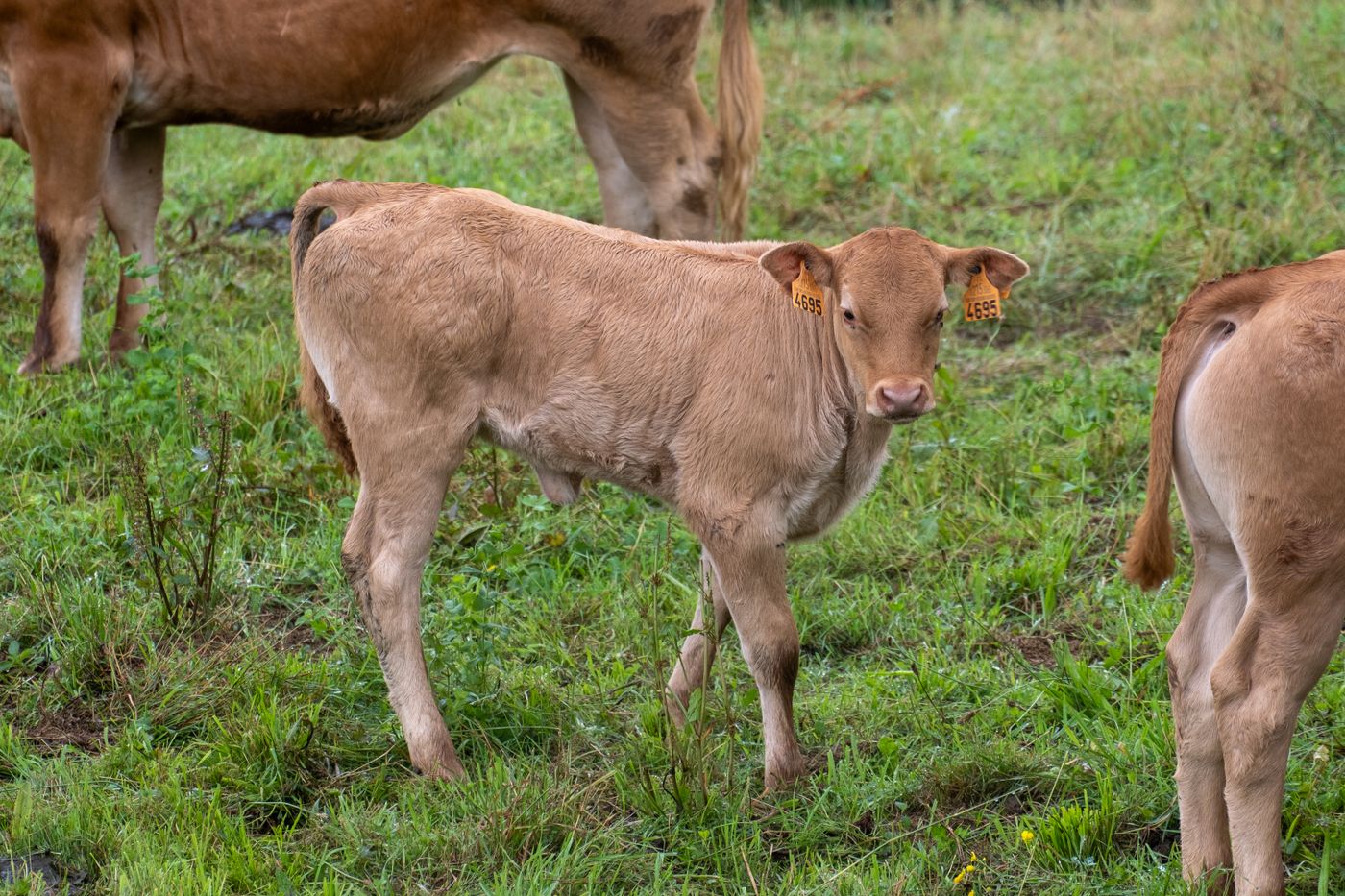
Ask a farmer with twelve cows which one calved last, and you will often get a description rather than a number: the brown one with the white patch, second from the end. Ask what she weighed at her last deworming, and the answer is usually an estimate. Ask what dose she got, and the honest answer is often whatever the bottle said for a medium cow.
Every one of those gaps costs money quietly. Untagged animals cannot be tracked, so the poor performers keep eating. Unweighed animals get guessed doses, and guessed doses are the single largest driver of drug resistance on smallholder farms. Unrecorded treatments mean withdrawal periods get forgotten and residues end up in milk you sell.
The equipment that closes those gaps is not expensive. A handful of hand tools plus a scale turns a herd from a collection of animals into a managed enterprise. This guide covers what each tool does, how to use it correctly, and the routine that ties them together so nothing gets missed.
Identification: You Cannot Manage What You Cannot Name
An ear tag is the cheapest management tool on any farm. It converts an animal into a record: date of birth, dam, treatments, calving dates, milk yield, weight gain. Without it, all of that lives in memory, and memory quietly favours the animals a farmer likes.
Tags are applied with an applicator, a plier-type tool that pushes the male pin through the ear and locks it into the female button. Placement is the part people get wrong. The tag belongs in the middle third of the ear, between the cartilage ribs, roughly a third of the way out from the head. Too close to the base risks the large blood vessels and leaves the tag rubbing the head; too close to the tip is thin tissue that tears out on a fence or a thorn bush.
Three habits prevent almost every tagging problem. Disinfect the applicator pin between animals, because you are making a hole in living tissue and moving down a line of stock. Load the tag so the number faces the direction you will read it from, usually visible when the animal faces you at the feed trough. And tag young, when animals are easy to restrain and the ear heals fast.
Keep a written or phone-based register that starts with the tag number. The tag itself is worthless without the record it points to, and the register is what later tells you which cow is paying for her feed and which is not.
Weighing: The Number That Makes Every Dose Correct
Most livestock medicines, especially dewormers, are dosed by body weight. Guess the weight and you guess the dose, and the two errors are not symmetrical. Overdosing wastes product and, with some compounds, risks toxicity. Underdosing is worse in the long run: it exposes the parasite population to a sublethal dose, which is precisely the pressure that selects for resistant worms. Farms that habitually underdose breed their own resistance, and then blame the drug.
A digital weighing scale or platform is the clean answer for small stock, calves and pigs, and it doubles as your growth-rate meter: weigh at the same point in the routine each month and the numbers tell you which animals are converting feed and which are passengers. For carcasses, feed bags and hanging weighing, a crane scale with a hook does the same job in a shed or a slaughter area.
Where a scale is genuinely out of reach for mature cattle, a girth tape gives a far better estimate than eyeballing, because heart girth correlates strongly with body weight. It is a compromise, not an equal, but it beats the guess by a wide margin. If you must dose a mixed group off estimates, split the group and dose to the heaviest animal in each split rather than the average, so nobody is underdosed.
Drenching and Injecting: Technique Beats Product
A drenching gun delivers a measured volume of liquid into the mouth. The technique that matters is simple and often ignored. Restrain the head with the muzzle roughly level, never tilted steeply upward, because a raised head opens the path into the windpipe. Insert the nozzle over the back of the tongue, aiming toward the throat rather than straight down, and deliver steadily so the animal can swallow. Liquid that goes into the lungs causes aspiration pneumonia, which kills animals days after a routine deworming that looked fine at the time.
Check the gun's calibration before each session by discharging into a measuring cylinder or a marked syringe. A worn gun that reads 10 millilitres and delivers 8 quietly underdoses the entire herd. Clean the gun after use, because residue degrades seals, and store it dry.
An automatic syringe, the self-refilling type that draws from a bottle, is the right tool for vaccinating a group. It removes the fumbling of drawing up each dose and keeps volumes consistent. Two rules protect the animals and the product: change needles regularly rather than working through a whole group on one blunt needle, and follow the route the label specifies, since subcutaneous and intramuscular products are not interchangeable.
Record every treatment against the tag number, with the date, the product and the withdrawal period. Withdrawal is a legal and food safety matter, not a formality: milk and meat from treated animals must be held back for the stated period. Your vet or animal health officer sets the actual products and schedules; the equipment simply makes sure the plan is delivered accurately.
Castration and Disbudding: Bloodless Tools, Done Properly
A burdizzo is a heavy clamp that castrates without breaking the skin. It crushes the spermatic cord through the scrotal wall, cutting off the blood supply to the testis, which then regresses. Because the skin stays intact, the infection and fly-strike risk of open surgical castration largely disappears, which matters in hot and dusty conditions.
Used carelessly, it fails or injures. Crush one cord at a time, never both at once across the middle, so the blood supply to the scrotum itself is preserved. Position the jaws across the cord where you can feel it under the skin, close firmly and hold for several seconds, then repeat on the other side at a slightly different height. Check the tool's jaws meet cleanly before you start; a burdizzo with bent or worn jaws crushes incompletely and leaves a bull that is still fertile and now injured.
Elastrator pliers apply a tight rubber ring, and their window is narrow: they are appropriate for lambs and kids in the first days of life, not for older animals where the pain and tetanus risk rise sharply. Tetanus is a real hazard with rings, so discuss vaccination with your vet before you use them.
Rumen Magnets and Hardware Disease
Cattle sort feed poorly. They swallow what is in the forage, and in Kenya that regularly includes wire from old tyres, fencing offcuts, nails and staples that end up in chopped fodder or silage. Heavy metal objects settle in the reticulum, and a sharp piece can penetrate the wall, causing the condition vets call traumatic reticuloperitonitis, or hardware disease. It presents as a cow that goes off feed, stands with an arched back, drops milk yield and resists being handled around the abdomen. Treatment is difficult and the outcome is often poor.
A rumen magnet is a smooth cylindrical magnet given orally, usually with a balling gun, which settles in the reticulum and holds ferrous objects against itself for the rest of the animal's life. It is one of the highest-value shillings on a dairy farm because it prevents a condition that can end a productive cow's career. Give it to mature animals, and pair it with the obvious prevention: keep wire, nails and metal debris out of the feed area, and check chopped fodder before it goes into the chaff cutter.
Water, Feeding and Moving Stock Safely
Handling equipment is not only about procedures. Automatic drinking bowls, whether cast iron for cattle or the smaller stainless and plastic types for goats and sheep, deliver water on demand as the animal presses the paddle. This matters more than farmers expect for dairy: a lactating cow drinks a large volume every day, and water restriction shows up in the milk can before it shows up anywhere else. Bowls also cut the labour and spillage of carrying buckets, and they keep water cleaner than an open trough.
Calf bottles with a correctly sized teat control the speed a calf drinks, which matters because milk gulped too fast can spill into the rumen instead of the abomasum and cause scours. Wash bottles and teats after every feed; milk residue is an excellent bacterial culture medium, and a dirty teat undoes good colostrum management.
For moving stock, transportation crates for poultry and small animals need genuine ventilation and enough floor space that nothing is crushed or overheated in a matatu or pickup on a hot afternoon. Load lightly, secure the crates so they cannot slide, and move animals early or late in the day rather than at midday. Carry straps make one-person handling of awkward loads safer.
The Routine: One Pass Through the Crush
Individual tools do not create good management; the routine does. The efficient pattern is to handle each animal once and do everything in a fixed order, because every extra pass through the crush costs stress, time and injury risk to both animal and handler.
Build the routine around a calendar rather than around crises. Deworming intervals, vaccination dates, hoof checks, weighing days and breeding records all belong on a wall chart in the dairy or a recurring reminder on a phone. The farms that get ahead are rarely the ones with the most expensive equipment; they are the ones where a cheap set of tools gets used on the same day every month.
Safety deserves the last word. Mature bulls are dangerous even when familiar, and a bull ring exists to give a handler leverage, not to be a lead point on its own: use a halter or a pole with the ring, never a rope on the ring alone. Work animals in a solid crush or race with an escape route for the handler, keep children out of the working area, and stop when an animal or a person is losing their temper. Nearly every serious livestock injury on a farm happens in a rushed handling session at the end of a long day.
Key Takeaways
- Tag every animal and keep a register keyed to the tag number. An untagged animal cannot be tracked, compared or culled on evidence.
- Place tags in the middle third of the ear between the cartilage ribs, and disinfect the applicator pin between animals.
- Weigh before you dose. Underdosing selects for resistant worms, which is the more expensive error over time.
- If no scale is available, use a girth tape, or split groups and dose each split to its heaviest animal.
- Drench with the head level, over the back of the tongue, delivered steadily. A raised head risks fluid entering the lungs.
- Calibrate drenching guns and change needles regularly. Worn equipment underdoses an entire herd silently.
- Use a burdizzo one cord at a time, and treat castration age, method and pain relief as veterinary decisions.
- A rumen magnet is cheap insurance against hardware disease in cattle fed chopped fodder.
- Handle each animal once: restrain, identify, weigh, treat, record. Build the schedule into a calendar, not a crisis response.
Frequently Asked Questions
Where exactly should a cattle ear tag be placed?
In the middle third of the ear, between the cartilage ribs, roughly a third of the way out from the head. That position has enough tissue to hold the tag, avoids the larger blood vessels near the base, and is less likely to tear out than the thin tissue near the tip. Disinfect the applicator pin between animals.
Why does weighing matter before deworming?
Because dewormers are dosed by body weight. A guessed weight that is too low delivers a sublethal dose, which lets the toughest worms survive and breed, building resistance on your farm. Weigh the animal, or split the group and dose each split to its heaviest member.
Is a burdizzo better than a rubber ring for castration?
They suit different ages and species. A burdizzo crushes the cord without breaking the skin, which lowers infection and fly-strike risk and works on larger animals. Rubber rings applied with elastrator pliers are for lambs and kids in the first days of life, and carry a real tetanus risk. Agree the method and timing with your veterinary officer.
What does a rumen magnet actually do?
It sits in the reticulum for the animal's lifetime and holds swallowed ferrous objects such as wire and nails against itself, preventing them from penetrating the stomach wall and causing hardware disease. It is given orally to mature cattle, usually with a balling gun, and is a low-cost way to protect a valuable dairy cow.
Which handling tools does Fuga stock, and what do they cost?
We stock ear tags and applicators, burdizzos, elastrator pliers and rings, drenching guns, automatic syringes, rumen magnets, bull rings, weighing and crane scales, calf bottles, drinking bowls and transportation crates. Prices move with specification and stock, so send your herd size and species on WhatsApp to wa.me/254716961018 or call 0734263958 for a current quote, or visit any branch. If you are building a dairy unit from scratch, start with our guide to the zero grazing dairy unit.