
Walk into a broiler house at two on a hot afternoon and listen. If the feeders are quiet and the birds are sitting with wings held away from their bodies, beaks open, breathing fast, you are watching money evaporate. Nobody panics, because nothing is dying. But every hour a bird spends panting is an hour it is not eating, and a broiler that does not eat does not grow.
Most Kenyan poultry keepers plan carefully for cold, because cold kills chicks visibly and quickly. Far fewer plan for heat, stale air and damp litter, the quiet thieves that take their cut every day. Temperature, airflow and humidity are not three separate problems: they are one system, and the equipment that manages them only pays off when you run it as one.
This guide covers why heat stress costs more than most farmers think, what an exhaust fan does that an open window cannot, how brooding heat sources honestly compare on running cost, how to zone heat so chicks choose their own comfort, what humidity does to litter and lungs, and a starter climate kit by flock size.
Heat Stress: The Loss You Never See on a Dead Bird Count
A chicken has no sweat glands. Its main way of dumping heat is panting: rapid breathing that evaporates water from the airways. Panting works, but it costs the bird water, energy, and appetite, because digesting feed generates internal heat, so a hot bird protects itself by eating less. That is the whole mechanism of the loss: hot birds voluntarily cut their own feed intake, and growth follows feed.
The timing makes it worse. Heat bites hardest in the final weeks of a broiler cycle, exactly when birds are heaviest, stocking feels densest, and every bird is a small heater warming its neighbours. A house that felt fine with two-week-old chicks can be an oven with market-weight birds in it. Hot layers respond in their own way, laying fewer and thinner-shelled eggs.
What the Air in a Poultry House Actually Has to Do
Ventilation has three jobs, and only one of them is cooling. First, it brings in oxygen and removes the carbon dioxide a packed house of birds breathes out. Second, it removes moisture: every bird exhales water vapour all day, droppings add more, and drinkers spill their share. Third, it removes ammonia, the sharp-smelling gas released as droppings break down in the litter. Ammonia sits low, right at bird level, where it irritates eyes and airways and leaves birds more vulnerable to respiratory trouble. A practical field check: crouch to knee height for a minute. If your own eyes sting or the smell is strong down there, your birds are living in it full time.
An open window is not a ventilation system, it is a hole. It moves air only when the wind decides to blow, in whatever direction and volume the weather chooses. On a still, humid morning, an open-sided house can sit in its own stale air for hours. An exhaust fan is different in kind, not just in degree: by pulling air out of the house it creates a slight pressure difference, which forces fresh air in through the openings you choose. That gives you three things a window never will: a guaranteed air exchange whatever the weather, control over where fresh air enters so it sweeps across the house instead of short-circuiting straight back out, and the ability to schedule airflow to the time of day that needs it.
Circulation and Extraction Are Two Different Jobs
Fan buyers often treat all fans as interchangeable. They are not. An extraction (exhaust) fan replaces air: it throws stale, moist, ammonia-laden air out of the building and pulls fresh air in. A circulation fan moves air around inside the house: it creates air speed over the birds, which strips heat off them the way a breeze cools you, and it mixes air layers, pushing warm air down from the roof space in cool weather and helping litter dry evenly.
Neither can do the other's job. A circulation fan in a sealed, smelly house just stirs the same ammonia faster. An exhaust fan running flat out over young chicks throws away heat you paid for. Mature broilers on a hot afternoon usually want both: extraction to bring in fresher air, circulation to move it across the birds. One maintenance note worth its own sentence: a cracked or chipped fan blade unbalances the motor and eats bearings, so replace blades early. Fuga stocks exhaust fans, circulation fans and replacement fan blades in the livestock and poultry range.
Brooding Heat Sources, Compared Honestly
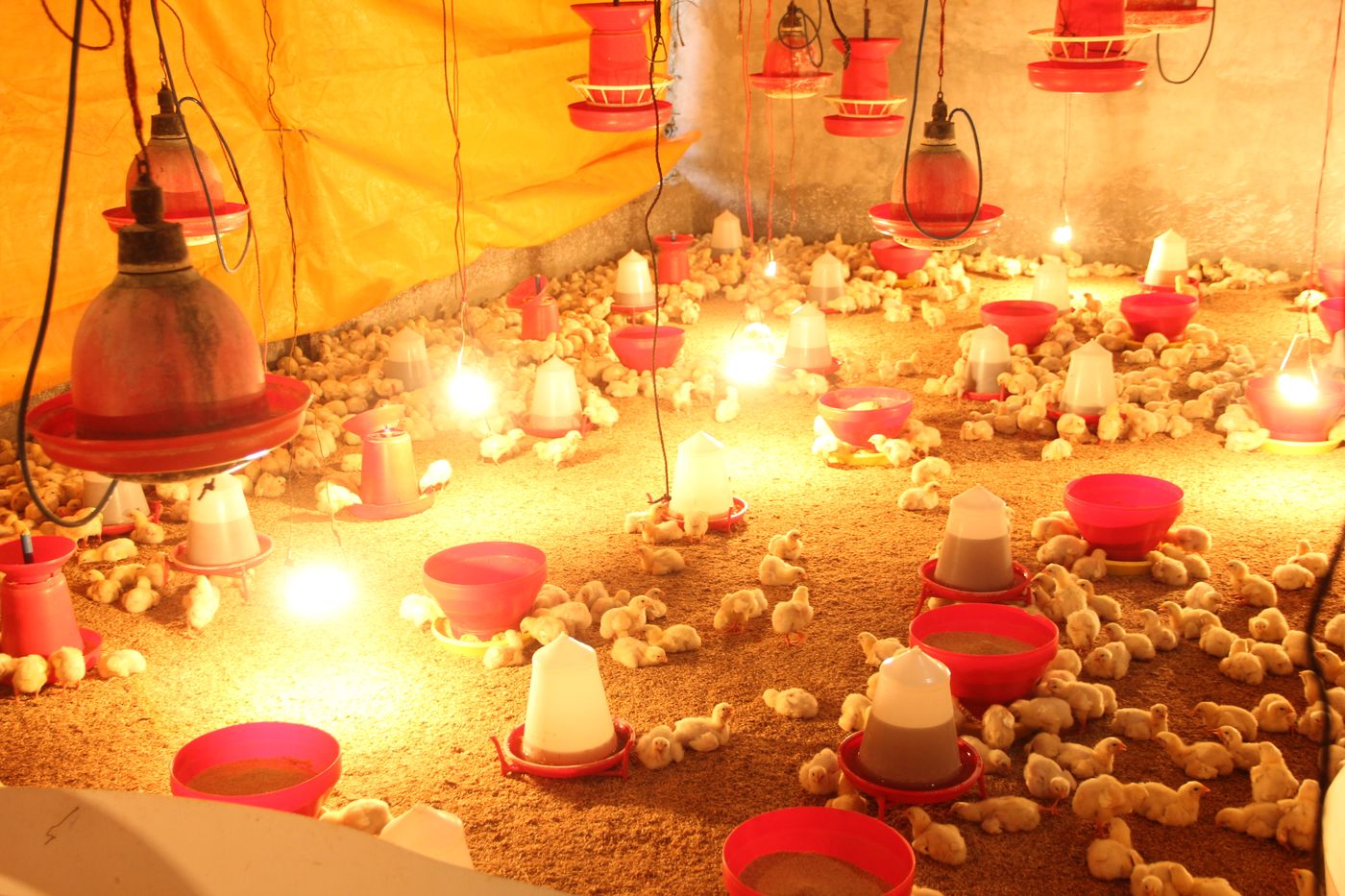
For the first weeks of life, chicks cannot hold their own body temperature and you must supply heat. Kenyan farms use three main sources, and each has a distinct logic.
Gas brooders burn LPG under a canopy that radiates heat down to chick level, which is efficient because it warms the zone the chicks occupy rather than the whole airspace. One unit covers a large group of chicks, and crucially, gas does not care what the power grid is doing. The Damly gas brooder comes in automatic and manual versions: the automatic modulates the flame against a thermostat, while the manual is simpler and cheaper but needs you to adjust it as the weather swings. THD and umbrella-type gas brooders follow the same canopy principle. Your running cost tracks the local price of an LPG refill and, just as much, how well your house holds heat.
Electric brooder heaters are clean and controllable: no open flame, no cylinder handling, and paired with a thermostat they hold a set zone temperature with no manual tending. Their running cost follows your electricity tariff and the hours the element runs, and their weakness is obvious: they are only as reliable as your power supply.
Infrared heat bulbs in ceramic holders are the entry point: cheap to buy, simple to hang, ideal for small flocks or as a supplementary warm spot. Each bulb only warms a small circle, so they scale poorly, and filament bulbs fail without warning, so always hold spares. Use ceramic holders, never plastic: a heat bulb will cook an ordinary plastic fitting.
On running cost, be suspicious of anyone who quotes you one universal answer. Gas prices, electricity tariffs and outage patterns differ by county and by month, so the honest comparison is local: work out what a cylinder lasts you versus what the meter shows for the same weeks of brooding, and price the risk of a power cut into the electric option. What is universal is this: whichever fuel you burn, the cheapest heat is the heat you keep. Low brooder canopies, side curtains, dry litter and draught control cut the bill for every heat source equally.
Zone the Heat and Let the Chicks Choose
The biggest brooding mistake is trying to heat the whole space to one perfect temperature. You will never hold it, and you do not need to. Instead, create a warm zone under the brooder and leave the surrounding area cooler, with feed and water in between. Healthy chicks are excellent judges of their own comfort: they move to the warmth when they need it and away when they do not, provided you give them somewhere to go.
This is why behaviour, not the thermometer, is the final word. The thermometer tells you the air temperature at one point; the chicks integrate everything, including draughts, floor temperature and their own age. Read the pattern from above:
For actual temperature targets, use the week-by-week schedule in the management guide for your breed, from your hatchery or breed supplier: targets differ between breeds and drop as chicks feather up, so no single number belongs in every house. Treat the thermometer as your cross-check and the birds as the verdict, and make your final inspection after dark, because night is when houses go cold and draughts show themselves. Our chick brooding guide covers the full first eight weeks in detail.
Humidity: The Lever Farmers Forget They Are Holding
Humidity gets almost no attention in small poultry operations, yet it drives two things you care about deeply: litter quality and respiratory comfort. When the air is too damp, litter stops drying, and wet litter is a factory for trouble: it releases far more ammonia, it cakes into hard mats, and it burns footpads. Damp air also blunts the birds' own cooling, because panting works by evaporation, and evaporation slows as humidity rises. A hot, humid afternoon is therefore far more dangerous than a hot, dry one at the same temperature.
Air that is too dry has its own costs, mostly during brooding: dust rises, and day-old chicks lose moisture faster than they can afford. In dry-season brooding, especially in the Rift Valley and other dry highland areas, a humidifier in the brooder house takes the harsh edge off the air while the heaters run. The rest of the year, your humidity tools are simpler: fix leaking drinkers the day they start dripping, keep litter deep and stirred, and let the exhaust fan carry moist air out before it settles. Our feeders and drinkers guide covers drinker choice and placement, which is where most wet litter actually starts.
Sensors and Controllers Beat Vigilance
Most keepers judge temperature by hand, at adult chest height, at the hour they happen to visit. Chicks live at floor level, and the hours that hurt are the ones when nobody is standing in the house: the 3 a.m. cold snap, the mid-afternoon spike. A thermo-hygrometer hung at bird height answers both problems for the price of a few chicks: it reads temperature and humidity where the birds actually live, and models with min-max memory show you what happened overnight, which is the single most revealing number in the house.
The step beyond measuring is controlling. A thermostat or climate controller switches heaters and fans against the thresholds you set, every hour of every day, without getting tired or travelling for a funeral. Consistency is the whole point: birds are stressed less by the wrong temperature than by temperature that swings. Sensors, controllers, fans and brooders are all on our current price list, and prices move with stock, so confirm figures on WhatsApp before you travel.
Plan for the Power Cut Before It Happens
If you brood with electricity anywhere on the Kenyan grid, the question is not whether the power will fail during a brooding cycle, but whether it fails on a cold night in week one. Small chicks lose body heat fast, and a long outage in the first week can undo the whole batch. So plan it like the routine event it is. If outages are common in your area, make gas your primary brooding heat and let electricity handle lighting and fans. If electricity is your primary heat, keep a manual gas brooder and a full spare cylinder as standby, and know how long changeover takes you in the dark. Drop the side curtains the moment power fails, because the house itself is your heat store. And resist the temptation of an open charcoal jiko among chicks: between the fumes and the fire risk in dry litter, it is a bad trade for a few hours of warmth.
A Starter Climate Kit by Flock Size
Every house, altitude and season is different, so treat this as a starting point to adapt, not a prescription. For a small flock of up to about 100 chicks, infrared heat bulbs in ceramic holders, plus spare bulbs, a thermo-hygrometer at bird height, and disciplined curtain management will carry you through brooding; add a small circulation fan for hot afternoons once the birds are grown. For a medium flock of a few hundred birds, step up to an umbrella or manual gas brooder or an electric brooder heater, keep the thermo-hygrometer, and add a circulation fan and, for dry-season brooding, a humidifier. For larger flocks from around 500 birds upward, automatic gas brooders such as the Damly earn their keep, and the house itself needs engineering: exhaust fans matched to house size with proper inlets, circulation fans down the length, a controller with sensors, and spare fan blades and bulbs on the shelf before you need them.
If you are still setting up the house itself, start with our guide to starting a poultry farm in Kenya, which covers housing, equipment and stocking decisions in order.
Key Takeaways
- Heat stress cuts feed intake and growth quietly; plan for heat with the same seriousness you plan for cold.
- Ventilation has three jobs: oxygen in, moisture out, ammonia out. An exhaust fan guarantees all three; an open window only gambles on wind.
- Extraction fans replace air; circulation fans move it over the birds. Grown broilers in hot weather usually need both.
- Gas brooders are grid-independent with wide coverage; electric heaters are precise but fail with the power; infrared bulbs suit small flocks. Compare running costs with your own local gas and tariff numbers.
- Zone the heat and let chicks choose: piling means cold, edge-hugging means hot, one-sided bunching means draught, even spread means right.
- Wet litter means more ammonia, footpad burns and disease pressure; manage it with drinker discipline, litter care and airflow.
- A thermo-hygrometer at bird height with min-max memory beats any amount of guesswork; a controller beats vigilance.
- Treat power cuts as routine: gas standby, spare cylinder, curtains down, and never an open charcoal burner among chicks.
Frequently Asked Questions
How do I know if my chicks are too hot or too cold?
Watch the spread, not the thermometer. Chicks piled tightly under the heat source and cheeping loudly are cold; chicks pressed to the edges of the brooder area, panting with wings out, are hot; chicks bunched away from one side are avoiding a draught. An even, quietly active spread means the zone is right. Check the pattern again at night, when houses are coldest.
Are gas brooders cheaper to run than electric brooders in Kenya?
It depends on your local LPG refill price, your electricity tariff and how often your power fails, so run your own comparison over one brooding cycle. What tilts many farms toward gas is reliability: a gas brooder keeps working through a blackout. Whichever you choose, insulation, low canopies and draught control cut the bill for both.
Can I just open windows instead of buying an exhaust fan?
Open sides and curtains are useful, but they only move air when the wind blows, and you cannot control the volume or the path. An exhaust fan creates a pressure difference that guarantees air exchange in still weather and pulls fresh air along the route you choose. For a small flock, curtains may be enough; as stocking grows, so does the case for a fan.
Why does my poultry house smell of ammonia, and what should I do?
Ammonia comes from droppings breaking down in damp litter, so the fix is drier litter and more air exchange: repair dripping drinkers, stir and top up litter, and run extraction ventilation so moist air leaves the house. If birds show ongoing watery eyes, wheezing or swollen faces, involve a vet; climate fixes prevent trouble but do not treat sick birds.
What do fans, brooders and sensors cost at Fuga?
Prices move with stock and the exchange rate, so check the price list and confirm current figures on WhatsApp at wa.me/254716961018 or call 0734263958. Our team will size fans and brooders to your house and flock, or you can visit any branch in Eldoret, Nakuru, Nairobi, or the Coast.