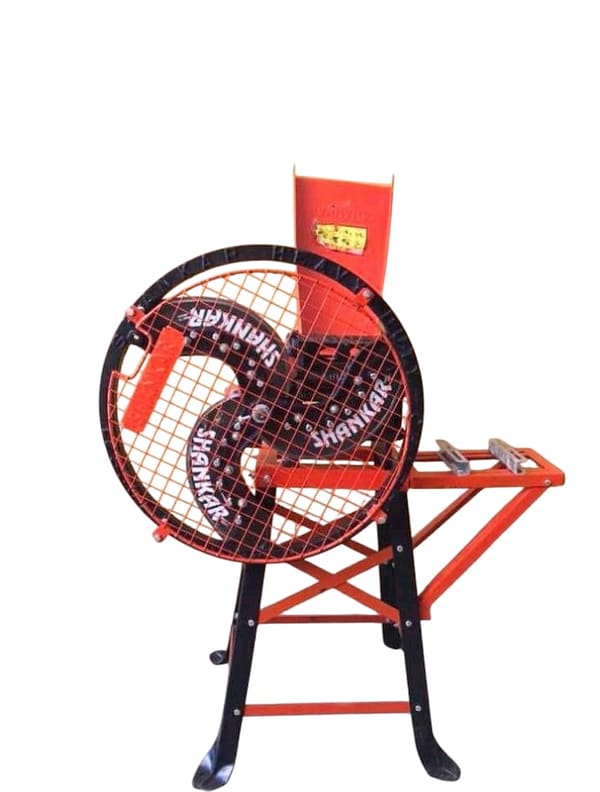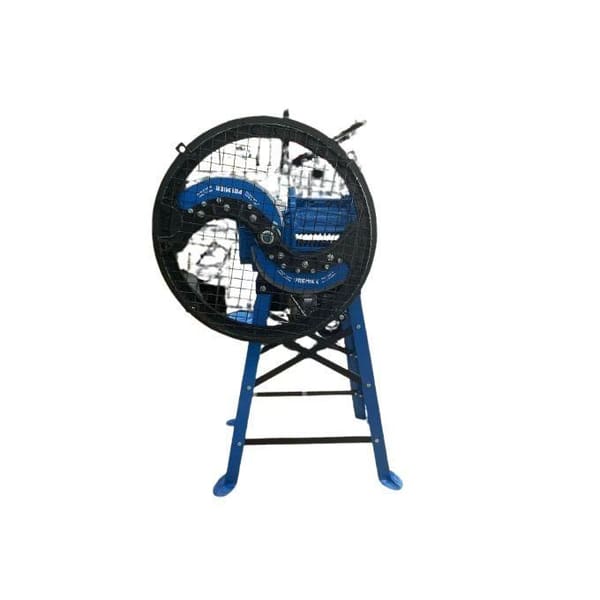
Whether a chaff cutter is made in a jua kali workshop or in a factory, check the same six things before you pay: the blades, the guards, the motor or engine rating on its plate, the spare parts, the warranty and a short test run. A written answer on each is worth more than a lower price you cannot back up.
Many farmers search for the cheapest chaff cutter, and in Kenya that often leads to a local fabricator. Good fabricators exist and some machines from them work for years. This guide is not about which kind is better. It is a checklist that protects you with any seller, including Fuga, because a chaff cutter is a machine with fast blades that you will feed by hand every day.
What are the main differences between jua kali and factory-made cutters?
In general terms, a factory-made machine is produced to a repeated design, so a part from one unit fits another. A one-off fabricated machine is built to the maker's own measurements, so the shaft, the blades and the gears may not match any catalogue. That difference matters later, when a blade wears or a gear chips, more than it matters on the day you buy.
| Check | Why it matters | What a good answer sounds like |
|---|---|---|
| Blades | They do the cutting and wear first | Seller can say what steel they use, how to sharpen them and where to buy a spare |
| Guards and feed opening | The fast moving parts are near your hands | A fixed cover over the drive, belts and gears, and a feed opening that keeps hands away from the blades |
| Motor or engine plate | The rating must suit the machine and your power | A plate with the rating and supply type, and the seller can say whether the machine is sold with or without it |
| Spare parts | A stopped machine means no feed | Parts for this model on the shelf or one visit away, not "we will make one" |
| Warranty | It shows who stands behind the machine | A written period, what it covers, and who to call |
| Test run | Faults show up under load | The seller runs it with fodder in front of you and you hear and watch it |
How do I check the blades and guards?
Ask to see the blades. They should be fixed firmly with no play, set so the cutting edge meets the fixed knife or plate cleanly, and be replaceable. Ask how a blade is sharpened and how often. Our guide to chaff cutter blade maintenance explains how blades wear and how to keep the edge.
Then look at the guarding. The drive, belts and gears should be covered. The feed opening should be shaped so that your hand does not have to travel close to the blades to push fodder in. Never accept "we can add the cover later" on a machine with a moving drive.
What should the motor or engine plate say?
Fuga's chaff cutter price page says motors and engines are sold separately from most cutters, so you can match the power to your farm, and it lists 2.2 HP and 3.0 HP electric motors and 7.5 HP engines. The same logic applies to any seller: the plate on the motor or engine should state its rating, and the seller should be able to tell you what rating the cutter is designed for. If nobody can, you are guessing. Our guide to manual, electric and petrol chaff cutters compares the three power options.
Which spare parts should I be able to buy?
Ask the seller to name the parts that wear and show you where to get them. Fuga's price page lists blades, a main shaft, an upper gear shaft, a front plate, upper and lower gears, worm gears, main shaft bearings and belt sets as parts it keeps for the chaff cutters it sells. For a machine from any other source, ask whether the same parts are available, and if the seller says parts are made to order, ask how long that takes. A week without a cutter is a week of hand-chopping.
What does a good warranty look like?
Fuga's product pages state a minimum one-year warranty on every machine it sells, with a technical team for installation and maintenance. Whatever the seller, ask four things: how long, what is covered (parts, labour or both), who you contact, and whether the warranty is on the receipt. A verbal "it will be fine" is not a warranty.
What happens in a test run?
Ask for a short run with real fodder. Listen for knocking, scraping or a motor that strains. Watch whether the cut length is even and whether fodder jams at the feed. A fault that shows in two minutes in the shop will show every day on the farm. Then follow the manufacturer's or the seller's instructions for safe use, and never clear a jam with the machine running.
What are the common mistakes when buying a chaff cutter?
- Buying on price alone. The cheapest quote often leaves out the motor, a guard or a warranty. Ask what is included, line by line.
- Buying a machine that is too small for the herd. A cutter that is slow for your herd becomes the daily bottleneck. Fuga's own product page describes its high-speed range as for herds where a blade machine has become that bottleneck, and its manual-feed 3 by 2 and 3 by 3 models as built for two to eight cows.
- Ignoring the power supply. A machine that needs three-phase power is no use on a single-phase line, and a petrol engine needs fuel you can reach. Say what you have before you choose.
- Forgetting where the spare blade comes from. Blades dull. Know the source of the next one on the day you buy the first machine.
- Skipping the safety talk. The person who sells you the machine should show you how to feed it and how to stop it, and you should pass that on to everyone who will use it.
None of these mistakes is specific to jua kali or to factory machines. They are what happens when a buyer is in a hurry and a seller is happy to let them be. A short list on your phone, ticked off in the shop, avoids all of them.
A worked example: a farmer with five cows
Take a farmer with five dairy cows and a plot of Napier grass, who has single-phase mains power. Fuga's price page says that for a few dairy cows or goats a standard Shankar or the 2-blade chaff cutter suits, with an electric motor if power is available, so the farmer starts there. At the shop the farmer asks about the blade, how it is sharpened and where the spare comes from, checks the guard over the belt, reads the rating on the motor plate, asks for the warranty on the receipt and watches a short run with grass. Only then does the farmer talk about the price. That order of questions turns a shopping trip into a purchase the farmer can defend later.
How do I think about the price?
Compare like with like. A lower quote that leaves out the motor, the guard or the warranty may be the more expensive machine once you add them. Use the chaff cutter price page for Fuga's guide list and ask any other seller for an itemised quote. Our chaff cutter buyer's guide helps you decide which size of machine you need before you compare prices.
How Do I Get a Price or Stock Check From Fuga?
Before you hand over money for any chaff cutter, from any seller, ask for four things in writing: the motor or engine rating, the warranty, the spare parts you can buy locally and the price. Ask Fuga the same four questions about the model you are considering.
Fastest route: tap here to WhatsApp Fuga on 0716 961 018 with this guide's name already in the message, or call 0734 263 958. Tell the branch your town, what you want to do with the machine and, if you can, the power you have on site. Our full price list shows the stock list, and each product page shows a guide price you can confirm.
Fuga's product pages say that stock is held across six branches and that you should message to confirm the branch nearest you has the item before you travel. They also say equipment is sent to customers countrywide (tell your town on WhatsApp and the cost and timing are confirmed for your order), that every machine carries a minimum one-year warranty with a technical team for installation and maintenance, and that payment is arranged with your branch when you order. The six branches are:
- Nairobi Main, Ngara: City View Plaza, Musindi Rd · 0734 263958
- Nairobi, Haile Selassie Ave: Gogo Mall, Shop B51 · 0746 080808
- Eldoret, Uganda Road: Opp. Eldo-centre Quickmart · 0703 452575
- Eldoret, Langas: Sokoni, behind Langas Stage · 0792 724552
- Nakuru: Lee Njiru Rd, Wamotho House Rm 35 · 0722 263958
- Coast, Kanamai: Mombasa-Malindi Rd · 0780 263958
Key Takeaways
- Check the same six things with any seller: blades, guards, motor or engine plate, spare parts, warranty and a test run.
- A one-off machine may use parts no catalogue lists, so ask where a worn blade or gear will come from before you buy.
- Never accept a moving drive without a fixed cover, and keep hands away from the feed opening.
- Fuga's price page says motors and engines are sold separately from most cutters so the power can be matched to the farm.
- Compare itemised quotes: motor, guard and warranty are what make a cheap quote expensive.
Frequently Asked Questions
Is a jua kali chaff cutter worse than a factory-made one?
Not automatically. The difference that matters is whether parts, guarding and a warranty are available. Use the same checklist on every machine and judge each one on its answers, not on where it was made.
What should I ask a seller before buying a chaff cutter?
Ask about the blades and how to sharpen them, the guarding on the drive and feed, the motor or engine rating, which spare parts you can buy, the warranty in writing, and ask for a test run with fodder.
Does Fuga sell chaff cutter spare parts?
Fuga's price page says blades, gears, worm gears, shafts, bearings and belt sets for the chaff cutters it sells are kept in stock. Ask the branch to confirm the part for your model.
Does a chaff cutter come with a warranty?
Fuga states that every machine it sells carries at least a one-year warranty, with a technical team for installation and maintenance. Always ask for the terms in writing.
Where can I see Fuga's chaff cutter models?
The chaff cutter price page lists the standard Shankar models, the 2-blade chaff cutter, choppers and the high-speed machines, with motors and spare parts. Confirm stock with your branch before you travel.