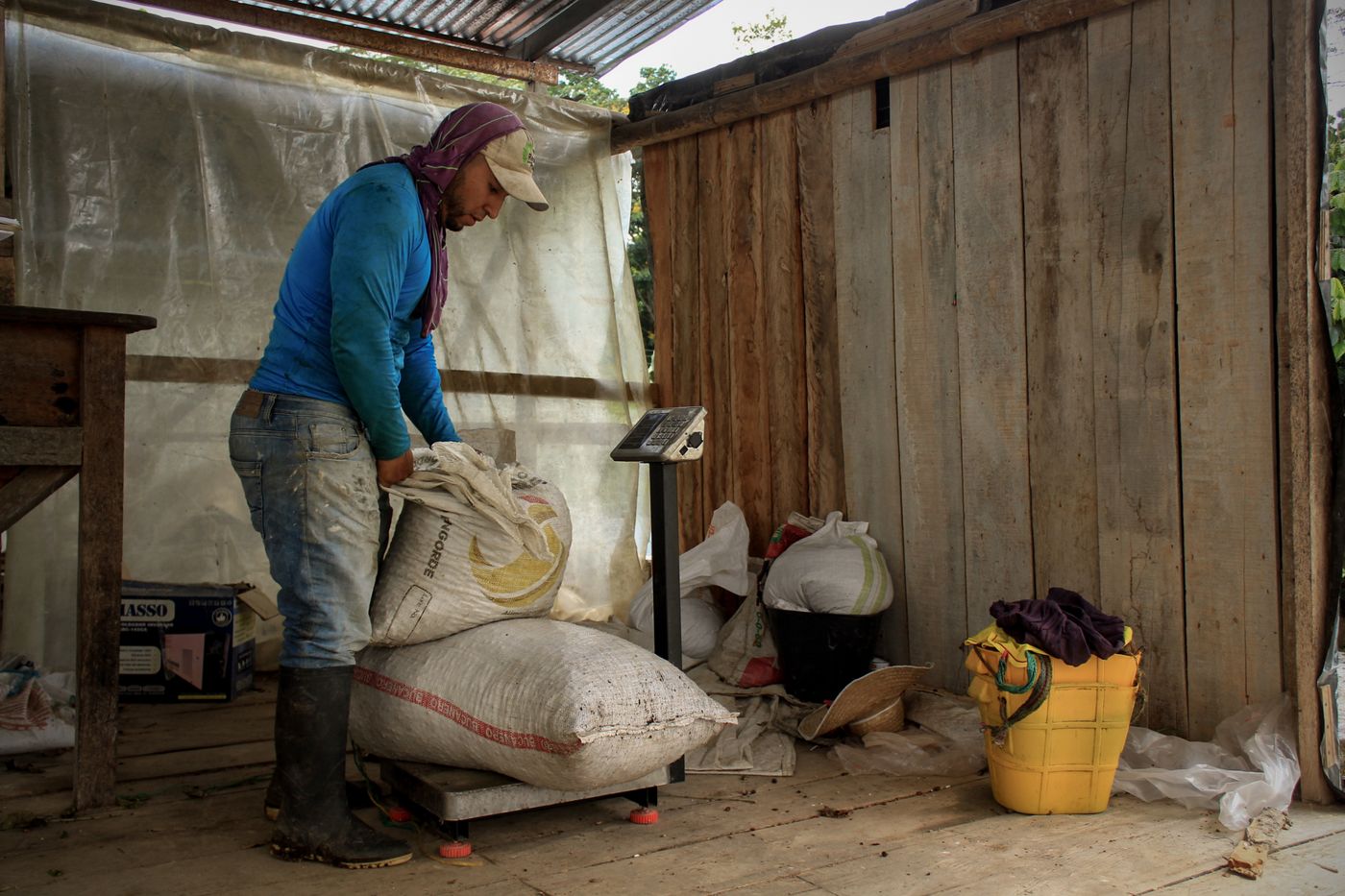
Stand at the gate of a working farm for one hour and count the journeys. Feed from the store to the shed. Water to the calf pens. Manure out. Napier in. Bags off the drying yard and into the store, then out again when the buyer's pickup arrives.
None of that appears in any costing you have ever written. It is not seed, not fertiliser, not fuel, not veterinary. It is somebody's day, spent moving weight across ground, and on most Kenyan farms it quietly consumes more hours than any single job people actually plan for.
It is also where people get hurt. A back injury does not show up as a line item either, but it removes a worker. This article is about the unglamorous equipment that decides how much of your farm disappears into carrying: the wheelbarrow, the trolley, the sack barrow, and the ground they run on.
The Labour Cost Nobody Puts in the Budget
Manual handling is invisible because it never generates an invoice. Nobody bills you for the fourth trip to the store. The cost is real anyway, and it is easy to measure once.
Pick your most repeated journey. Time it once, properly, including loading and unloading. Then count how many times that journey happens in a normal day. Suppose a trip takes four minutes and happens thirty times: that is two hours of somebody's paid day, every day, spent walking. Over a month it is a meaningful share of your wage bill, and none of it grew anything.
The number that matters is not the time per trip but the number of trips, and loading capacity is the multiplier. A worker carrying feed in buckets because the barrow lost its wheel in March is making three times the journeys for the same work. Handling equipment is not a purchase you make once and forget. It quietly sets your labour rate for years.
Why One Wheelbarrow Lasts Ten Years and Another Dies in a Season
Wheelbarrows look alike in a display. They fail in four predictable places, and you can check all four in about five minutes before you pay.
The tray. Thickness is the whole story. Sheet steel is described by gauge, and the gauge number falls as the steel gets thicker, so a lower number means a stronger tray. You do not need the figure. Press the middle of an empty tray hard with your thumb: if it flexes and pops back like a tin lid, it will deform under stone and wet soil, and once a tray has a crease it will crack along it. Look at the front lip in particular, because that is what takes the impact every time the load is tipped out.
The frame and the welds. Turn the barrow over. The joints that matter are where the handles meet the underside of the tray and where the legs brace into the frame. You want continuous, even welds, not three tack spots and some paint. A folded sheet frame is lighter and cheaper; tubular steel resists twisting far better, and twisting is what happens every time a loaded wheel drops into a rut.
The bearing. Spin the wheel and listen. A sealed ball bearing turns freely, quietly and keeps turning. A plain bushing, which is what many light barrows use, is a sleeve the axle rubs against. Under load it wears oval, the wheel wobbles, the tyre starts rubbing the fork, and pushing gets harder every month. It is one of the cheapest parts on the barrow and one of the biggest differences a year later.
The wheel itself. Not its quality but its type, which deserves a section of its own.
Pneumatic or Solid: The Wheel Decides Where It Can Go
A pneumatic tyre is filled with air, and air is what lets the tread deform around a stone instead of climbing over it. That does two useful things: it lowers the effort needed to roll across rough ground, and it absorbs shock that would otherwise travel up the handles into wrists and shoulders all day. On soft soil the tyre also flattens and spreads its load across a wider contact patch, so it sinks less.
The price is punctures. Thorns, wire, nails in the yard and slow pressure loss are all real, and a pneumatic tyre run half flat is worse than no tyre at all, because the sidewall folds and the barrow digs in. Anyone running pneumatic wheels needs a pump, a puncture kit and the habit of a monthly pressure check.
A solid wheel, whether hard rubber or foam filled, removes that maintenance burden entirely. It never punctures and never needs air. In exchange it is hard, so it transmits every bump into the load and the operator, and its narrower contact patch cuts into soft ground rather than floating over it.
The choice is therefore about your route, not about which is better. Short runs on a concrete dairy apron, a hard yard or a store floor: a solid wheel is the sensible, maintenance free answer. A shamba, a murram track, gravel, or anything you push in the wet season: pneumatic, without hesitation. Foam filled wheels sit in between, giving you a soft ride with no punctures, at more weight and more money.
Trolleys, Sack Barrows and When Two Wheels Beat One
A wheelbarrow is a lever. The wheel is the fulcrum, the load sits between the wheel and your hands, and you lift only a share of the total weight. That is why one person can move a load they could never carry, and also why a barrow is tiring on uneven ground: the balancing is your job, and every wobble is corrected by your arms and back.
A two wheeled platform trolley removes the balancing entirely. All the vertical load sits on the wheels and you simply push, which is far less tiring than a barrow for heavy, stable loads on a reasonable surface. The trade offs: it needs a wider, smoother path, it will not tip to dump a load, and small hard castors that glide on concrete are useless on murram.
A sack barrow, or hand truck, is the right answer for anything already in a bag, drum or crate. The toe plate slides underneath, the load leans back onto two wheels, and you carry almost nothing. For a farm handling 50 kg fertiliser bags, 70 kg feed bags or 90 kg maize bags, it is the most effective handling tool you can own, because it deletes the repeated lifting that damages backs rather than merely easing it.
Match the tool to the shape of the load. Loose material such as manure, soil, sand and feed goes in a barrow. Bags, drums and crates go on a sack barrow. Heavy, stable, longer distance work on decent ground goes on a platform trolley. Whatever you choose, take the largest wheels the model offers, because wheel diameter decides how a load behaves on rough Kenyan ground more than any other dimension. You can compare options across our farm equipment range.
Load Limits, and the Lift That Actually Hurts You
Every load has two limits and the smaller one wins. The equipment has a rating set by its frame, axle and wheel. The person pushing it has one too.
Trays are usually described in litres, and that unit hides the danger. Water weighs one kilogramme per litre, and sand or wet soil weigh roughly one and a half to two tonnes per cubic metre. So a sixty five litre tray filled to the brim with wet sand is carrying somewhere around a hundred kilogrammes, which is beyond both the frame and the operator, while the same tray full of napier or dry manure is light enough to run with. Volume tells you nothing about weight until you know what you are moving.
Position matters as much as quantity. Because the barrow is a lever, a load pushed forward towards the wheel puts most of its weight on the wheel, and a load left sitting at the back of the tray transfers into your arms and lower back. Loading forward is free, takes no extra time, and changes how a heavy trip feels more than anything else you can do.
The pushing is rarely what injures people. The lift into and out of the barrow is. Stand close to the load with your feet apart and one slightly forward, hinge at the hips and bend your knees instead of rounding your back, get a firm grip, bring the load against your body before you rise, then straighten your legs. Never twist while loaded: move your feet to turn. Put it down the same way you picked it up, because the lowering is where tired people get careless.
Holding a load away from your chest multiplies the force through your lower back, because your spine is working at the end of a longer lever. Keeping the load against your body is the difference between a manageable lift and a damaging one. For anything genuinely heavy or awkward, use two people with one calling the count. There is no prize for the hero lift.
Finish with the basics: gloves for wire, thorn and cut sheet, and proper boots, because a loaded barrow rolling across an unprotected foot is a serious injury on an ordinary Tuesday. Our workshop and industrial tools range carries the gloves, boots and hand tools that belong alongside handling equipment.
Fix the Route Before You Buy the Barrow
The cheapest capacity increase on most farms is not a better barrow. It is a better path for the barrow you already own.
Give the wheel a firm strip. You do not need a paved road. A metre wide line of murram or hardcore along the route people genuinely walk, which is often not the route on the plan, transforms a wet season journey. Watch where the footprints go, then harden that line.
Measure your gates and doorways. Measure the barrow at its widest point, usually the handles or the wheel arms, against your narrowest opening. Store doors are remarkably often a few centimetres too tight, so every load is set down, carried through by hand and reloaded, twice a trip, for years.
Kill every step and open every corner. A single step at the store threshold forces a full lift of the whole load, every journey, and a short timber or concrete ramp removes it. Gentler slopes need less force but a longer run, so give the ramp as much length as the space allows and keep the surface non slip. A tight turn makes people slew a loaded barrow sideways, which is how frames bend and loads tip.
Raise the loading point. Collecting a bag from the ground is the worst lift on the farm; collecting it from a bench, pallet stack or platform at hip height removes most of the strain. One waist height loading bench beside the store door does more for your workers' backs than any technique poster.
Never travel empty. Out with manure, back with feed. Plan trips in pairs and you have cut journeys without buying anything at all.
Where to Start
Buy one good barrow rather than two cheap ones, and check the tray, the welds, the bearing and the wheel before you pay. Match the wheel to the worst ground on your route, not the best. Add a sack barrow if you handle bags. Then spend a Saturday on the twenty worst metres of path on the farm.
Handling equipment is stocked across all six branches and current pricing sits on the price list. If you are unsure what suits your ground, talk to us or send a photo of the route on WhatsApp and we will tell you what will survive it.
Key Takeaways
- Manual handling has no invoice, so it never gets budgeted. Time one repeated journey and count the trips, and the cost becomes visible immediately.
- Check four things before buying a barrow: tray thickness, the welds under the tray, whether the wheel has a sealed bearing or a plain bushing, and the wheel type.
- Pneumatic wheels roll far easier on rough, soft and rutted ground. Solid wheels never puncture and suit hard yards and short runs.
- Trays are rated in litres but loads are limited by weight. Fill dense material to the halfway line and push it forward over the wheel.
- The lift, not the push, causes injuries. Load close to the body, lift with the legs, never twist, and raise the loading point to hip height.
- A metre of hardcore, a wider gate and a short ramp cut more journeys than a bigger barrow ever will.
Frequently Asked Questions
What size wheelbarrow do I need for a farm in Kenya?
Size the barrow to the heaviest thing you move, not the bulkiest. A large tray is useful for manure, napier and crop residues, which are light for their volume. If you also shift murram, sand, stone or wet soil, a big tray simply tempts people to overload it, because dense material reaches a dangerous weight long before the tray is full. A mid to large tray on a strong frame with a good wheel serves most mixed farms better than the biggest tray on a light chassis.
Are pneumatic or solid wheelbarrow tyres better?
It depends entirely on your ground. A pneumatic tyre deforms around ruts and stones and spreads its contact patch on soft soil, so it rolls far more easily on rough or muddy routes and absorbs shock that would otherwise reach your wrists. A solid or foam filled wheel never punctures and needs no attention, which suits short runs on concrete, hard yards and dairy aprons. If your route crosses a shamba, a murram track or wet ground, choose pneumatic and keep a pump and a puncture kit.
How much weight can a wheelbarrow carry safely?
There are two limits and the smaller one wins. The barrow has a rated load set by its frame, axle and wheel, and the person pushing it has a limit of their own. Trays are usually rated in litres, which hides the problem: sand and wet soil weigh roughly one and a half to two tonnes per cubic metre, so a sixty five litre tray filled with wet sand is already around one hundred kilogrammes. Fill dense material to about the halfway line, keep it forward over the wheel, and make two trips instead of one.
What is the correct way to lift a heavy bag on a farm?
Stand close with your feet apart and one foot slightly forward, hinge at the hips and bend your knees rather than rounding your back, get a firm grip and bring the bag against your body before you rise, then lift with your legs. Never twist while loaded: turn your feet instead. Set the load down the same way you picked it up. The single biggest improvement is not technique but height, because a bag collected from a bench at hip level avoids the worst part of the lift altogether.
Is a sack barrow worth buying for a small farm?
If you regularly move bagged feed, fertiliser, maize, drums or gas cylinders, yes. A sack barrow slides its toe plate under the load and tips it back onto two wheels, so the wheels carry almost all of the weight and you only balance and push. That removes the repeated lifting that damages backs. It needs reasonably firm ground to be worth having, so on soft routes look for the largest wheels available, ideally pneumatic ones.