Dairy goats are one of the quietest success stories in Kenyan livestock. On plots too small for a dairy cow, in households where the capital for a good heifer is simply out of reach, a handful of well-managed dairy goats can put fresh milk on the table every day, sell the surplus at a premium, and multiply into a herd worth real money within a few seasons.
They are also easy to get wrong. A dairy goat is not a meat goat that happens to be milked. She is a specialised animal that needs dry housing, clean water, consistent feeding, and hygienic milking to earn her keep. The difference between a doe giving a cupful and a doe giving a litre or more a day is almost never the goat. It is the setup around her.
This guide covers that setup from the ground up: why dairy goats fit Kenyan smallholders so well, the breeds you will meet here, how to build the raised slatted-floor house they need, the feeding and milking equipment that pays for itself, kid rearing, health basics, and an honest look at where the money actually comes from.
Why Dairy Goats Fit the Kenyan Smallholder
The case for dairy goats rests on three things: land, feed, and capital. A zero-grazing goat unit for three or four does fits in a corner of a compound where a cow unit never could. Goats thrive on cut-and-carry fodder, browse from fodder shrubs, and crop residues that would otherwise go to waste, so the daily feed bill is a fraction of a cow's. And the purchase price of a good doe is far below that of a dairy heifer, which means a family can start with real dairy genetics instead of stretching for one expensive animal.
There is a fourth advantage that is easy to overlook: risk. A farmer whose single cow falls sick loses the whole enterprise at once. A farmer with four does who loses one still has three in milk. Spreading the same investment across several small animals is a genuinely safer way to hold livestock wealth.
Dairy goats are already well established in Kenya. Central Kenya counties such as Nyeri, Meru, Embu, and Tharaka-Nithi have strong dairy goat breeder networks built up over decades, and the practice has spread into western and eastern counties as well. The Dairy Goat Association of Kenya promotes improved breeds and keeps breeding records, and KALRO and county livestock extension officers offer guidance on housing, feeding, and health. You are not pioneering alone; there is a support system to plug into.
The Breeds You Will Meet: Toggenburg, Saanen, Alpine, and Crosses
Three exotic dairy breeds dominate the Kenyan scene, alongside their crosses with hardy local goats.
The Toggenburg is the workhorse of central Kenya's dairy goat networks. She is brown with distinctive white stripes down the face and white lower legs, calm to handle, and a steady milker under smallholder conditions. Most animals sold through breeder groups in Nyeri and neighbouring counties carry Toggenburg blood.
The Saanen is the all-white breed with the highest milk potential of the three, but she is also the most demanding. Saanens do best in the cooler highlands with excellent feeding, and their pale skin makes them sensitive to harsh sun. They reward good managers and punish poor ones.
The Alpine, including the German Alpine lines introduced around Meru, combines strong yields with good hardiness, and Alpine crosses have a solid reputation in eastern Kenya.
Crosses between these breeds and the Small East African or Galla goat are where most farmers should start. A fifty or seventy-five percent cross keeps much of the local goat's disease tolerance and heat tolerance while milking far beyond her local mother. A well-fed crossbred doe that stays healthy will out-earn a stressed purebred every time. Buy foundation stock from a recognised breeder group with records rather than from an open market, ask to see the dam being milked if you can, and check the udder for two well-placed, sound teats.
Housing: The Raised Slatted Floor Is Non-Negotiable
Goats hate damp, and damp is what kills them. Wet floors breed foot rot, pneumonia, and above all internal worms, which are the biggest killer of goats in warm climates. The Kenyan solution, proven across thousands of smallholder units, is the raised slatted-floor house: a timber platform lifted off the ground so that urine and droppings fall through gaps between the floor slats, leaving the goats standing on a dry, self-cleaning surface.
The working dimensions are simple. Raise the floor roughly half a metre to a metre above the ground, high enough to sweep manure out from underneath. Make the floor from timber slats about 5 cm wide, laid with gaps of about 1.5 to 2 cm between them: wide enough for droppings to fall through, narrow enough that a kid's leg cannot slip in. Allow in the region of 1.5 to 2 square metres of resting space per adult doe, with more for a doe kidding down, and attach a small exercise yard if space allows.
Build the lower walls solid to block ground-level draughts, and leave the upper walls open with wire mesh or spaced timber for airflow, because stale, ammonia-laden air is as dangerous as a draught. Slope a rainproof roof away from the prevailing weather, and orient the open side away from driving rain. Feed and water are offered from outside through a feeding barrier, so the goats cannot climb into the trough and foul it, and so you can feed without entering the pen.
Plan separate spaces from day one: a pen for milking does, a kid pen that is dry and draught-free, and a buck pen sited away from the does. A mature buck has a strong smell that transfers to milk, so he should never live beside the animals you milk.
Feeding Equipment: Hay Racks, Troughs, and the Chaff Cutter
A dairy goat converts fodder into milk, so feeding equipment is milking equipment by another name. The core system in Kenya is cut-and-carry: napier grass, sweet potato vines, maize stover, banana pseudostems, and high-protein fodder shrubs such as calliandra and leucaena, harvested and brought to the pen.
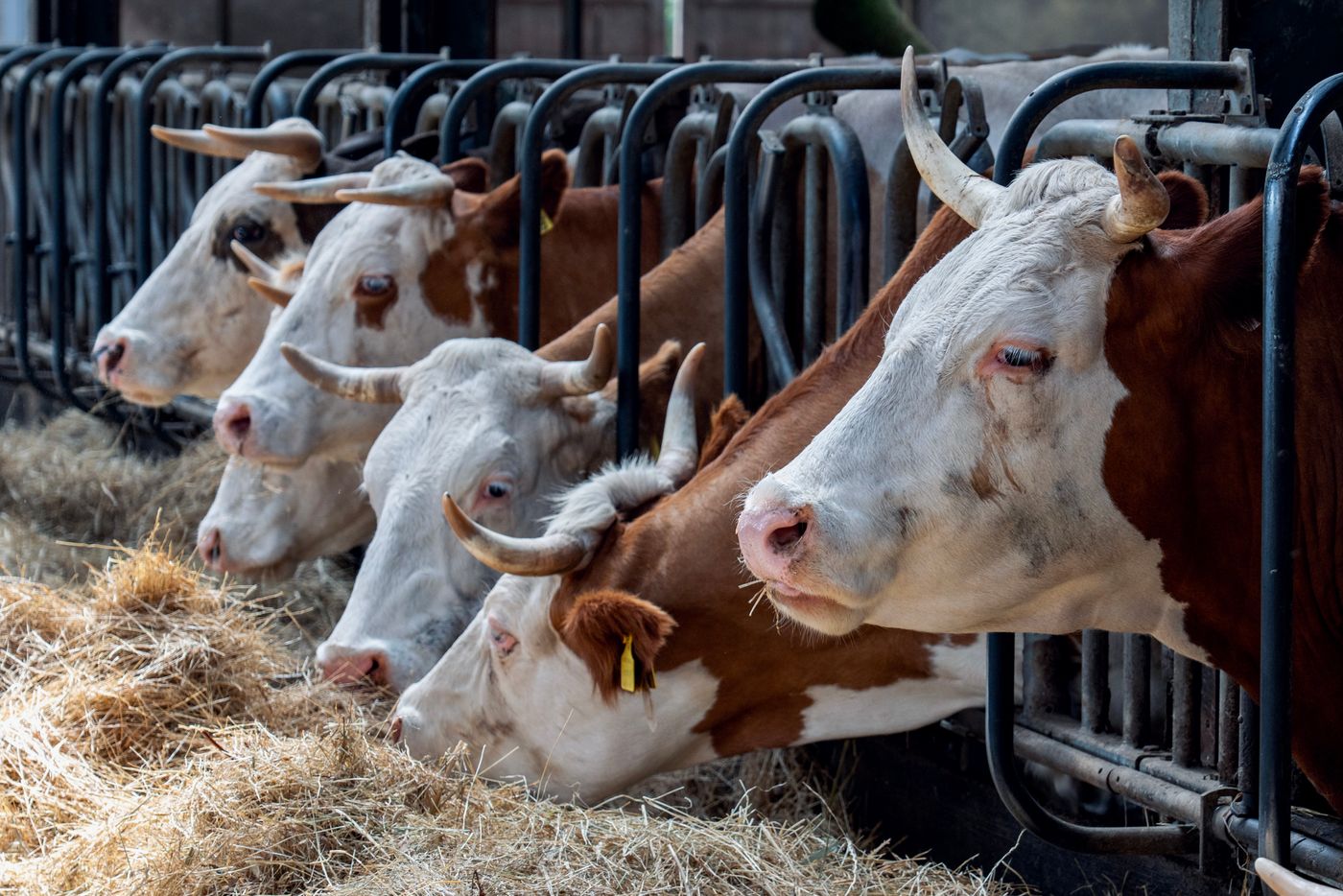
Never feed goats off the floor. A goat will refuse feed that has been trampled or soiled, and floor feeding can waste a third of what you cut. Use a raised hay rack or fodder basket fixed to the feeding barrier so the goats pull fodder through at head height, with a trough below to catch leaf drop. A separate concentrate trough holds the dairy meal fed to milking does, most conveniently during milking itself, and every pen needs a fixed mineral lick, because goats on cut fodder cannot balance their own minerals.
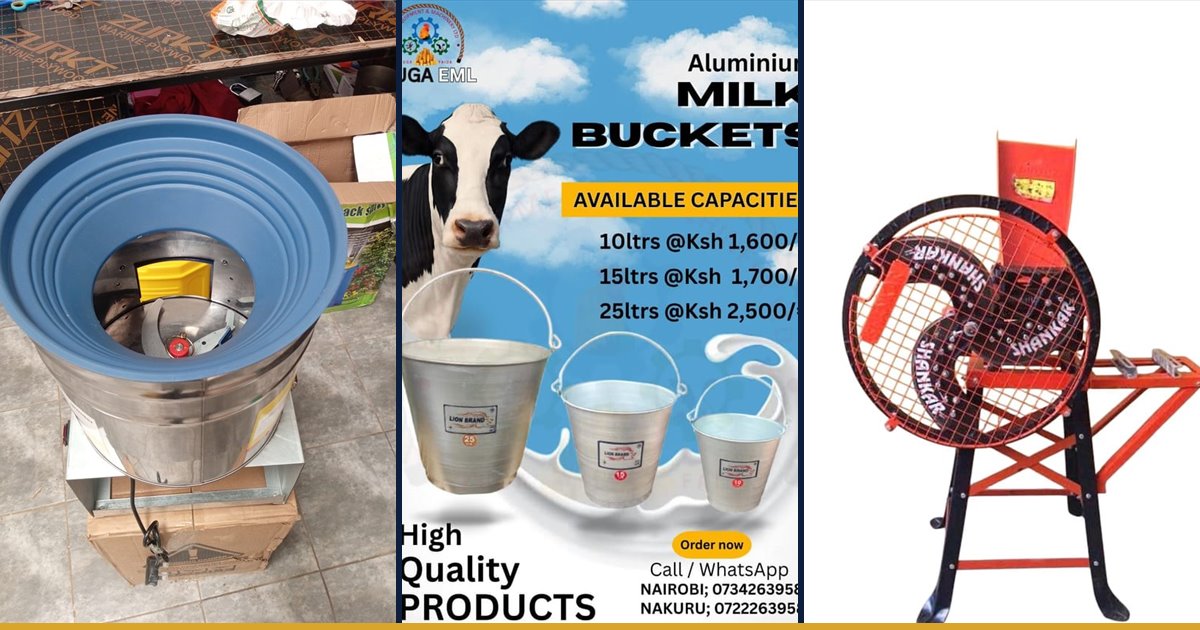
The single most valuable machine in a cut-and-carry system is the chaff cutter. Chopping napier and crop residues into short lengths cuts refusal and waste sharply, lets you mix fodder so goats cannot sort out only the sweet parts, and makes dry-season stover usable. A hand-operated model serves a small flock; a motorised one earns its place once you are feeding several animals daily or serving neighbours. Our guide on choosing a chaff cutter in Kenya walks through sizing and options in detail.
Plan for the dry season from the start. Goats that milk well in the rains and crash in the dry months never pay. Conserve surplus fodder as hay, store it raised and dry, and treat fodder shrubs as your protein bank.
Water, the Milking Stand, and Milk Hygiene
Milk is mostly water, and a lactating doe short of water simply gives less of it. Provide clean water at all times through a bucket or bowl fixed at the feeding barrier, raised so it cannot be fouled, emptied and refilled daily. Warm, dirty water depresses drinking and invites disease; this is the cheapest production boost you will ever buy.
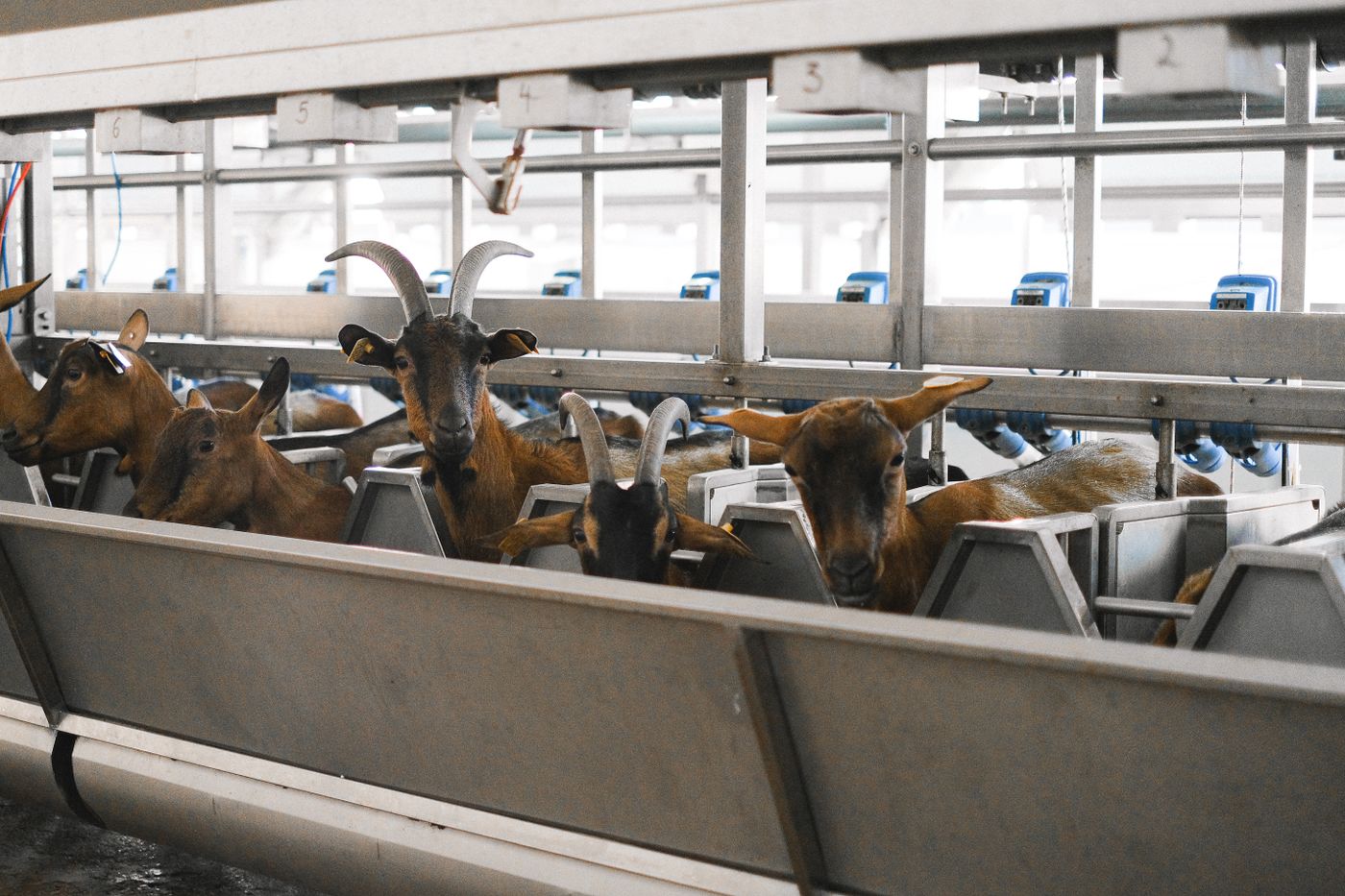
Milk from a simple milking stand rather than crouching on the floor. A milking stand is a low timber platform the doe steps onto, with a head yoke that holds her gently in place and a feed bowl in front so she associates milking with her concentrate ration. It raises the udder to a comfortable working height, keeps the doe still and calm, and keeps the pail off the ground. Any farm carpenter can build one in an afternoon from off-cuts.
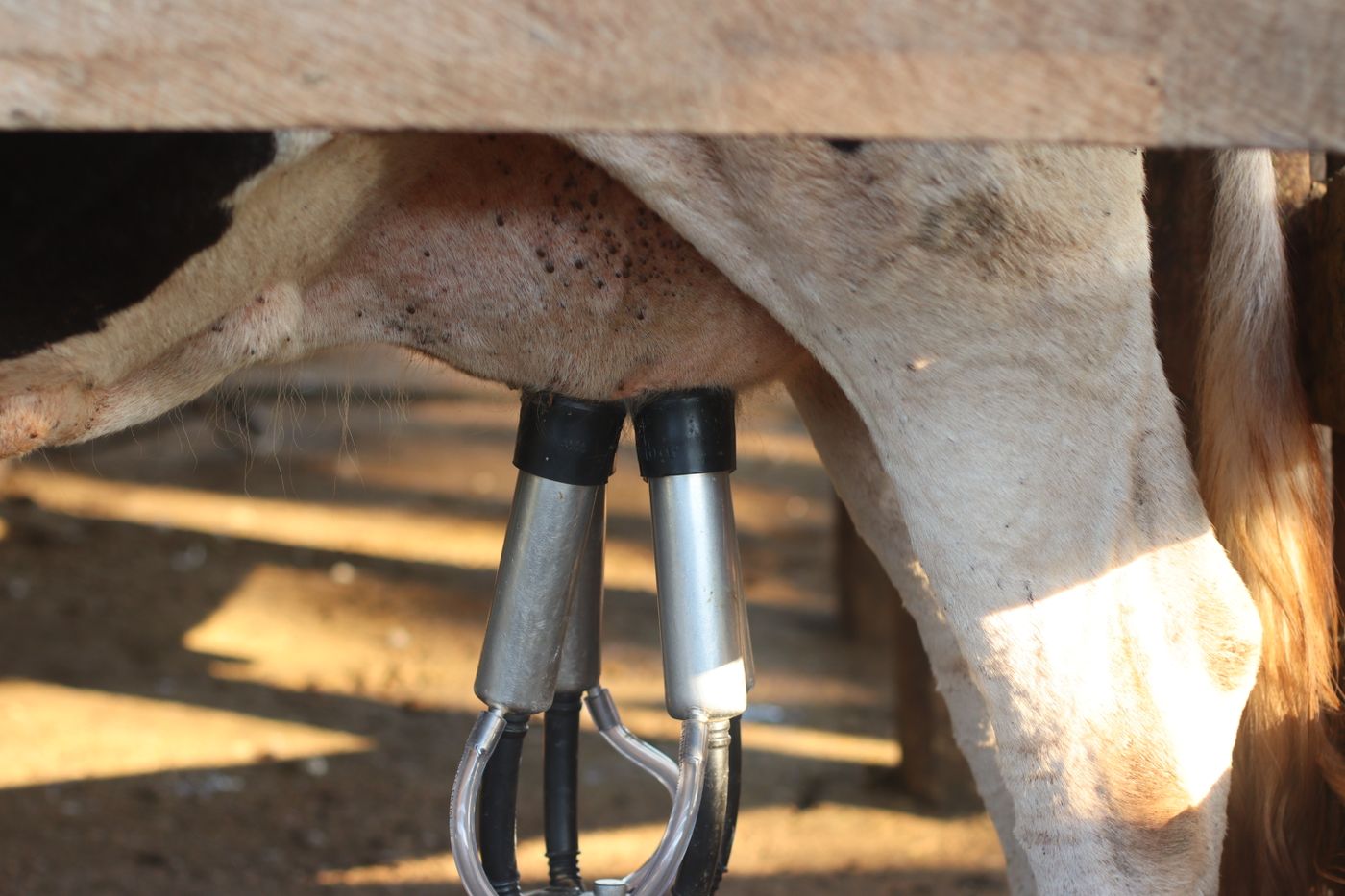
Hygiene is where goat milk wins or loses its market. Wash your hands, wipe the udder clean with warm water, and dry it with a clean cloth before you start. Milk quickly with a full-hand squeeze, never a pull, into a stainless steel or food-grade seamless pail, then filter the milk immediately and get it cool. Goat milk picks up odours faster than cow milk, which is one more reason the buck lives far from the milking pen. Handled cleanly and chilled promptly, good goat milk is mild and sweet, and it commands its premium. Our article on milk cooling and hygiene applies to goat milk just as much as cow milk.
Kid Rearing and Breeding
Every future milker starts as a kid, so kid rearing is herd building. Make sure each kid suckles colostrum, the thick first milk, within the first few hours of life; it carries the antibodies the kid is born without. House kids in a dry, draught-free corner pen off the main floor, feed milk consistently in the early weeks, and introduce soft fodder and a little concentrate early so the rumen develops. Wean gradually at around three months rather than abruptly.
Breed a young doe on body condition, not the calendar: she should be well grown and strong before her first service, which for a well-fed doeling typically falls somewhere in her first year. Pregnancy lasts about five months, so time services so kidding lands when fodder is plentiful. Stop milking and rest the doe in the last weeks before kidding so she rebuilds condition for the next lactation.
On the sire side, one good buck serves many does, which is why buck ownership is often shared. Breeder groups in the established dairy goat counties run buck stations precisely so smallholders can access superior genetics and avoid inbreeding, which quietly erodes milk yield and kid vigour. Keep simple records of services, kiddings, and daily milk per doe; they cost nothing and they are what separate breeding from guessing, and a recorded doe sells for more.
Health Basics: Hooves, Worms, and Watchfulness
Goat health on a well-built raised floor is mostly routine. Trim hooves every two to three months with proper hoof shears, paring the overgrown wall level with the sole. Overgrown hooves make walking painful, and a doe in pain eats less and milks less long before she goes visibly lame.
Internal worms remain the number one threat, even with a slatted floor, because goats also pick up larvae from wet pasture and freshly cut ground-level fodder. Do not deworm blindly on a fixed calendar, which breeds resistant worms. Instead work with your vet or extension officer on a strategic program, and learn to check the inner eyelid: a pale, whitish membrane instead of a healthy pink signals the anaemia of heavy worm infection and the need to act.
Respiratory disease is the other big risk, driven by draughts, damp, and crowding, which is why the housing rules above matter so much. Contagious caprine pleuropneumonia (CCPP) is a serious goat disease present in Kenya, and your vet can advise on vaccination for your area. Quarantine any new animal for a couple of weeks before it joins the flock, and buy from tested, recorded herds in the first place. A thermometer, hoof shears, clean syringes, and a relationship with a good animal health provider cover most of what a small dairy goat unit needs.
The Honest Economics of Goat Milk
Now the part too many guides skip. Goat milk in Kenya is a premium niche, not a bulk commodity. There is no nationwide formal collection system waiting for your milk the way there is for cow milk. Most successful producers sell directly: to neighbours and estates at the farm gate, to families who find goat milk easier to digest, to health-conscious buyers, and in some areas to small processors or institutions. The reward for that direct selling is a price per litre well above cow milk; the cost is that you must build your own customer list, and it grows by word of mouth from consistently clean, well-cooled milk.
Be equally honest about volumes. A well-managed crossbred doe gives on the order of a litre or more a day, and good purebreds under excellent feeding give more; no goat matches a cow's volume, and nobody should promise you otherwise. The goat wins on margin per shilling of feed, on premium price, and on low risk, not on bulk.
The second income stream is the one that surprises beginners: breeding stock. Because demand for good dairy goats outstrips supply, a recorded, well-bred doeling or buckling often sells for far more than meat price, and for many established keepers stock sales out-earn the milk. Add manure, which is excellent for vegetable plots, and surplus male kids sold for meat, and the enterprise stands on several legs. Start small and deliberate: two or three in-kid does from a recorded herd, a well-built house ready before they arrive, and feed planned through the dry season. Grow from your own kids, and let the milk customers and the herd expand together.
Key Takeaways
- Dairy goats suit smallholders because they need far less land, feed, and capital than a dairy cow, and a flock spreads risk that a single cow concentrates.
- Start with recorded Toggenburg, Alpine, or Saanen crosses from a breeder group, not open-market animals; a healthy cross out-earns a struggling purebred.
- The raised slatted-floor house is the foundation: dry goats, broken worm cycles, easy manure collection, and the buck housed well away from milking does.
- Feed off the floor with hay racks and troughs, chop fodder with a chaff cutter to cut waste, and give every pen a mineral lick and constant clean water.
- A simple milking stand plus strict hygiene and fast cooling is what earns goat milk its premium price.
- Money comes from premium direct milk sales and, often even more, from selling well-bred, recorded breeding stock.
Frequently Asked Questions
How much milk does a dairy goat give in Kenya?
It varies with breed, feeding, and stage of lactation. A well-managed crossbred doe commonly gives around a litre or more per day, while good purebred Toggenburgs, Alpines, or Saanens under excellent feeding give more. Feeding, water, and health make a bigger difference than breed papers alone, so judge any seller's claims against how the animal is actually kept.
Which breed should a beginner start with?
For most beginners, a Toggenburg or Alpine cross from a recognised breeder group is the safest start: hardier and cheaper than purebreds, but milking far beyond local goats. Saanens have the highest potential but need the best management and cooler conditions. Buy from recorded herds and check the udder and the dam's milk before paying.
How high should the raised floor be, and what size slats?
A common working design raises the floor about 0.6 to 1 metre off the ground, with timber slats around 5 cm wide laid with 1.5 to 2 cm gaps so droppings fall through but kids' legs cannot. Allow roughly 1.5 to 2 square metres of resting space per doe, solid lower walls against draughts, and open upper walls for airflow.
Can I keep dairy goats on a small plot with no grazing?
Yes, zero-grazing is how most Kenyan dairy goats are kept. You cut and carry fodder such as napier, sweet potato vines, and fodder shrubs to the pen, ideally chopped with a chaff cutter to reduce waste. The keys are a dry raised house, feed planned through the dry season, and clean water always available.
What equipment do I need, and what does it cost at Fuga?
The core list is a chaff cutter, hay rack and troughs, drinkers, a milking pail and milk cans, hoof shears, and a mineral lick holder, plus timber for the house and milking stand. Prices change with season and stock, so confirm current prices on WhatsApp at wa.me/254716961018 or call 0734 263958, or visit any branch in Eldoret, Nakuru, Nairobi, or the Coast.