A chainsaw is the most productive hand-held tool a Kenyan farm can own, and the most unforgiving. The same machine that turns a fallen blue gum into a season of firewood in an afternoon can, held wrongly for half a second, cause an injury that ends your working year. The difference is not luck: it is buying the right size, understanding how the tool behaves, and keeping the chain sharp and the safety systems alive.
Most buyers choose on price or bar length alone, with no thought for the engine behind the bar or the work in front of it. An underpowered saw with a long bar bogs down, overheats, and kicks back more, because the engine cannot keep the chain moving through the cut.
This guide covers the full picture: power source, sizing, chain spec, kickback and safety gear, sharpening and tensioning, fuel and maintenance, the law on felling trees in Kenya, and the honest cost of ownership.
Petrol or Electric: Match the Power Source to the Work
Electric chainsaws, corded or battery, start instantly, run quietly, need no fuel mixing, and suit compound pruning or workshop cutting near a socket. We weighed corded against cordless in our workshop power tools guide, and the same logic applies here.
For farm work, though, petrol wins. Firewood, boundary trees, and storm-fallen timber are rarely near a socket, and battery run time falls fast in continuous hardwood cutting. A mid-size petrol engine sustains the chain speed that big cuts demand. And a two-stroke engine can be repaired in any town with a fundi and spares, which matters more over five years than any spec on the box. The rest of this guide assumes petrol, the class in our workshop and industrial tools range.
Bar Length and Engine Size: The Pairing That Decides Everything
The guide bar is the steel blade the chain runs around; its length sets the biggest cut you can make comfortably. The engine, measured in cubic centimetres (cc), sets how much wood the chain can chew through without stalling. The two must be matched: a small engine cannot drive a long bar's cutters through the wood, so the chain slows, binds, and grabs, and a grabbing chain is a kickback risk.
A bar cuts wood up to roughly its own length in one pass, and nearly double if you cut from both sides. Size for your everyday log, not your record log: a bar two or three inches longer than your daily wood gives working clearance without dead weight and extra kickback surface.
In task terms: pruning, fence posts, and light firewood suit a compact 12 to 14 inch saw that is light enough to use all day. General firewood, farm clearing, and medium felling belong to the workhorse class, a 40 to 50 cc engine with a 16 to 18 inch bar, which is why the 18 inch saw is the default farm chainsaw across Kenya. Timber salvage and large felling justify a 20 to 24 inch bar, but only on roughly 60 cc or more, in experienced hands. And for grass and light bush, use a brush cutter instead, as we cover in the brush cutters and slashers guide.
This is why Fuga stocks the TOTAL Chain Saw 18": a petrol saw in the farm workhorse class, backed by spares and after-sales support at all six branches. Prices move with stock, so confirm the current figure on WhatsApp.
Chain Pitch and Gauge, Without the Jargon
Sooner or later you will buy a replacement chain, and the shop will ask three numbers. Pitch is the spacing of the chain's links, measured as the distance across three rivets divided by two; common sizes are 3/8 inch and .325 inch. Gauge is the thickness of the drive links, the tabs that ride in the bar's groove, commonly .050 or .058 inch. The third number is the drive link count, which sets the chain's length.
All three must match the bar and drive sprocket exactly. A wrong-pitch chain will not seat on the sprocket; a wrong gauge jams in the groove or wobbles in it, cutting crooked and throwing more easily. The numbers are usually stamped on the bar near its base: photograph that stamp, and buying the right chain becomes a two-minute errand instead of a gamble.
Kickback: The Mechanics, and the Gear That Actually Matters
Kickback is the sudden, violent rotation of the saw up and back toward the operator, and it is what makes chainsaws uniquely dangerous. The physics live at the bar nose. Around the upper quarter of the tip, the cutters travel up and over the nose; if that zone touches wood or ground, a cutter digs in, the chain stalls for an instant, and the engine's energy rotates the whole saw back at you. Pinching the bar in a closing cut throws the saw back the same way.
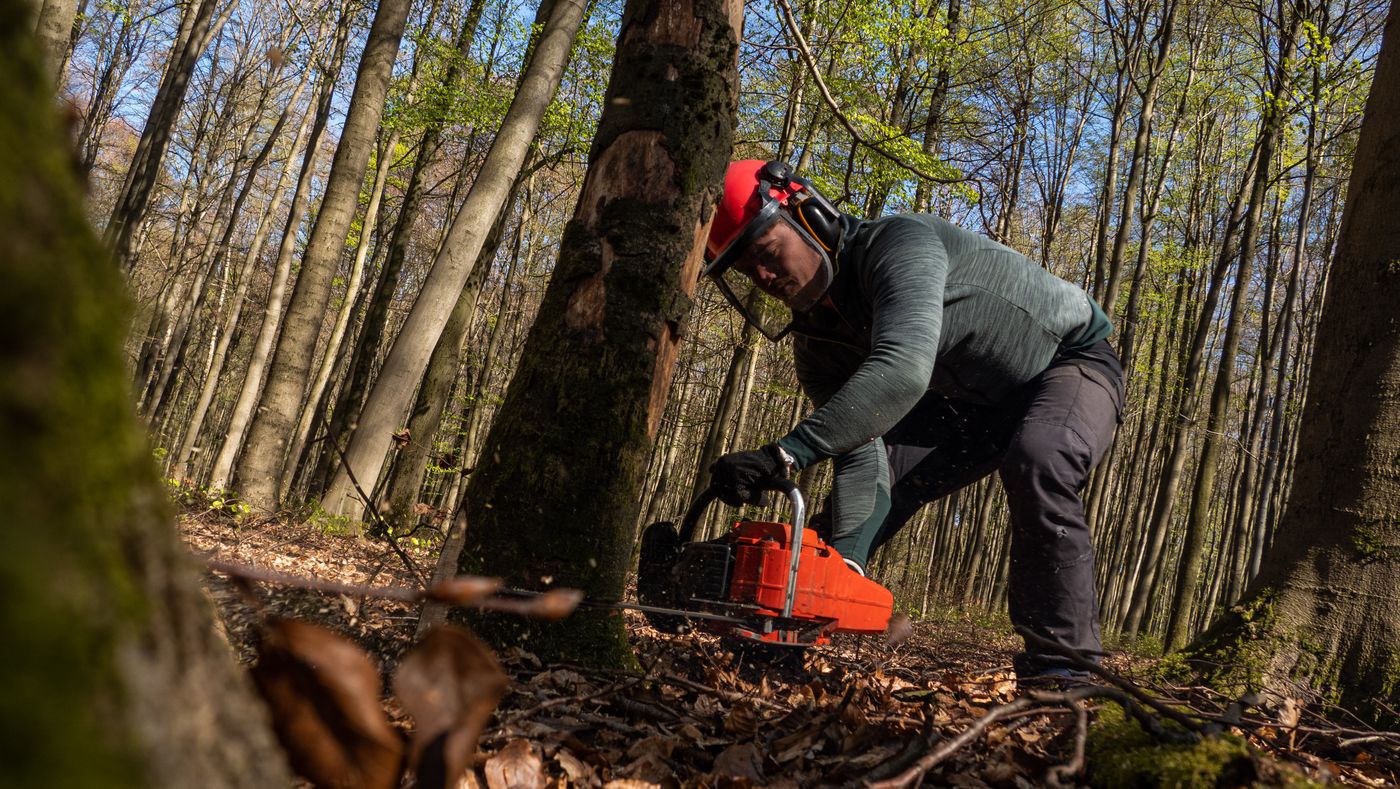
Defence starts with technique: know where the bar nose is at every moment, never cut with the upper tip, hold the saw with both hands with the left thumb wrapped around the front handle, stand beside the cutting line rather than behind the bar, and never cut above shoulder height. A dull chain invites pressing, and pressing puts the nose into wood.
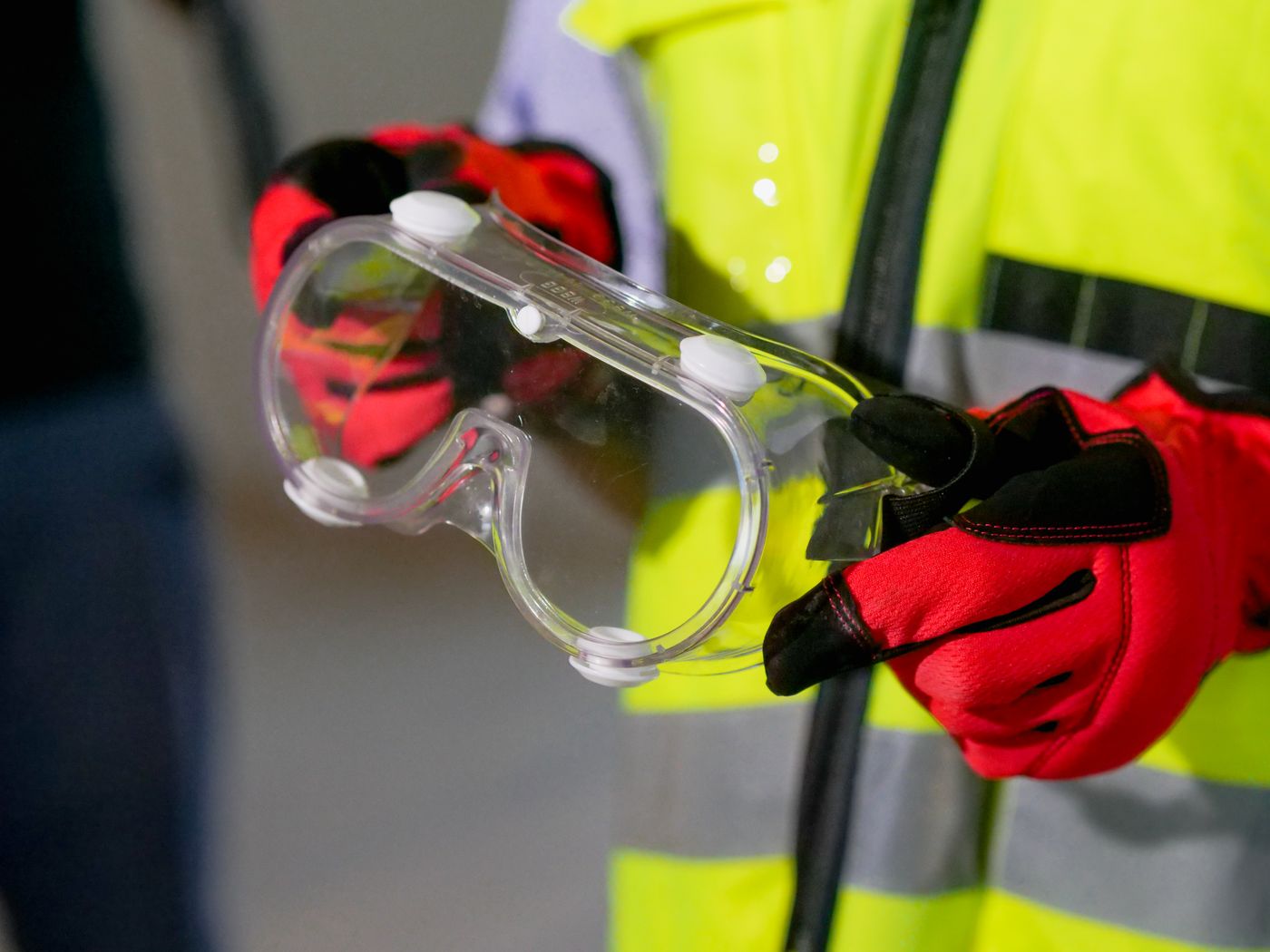
Then the equipment. The chain brake, the front hand guard your left wrist strikes as the saw rotates, stops the chain in a fraction of a second; test it before every session by engaging it at idle. Low-kickback chain adds guard links that limit how deep the nose cutters can bite. On your body, the gear that earns its cost is a helmet with mesh visor and ear defenders (a petrol saw is loud enough to damage hearing over unprotected working days), chainsaw trousers or chaps, whose loose fibres pull out and jam the sprocket to stop the chain before it reaches your leg, plus sturdy boots and snug gloves.
Sharpening and Tensioning: The Routine That Keeps a Saw Safe
A chainsaw is only ever as good as its chain. A sharp chain pulls itself into the wood and throws thick chips; a dull one throws fine dust, smokes, and makes you lean on the saw. Sharpening is a ten-minute field skill: a round file of the correct diameter for your chain pitch, a file guide, and a flat file for the depth gauges.
Tension first, because a loose chain files inaccurately and can derail or whip off the bar. Pull the chain away from the middle of the bar: it should lift slightly and snap back, and it should turn around the bar by gloved hand. Adjust with the tensioning screw while holding the bar nose up, and re-check after the first minutes of cutting, because chains stretch most when new and when hot.
Then file. Brace the saw, engage the chain brake, and give every cutter the same number of strokes at the angle marked on the cutter, usually 25 to 30 degrees, filing from inside outward. Every few sharpenings, take down the depth gauges, the small fins that control how deep each cutter bites, with the flat file and a gauge tool. Left too high they stop the chain cutting; filed too low they make it grab, and grabbing is kickback in waiting.
Fuel Mix and the Maintenance Schedule
A petrol chainsaw runs a two-stroke engine with no oil sump: lubrication comes entirely from oil mixed into the petrol, and running straight petrol even once can seize the piston. Most modern saws specify a 50:1 mix, one part two-stroke oil to fifty parts petrol: 20 millilitres of oil per litre, or 100 millilitres in 5 litres. Some engines call for a richer mix such as 25:1, so your manual has the final word. Use proper two-stroke oil, never engine oil, mix in a marked container, shake before every fill, and use the mix within a few weeks, because stale fuel gums carburettors.
Bar oil is a separate system with its own tank: it lubricates the chain and is consumed as you cut. Top it up at every refuel, and if the bar oil level is not going down, the oiler is blocked and the bar is being cooked.
Beyond fuel, the schedule is short. Daily: check the chain brake and tension, top up bar oil, tap out the air filter, inspect the chain. Weekly in regular use: flip the bar to even out wear, clean the bar groove and oiler holes, clean the cooling fins, check the sprocket. Seasonally: replace the spark plug and fuel filter, and replace bar, chain, and sprocket as a worn set, because a worn sprocket destroys new chains. Before long storage, run the carburettor dry and store the saw clean.
The Law: Felling Trees Needs Permission
Owning and using a chainsaw is legal; harvesting trees is regulated. Timber harvesting in Kenya falls under the Kenya Forest Service (KFS): felling trees for timber requires a permit, and moving timber by road needs a movement permit. Rules differ between planted trees on private farms and indigenous trees, so before felling beyond routine pruning, check with your local KFS or county forest office. The permit visit is cheap; an impounded lorry of timber is not.
The Honest Cost of Ownership
The purchase price is the start of the story, not the whole of it. A working saw consumes fuel mix and bar oil every hour it runs, chains and files wear out, and the bar and sprocket have a finite life. Budget honestly: an owner who resents buying files ends up running a dull chain, and a dull chain costs more in fuel, time, and risk than every file you will ever buy.
Two habits shrink every slice of that chart. Sharpen little and often, because a sharp chain uses less fuel per log and spares the bar, sprocket, and engine. And buy a saw with parts support: a cheap import with no spares in the country becomes scrap the first time it needs a part, while a supported brand keeps earning for years.
Key Takeaways
- Petrol suits Kenyan farm work; electric suits light, regular cutting near power.
- Match bar and engine to the job: 12 to 14 inch for pruning, 40 to 50 cc with a 16 to 18 inch bar for firewood and clearing, 20 inch and up only on large engines.
- Replacement chains must match pitch, gauge, and drive link count; the numbers are stamped on the bar.
- Kickback comes from the upper bar nose touching wood; defend with technique, a tested chain brake, and real PPE.
- Tension until the chain snaps back against the bar; sharpen with equal strokes per cutter and check depth gauges every few sharpenings.
- Mix fuel at the manual's ratio, commonly 50:1 (20 ml oil per litre), and top up bar oil at every refuel.
- Felling trees for timber needs Kenya Forest Service permits; check before you cut and before you transport.
- Budget for consumables: fuel, oil, chains, files, bars, and sprockets are the true cost of ownership.
Frequently Asked Questions
What size chainsaw do I need for firewood in Kenya?
For most farm firewood, a petrol saw with a 16 to 18 inch bar on an engine around 40 to 50 cc is the sweet spot: enough power for blue gum and grevillea logs, light enough to use for hours. Go smaller for pruning, bigger only if you regularly cut logs thicker than the bar is long.
What is the correct fuel mix for a petrol chainsaw?
Most modern two-stroke chainsaws specify 50:1, which is 20 ml of two-stroke oil per litre of petrol. Some engines require a richer mix such as 25:1, so treat your manual as final. Never run straight petrol, never use ordinary engine oil in the mix, and remember bar oil goes in its own tank.
How do I stop my chainsaw from kicking back?
Keep the upper bar tip out of the wood, run a sharp, correctly tensioned chain, hold the saw with both hands, thumb wrapped around the front handle, and stand beside the cutting line. Test the chain brake before every session, and wear a visored helmet and chainsaw trousers.
Do I need a permit to cut down trees on my own farm?
For timber, yes. Felling trees for timber falls under Kenya Forest Service regulation, and moving timber by road needs a movement permit. Requirements differ between planted and indigenous trees and between counties, so check with your local KFS or county forest office before felling.
How much does the TOTAL Chain Saw 18" cost at Fuga?
Prices move with stock and the exchange rate, so confirm the current figure on WhatsApp at wa.me/254716961018 or call 0734263958. Our team will help you pick the right chain, files, and safety gear, or you can visit any branch in Eldoret, Nakuru, Nairobi, or the Coast.