
The tank on the roof is full. You checked it yourself. Yet the upstairs shower is a dribble, the instant shower heater refuses to switch on, and filling a twenty-litre jerrican at the kitchen tap takes long enough to lose patience. Low water pressure is one of the most common complaints walk-in customers bring to our branches, and the most common response to it is also the most wasteful: buying a pump before understanding the problem.
A booster pump does exactly one job. It adds pressure to water that is already arriving at its inlet. It cannot conjure water that is not there, it cannot force a useful flow through a pipe that is blocked or too narrow, and it should never be set to suck on a shared utility line. Buy one for the wrong problem and you own a machine that hums, cycles, and delivers the same weak shower.
This guide walks through the diagnosis first: the four reasons Kenyan taps actually run weak. Then the machine: how a booster works, where it sits in the line, how to match horsepower to your house honestly, why the same half-horsepower pump is sold at two very different prices, what instant showers really need, and how to protect the pump so it lasts years instead of months.
Diagnose First: The Four Reasons Taps Run Weak
1. The tank is not high enough. Gravity pressure comes from height alone: the vertical distance between the water surface in the tank and the outlet you are standing at. Every metre of that height adds roughly a tenth of a bar of pressure, which means a tank on a two-metre stand gives a ground-floor tap only a gentle push and gives a first-floor shower head, which may sit barely a metre below the tank water level, almost nothing. This is physics, not a fault, and it is why the top-floor shower in a building is always the worst one. Raising the tank or fitting a booster are the only real cures; we cover stands and tank siting in our water storage tanks guide.
2. The pipe run chokes the flow. Friction in a pipe rises sharply as the pipe gets narrower and longer. A house extended tee by tee over the years often ends up feeding four outlets through a single long run of half-inch pipe, and no pump fixes a layout problem cheaply. If the pressure is poor everywhere and gets dramatically worse when a second tap opens, suspect the pipework before the tank.
3. Fittings are clogged. Borehole, river, and roof water all carry silt and scale that collect exactly where the passage is smallest: tap aerators, shower heads, non-return valves, and gate valves left half-closed since the last repair. The free diagnosis is to unscrew the aerator or shower head and open the tap. If flow jumps, you needed cleaning, not machinery.
4. The supply itself is weak or absent. In many estates, county or utility water arrives at low pressure, at odd hours, or only a few days a week. No pump can pressurise an empty pipe. The correct fix is storage: let the supply fill a tank through a float valve whenever it is present, and let the house draw from the tank. The booster then earns its place after the tank, not before it.
How a Booster Works, and Where It Sits in the Line
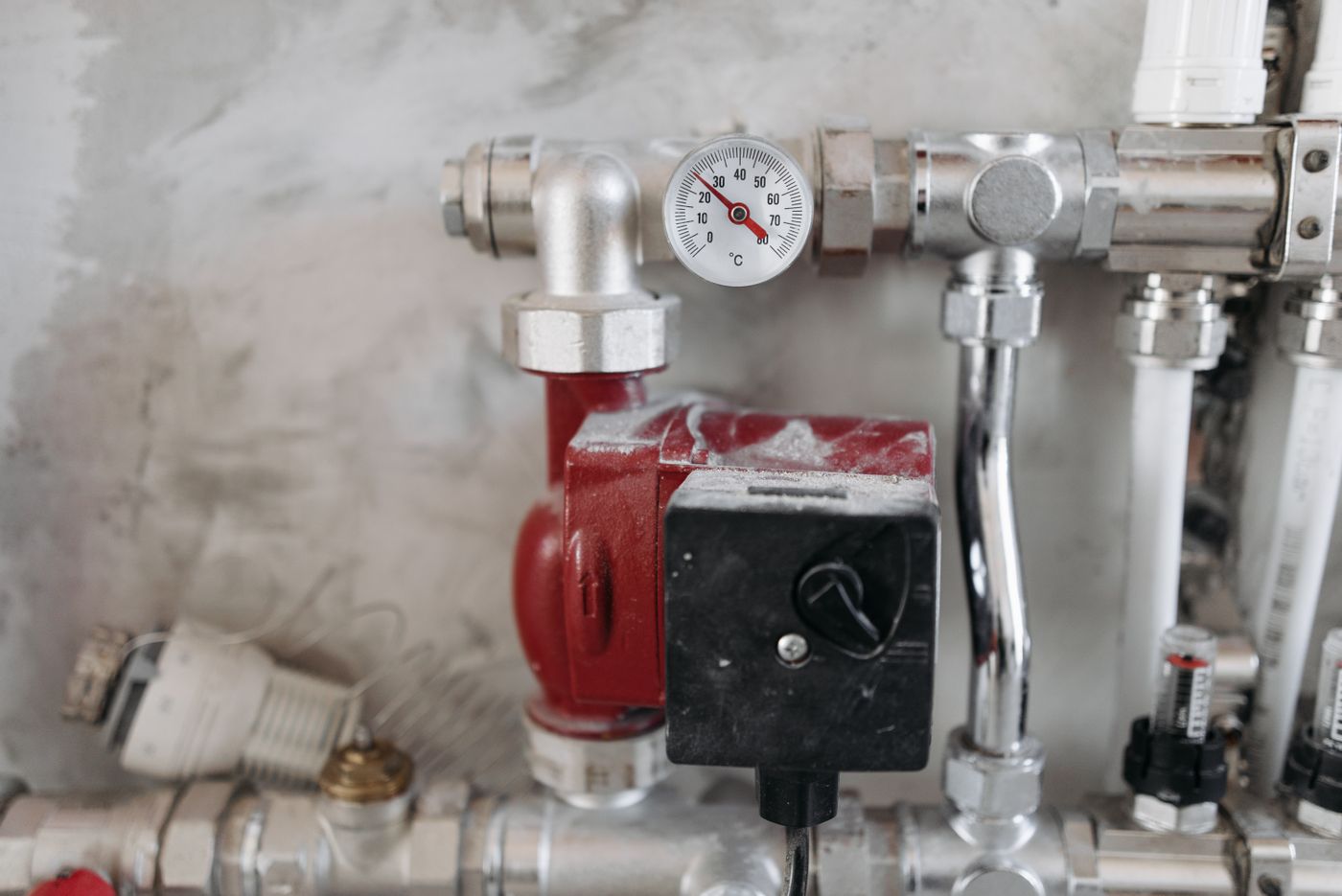
Inside a booster is a motor spinning an impeller. Water enters at the centre, is flung outward, and leaves the casing with more energy than it arrived with, which the pipework experiences as added pressure. That is the whole trick, and it explains the golden rule of placement: the pump must always receive water easily, because it can push far better than it can pull.
The right position is therefore after the storage tank, at or below tank level, so gravity keeps the suction side flooded at all times. Supply enters the tank through a float valve, the tank feeds the pump, and the pump feeds the house. Keep the pump close to the tank, on a firm level base, under a roof, and connected with union fittings so it can be removed for service without cutting pipes.
What you must not do is connect a booster directly to the utility line to suck harder on the mains. It barely works, because when the line pressure collapses there is nothing in the pipe to pump. It is also unfair and risky: suction on a shared main steals pressure from your neighbours and can pull dirty groundwater into the drinking supply through any weeping joint. Water utilities generally prohibit pumping directly off their lines for exactly these reasons, so check the rules that apply in your area. The arrangement that keeps everyone happy is the one described above: mains to tank, tank to booster, booster to house.
Automatic Control, and Why Dry Running Kills Boosters
Almost every domestic booster worth buying today is automatic: a small pressure and flow controller on the pump senses when a tap opens, starts the motor, holds pressure while water is flowing, and stops when the tap closes. Nobody walks to a switch, and the pump only runs when the house is actually drawing water. When comparing models, this controller is not an accessory; it is the difference between a pressure system and a machine you babysit.
The controller also guards against the classic booster killer: dry running. The water passing through a pump is not just the product, it is the coolant and lubricant for the mechanical seal on the motor shaft. Let the tank empty while the pump keeps calling for water and the seal runs dry, overheats within minutes, and starts to leak; plastic impellers can warp, and the motor cooks soon after. A pump that died in its first months has almost always been run dry, not worked hard.
Matching Horsepower to Your House, Honestly
Booster sizing is about how many outlets run at once and how far the water must be pushed, not about buying the biggest motor on the shelf. A 0.5HP automatic booster is the honest match for the typical Kenyan home: ground floor plus one storey, one or two bathrooms, one shower running while a kitchen tap fills. Step up to 0.75HP or 1HP when the building is taller, when several bathrooms genuinely run at the same time, or when one pump serves a small rental block or guest house.
Oversizing is not generosity, it is a slow leak of money. A 1HP pump on a single-bathroom bungalow short-cycles, hammers its own switchgear, stresses fittings with pressure they were never rated for, and bills you for electricity the shower never needed. If in doubt, count simultaneous outlets rather than rooms, and ask our team; sizing questions are the same ones we answer for lifting pumps in the water pump buying guide.
Two Grades of the Same Horsepower: When Each Is Rational
Walk into any of our branches and you will find booster pumps from 0.5HP to 1HP in two build grades, and the price difference between two pumps with the same figure on the label surprises people. The label is not lying; the difference is inside. Premium builds, the class our Pedrollo pumps represent, carry copper motor windings, brass impellers and inserts, better seals and bearings, and thermal protection, and they are rated for long daily duty. Budget builds, including our Marquis range, deliver the same boost for far less money by economising on exactly those parts, which means they are happiest working shorter, lighter shifts.
Both purchases can be rational. A bedsitter landlord boosting one bathroom, a family that needs pressure for two showers a day, or a tight first budget are all well served by the budget grade, honestly used. A family home where the pump runs many times every day, a rental block, a salon or carwash, or any buyer who counts the cost of downtime and callbacks should buy the premium grade once instead of the budget grade twice. Browse both grades in our water equipment range and compare current figures on the price list.
Instant Showers: What They Actually Need
The instant shower heater is where most Kenyan pressure complaints begin, because it is the most demanding outlet in the house. Its heating element only switches on when water moves through it fast enough, and it only heats comfortably within a band of flow: too little and it cannot switch on at all or runs scalding, too much and the water passes through faster than the element can warm it. A weak gravity feed from a low tank sits below that band, which is why the heater clicks, flickers lukewarm, or refuses entirely.
What the heater needs is not maximum pressure but steady, sufficient flow, and that is precisely what a small automatic booster provides. Two cautions belong here. First, every shower head and heater has a maximum rated pressure, so a strong pump should be paired with a pressure regulator rather than allowed to test the plastic. Second, the heater itself is a mains-voltage appliance in a wet room: its wiring, earthing, and breaker are an electrician's work, just as the pipework is a plumber's.
Protecting the Pump: Floater, Regulator, Dry-Run Cutout
Three inexpensive companions decide whether a booster lasts. The first is a floater switch in the storage tank, wired to cut the pump's power before the tank runs empty, so dry running simply cannot happen; the same tank's float valve on the inlet side keeps it refilling whenever supply is present. We stock floaters alongside the pumps for exactly this reason.
The second is dry-run protection on the controller. Better automatic controllers detect loss of water and shut the motor down rather than letting it spin dry, then retry later. Treat this as a second line of defence behind the floater, not a substitute for it. The third is a pressure regulator on the house side, which caps the downstream pressure so shower heads, instant heaters, and pipe joints only ever see what they are rated for. On PPR installations the joints are welded and strong, but the fittings and appliances on the ends still deserve the cap; our PPR plumbing guide covers that pipework in detail.
Installation Belongs to a Plumber: What to Ask For
A booster is not a plug-and-play appliance; it is a modification to a pressurised water system, and a good plumber will finish in half a day what a weekend experiment gets wrong for a month. Your job is to brief them well. Ask for: a flooded suction line from the tank with no reduction in pipe size into the pump inlet; union fittings on both sides of the pump; a non-return valve so pressure does not drain back; a bypass line with isolating valves so the house still gets gravity water when the pump is off or in for service; the floater switch wired in; and a dedicated, properly earthed power point installed by an electrician, not a socket extension trailing to the tank stand.
After installation, the care routine is light: keep the tank lid on and the water clean, listen for a pump that has started cycling when no tap is open (a sign of a leak or a tired non-return valve), and have the seal checked at the first sign of a drip. The habits are the same ones that keep bigger machines alive in our borehole pump maintenance guide.
Key Takeaways
- Diagnose before buying: low tank height, pipe chokes, clogged fittings, and absent supply each have a different fix, and only the first is solved by a booster alone.
- Gravity gives roughly a tenth of a bar per metre of tank height, which is why upstairs showers dribble even under a full tank.
- The booster sits after the storage tank with a flooded suction. Never pump directly off the utility line; it barely works and most supply rules forbid it.
- Choose automatic pressure-controlled models: the pump starts when a tap opens and stops when it closes.
- Dry running destroys the seal and motor in minutes; a floater switch in the tank plus dry-run cutout on the controller prevents it.
- 0.5HP suits the typical one or two bathroom home; 0.75HP to 1HP suits taller buildings and multiple simultaneous outlets. Oversizing wastes money and stresses fittings.
- Budget and premium builds of the same HP differ in windings, impeller material, seals, and duty rating. Buy the duty cycle your household actually runs.
- Instant showers need steady flow within their rated band, plus a pressure regulator, plus an electrician for the wiring and a plumber for the pipe.
Frequently Asked Questions
Can I connect a booster pump directly to the county or mains water line?
No. When the line pressure drops there is nothing in the pipe to pump, so the booster achieves little, and suction on a shared main pulls pressure from your neighbours and can draw contamination into the supply through weeping joints. Utilities generally prohibit it, so check your local rules. Fill a storage tank from the mains, then boost from the tank.
What size booster pump do I need for a two-storey house in Kenya?
For a typical two-storey home with one or two bathrooms, a 0.5HP automatic booster fed from a tank is usually the honest match. Move to 0.75HP or 1HP when several showers genuinely run at the same time, the building is taller, or one pump serves multiple units. Count simultaneous outlets, not bedrooms.
Why does my instant shower not switch on or keep going cold?
Instant shower heaters need water moving through them fast enough to trigger and hold the heating element. A low tank on a short stand often cannot deliver that flow, especially upstairs. First clean the shower head and check valves are fully open; if flow is still short, a small automatic booster after the tank usually solves it. Keep the heater's wiring with an electrician.
Why did my booster pump fail after only a few months?
The usual cause is dry running: the tank emptied while the pump kept calling for water, and the water-lubricated seal overheated and failed. Fit a floater switch in the tank to cut power before it empties, and choose a controller with dry-run protection. A booster that always receives water routinely lasts for years.
How much do booster pumps cost at Fuga?
We stock booster pumps from 0.5HP to 1HP in budget and premium grades, including Pedrollo and Marquis, plus pressure regulators and floater switches. Prices move with stock and the exchange rate, so check the price list or confirm on WhatsApp at wa.me/254716961018, call 0734 263958, or visit any branch.