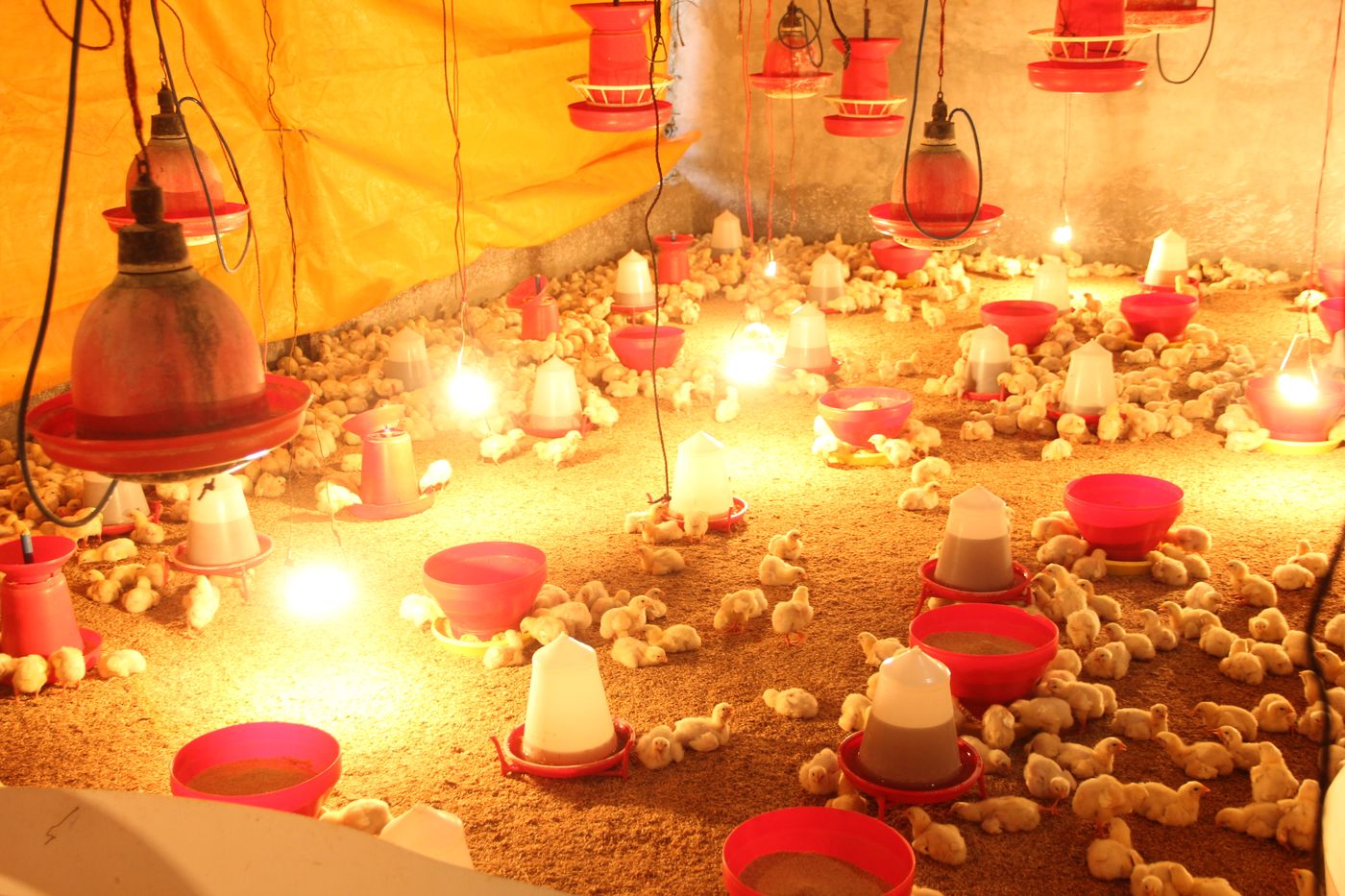
It is three in the morning in November, rain is drumming on the iron sheets, and the brooder that felt warm at eight o'clock in the evening is now several degrees colder. Nobody is awake to see it. By morning the chicks are piled in one corner, a few at the bottom of the pile have died, and the rest will carry the chill as slower growth and weaker immunity for weeks. The heater was working. The farmer simply had no way of knowing what the night did.
A thermometer and a hygrometer cost less than a bag of feed, and they turn the climate of a poultry house from a feeling into a number. Hung in the right place, read at the right times, and used with a simple record, they tell you how cold the night got, how damp the air is, and whether what you changed yesterday actually worked.
This guide covers what each instrument measures, where to hang them, the temperature and humidity ranges most farmers work to as rules of thumb, how to use a minimum and maximum reading, and what to do with the numbers on the cold, wet nights of the short rains.
What the Instruments Measure, and What They Cost
A thermometer measures air temperature. In a poultry house the reading that matters is the temperature where the birds actually are, which for day-old chicks is a few centimetres above the litter, not the temperature at the height of your face.
A hygrometer measures relative humidity: how much water vapour the air holds compared with the most it could hold at that temperature. Relative humidity is the key to wet litter, ammonia and respiratory trouble. Because cold air holds less water, humidity climbs as the house cools at night, even if nothing else changes.
| Item | Stock code | Price |
|---|---|---|
| Subhen Thermometer | 6708 | KSh 625 |
| Subhen Hygrometer | 6707 | KSh 500 |
| BROODER HEATER | 6138 | KSh 900 |
Prices are from our current price list. Ask at the branch to see each instrument before you buy, so you can check how it displays and how it mounts, and look at our thermo hygrometer page for a combined option. Whichever you choose, one instrument in the house is a start; two, one near the heat and one in the far corner, is far more useful.
Where to Hang Them
A thermometer reports the air touching it, and nothing else. Hung in the wrong place it will give a precise, confident, wrong answer, and you will manage the house to that wrong number. Placement matters more than the instrument.
- At bird height. In the brooder, at chick height, a few centimetres above the litter. For growers and layers, at roughly the height of the birds' backs. Warm air rises, so a reading at head height in a heated brooder can be several degrees warmer than the floor.
- Out of direct heat. Never under the heater or in the direct radiation of a bulb or gas brooder, which reads the heater, not the air. Hang it at the edge of the warm zone, where chicks should be comfortable.
- Out of the sun and off the outside wall. Afternoon sun through a curtain or onto iron sheets will push the reading up; an outside wall in the night will pull it down.
- Away from drinkers and wet patches. A hygrometer next to a leaking drinker reads the drinker. Hang it over dry litter.
- Away from the door and draughts. A reading taken in the path of the doorway air tells you about the doorway.
- Protected from birds. Fix it to a post or hang it from a wire where birds cannot perch on it or peck it, and wipe the dust off weekly.
Target Ranges by Age: Rules of Thumb
The ranges below are general guidance used widely in poultry keeping, not fixed laws. Breed, feathering, stocking density and the type of heater all shift the ideal, and your chicks' behaviour is always the final judge. Follow the breeder's or hatchery's guide where you have one.
- Week one: around 32 to 35 degrees Celsius at chick height in the warm zone, with cooler space nearby so chicks can move to where they are comfortable.
- Each following week: reduce by roughly 3 degrees, as our guide to chick brooding equipment sets out week by week.
- Off heat: once fully feathered, usually somewhere between weeks five and eight depending on breed and how cold your area is at night.
- Grown birds: a comfortable house for feathered birds is commonly taken as somewhere around 18 to 24 degrees, with heat stress more of a worry than cold once temperatures climb toward the 30s.
- Relative humidity: roughly 50 to 70 percent is the band most farmers aim for. Persistently higher readings go with wet litter and ammonia; very low readings in a dry, heated brooder go with dust.
Reading Minimum and Maximum: The Night You Did Not See
A single reading tells you what the house is like right now. It says nothing about three in the morning, which is when most brooder losses begin. That is why a minimum and maximum reading matters more than any spot check.
Many digital thermometers record the lowest and highest temperature since they were last reset. If yours does, the routine is simple: reset it when you do the evening check, and read the minimum and maximum first thing in the morning before you touch the heater or the curtains. If your instrument has no memory, you can still learn the pattern by taking readings late in the evening and again at first light for a week, and by checking the brooder once in the small hours on the coldest nights.
- Write it down. A line a day in a notebook: date, bird age, evening reading, overnight minimum, daytime maximum, humidity morning and evening, and what you changed.
- Look at the gap. A brooder that reads 33 degrees at nine at night and 25 by dawn has a heating problem the evening check will never show.
- Compare the two positions. If the warm zone holds but the far corner drops sharply, chicks still have a refuge; if both drop together, the heater is not keeping up.
Acting on the Readings in the Short Rains
October to December brings cold, wet nights to much of Kenya, especially at altitude. Two things happen together: the temperature falls, and the relative humidity rises because cool air holds less moisture. A house can be cold and clammy at the same time, which is the worst combination for young birds and for litter.
When the minimum is too low, start with the heat and the draughts, not the ventilation. Lower or add heat in the brooder, tighten the brooder ring so the warm zone is smaller, lower the curtain on the windward side, and block gaps at floor level where cold air runs across the litter. Our guide to gas versus electric brooders covers how each heat source behaves overnight.
When the humidity stays high, resist the urge to seal the house. Closing everything traps the moisture the birds breathe out and the ammonia from the litter, and the reading climbs further. Keep a small opening high up on the leeward side or at the ridge so moist air can leave, while the lower windward side stays closed against draughts. Then deal with the sources: fix leaking drinkers, top up and turn wet litter, and avoid overcrowding. Our guides to brooder ventilation and wet litter in the rains go into the detail.
When the maximum is too high, which happens on the sunny afternoons between showers, the problem is the opposite. Curtains closed for the cold night are often still down at two in the afternoon, and an iron-sheet roof in the sun heats the house quickly. Open up as the day warms, raise or switch down the brooder heat, and use the afternoon maximum to decide how early the curtains should come up tomorrow.
Check the Numbers Against the Birds
Instruments can drift, batteries fade and a thermometer can be knocked into a sunbeam. The chicks are the second instrument, and they never need calibrating.
- Chicks spread evenly and active: the temperature is about right, whatever the display says.
- Chicks crowded under the heat and cheeping loudly: too cold. Act even if the thermometer says otherwise, then check where it is hanging.
- Chicks pushed to the edges, panting with wings held out: too hot. Raise the heater or reduce it.
- Chicks bunched on one side: usually a draught or uneven heat. Look for the gap or the open curtain.
- Sharp ammonia smell at bird height, damp caked litter: humidity and ventilation need attention, whatever the hygrometer reads.
Once a month, check the thermometer against a second one by hanging them side by side for an hour. If they disagree by more than a degree or two, find out which is right before you trust either. And if birds show signs of illness, such as huddling with ruffled feathers at a normal temperature, unusual droppings or breathing noises, call a vet rather than adjusting the heat and hoping.
A Simple Daily Climate Routine
- First light: read and record the overnight minimum and the morning humidity before changing anything. Watch the chicks for a minute.
- Mid-morning: open curtains as the day warms, check the drinkers for leaks and turn any wet litter.
- Afternoon: read the maximum. On sunny days, check that the house is not overheating with curtains still down.
- Evening: close up for the night against draughts while leaving a high leeward or ridge opening. Check the heater, record the evening reading, and reset the minimum and maximum.
- Weekly: wipe the instruments, look back over the notebook, and lower the brooder target as the birds feather.
A thermometer and hygrometer will not keep chicks warm, but they will tell you, every morning, whether you did. For instruments, brooder heaters and the rest of your brooding setup, browse our livestock and poultry equipment, visit any Fuga branch, or ask on WhatsApp 0716 961 018.
Key Takeaways
- Hang instruments at bird height, out of direct heat, sun, draughts and drinkers; placement matters more than the instrument.
- Use two positions if you can: the edge of the brooder warm zone and the coldest far corner.
- As a rule of thumb, brood at around 32 to 35 degrees in week one and step down roughly 3 degrees a week, aiming for about 50 to 70 percent relative humidity.
- Read the overnight minimum every morning before changing anything; it is the honest test of the night the chicks lived through.
- On cold, wet short-rains nights, add heat and stop floor draughts, but keep a high leeward or ridge opening; never seal a house with a gas or charcoal heater.
- Check every reading against chick behaviour, and call a vet if birds look ill rather than adjusting the heat and hoping.
Frequently Asked Questions
Where should I put the thermometer in a brooder?
At chick height, a few centimetres above the litter, at the edge of the warm zone rather than directly under the heater. A thermometer under a bulb or gas brooder reads the heater's radiation, and one at head height reads the warm air that has risen above the chicks. If you can, add a second instrument in the far corner of the house so you know how cold the rest of the space gets.
What humidity should a poultry house have?
Roughly 50 to 70 percent relative humidity is the band most farmers aim for as general guidance. Readings that stay higher go with wet litter, ammonia and breathing problems, while very low readings in a dry, heated brooder go with dust. Expect humidity to rise at night as the house cools, and manage it with a high opening for moist air to escape and by fixing leaking drinkers and wet litter.
Why does a minimum and maximum reading matter?
Because the coldest part of the night usually comes in the early hours, when nobody is in the house. A thermometer that remembers its lowest and highest readings since the last reset shows you what actually happened overnight. Reset it at the evening check and read it at first light before changing the heater or curtains. If your instrument has no memory, take readings late in the evening and at first light for a week to learn the pattern.
Should I close the poultry house completely on cold, rainy nights?
No. Close the lower windward side and block floor-level draughts, but keep a small opening high up on the leeward side or at the ridge. A fully sealed house traps moisture and ammonia, and if a gas brooder or charcoal jiko is inside it can build up carbon monoxide, which has no smell and can kill both birds and people. Add heat in the brooder rather than shutting off the air.
Can I trust the thermometer more than the chicks?
Use both, and when they disagree, believe the chicks and then check the instrument. Chicks spread evenly and active are comfortable; chicks crowded under the heat are cold; chicks panting at the edges are too hot; chicks bunched on one side point to a draught. Once a month, hang two thermometers side by side for an hour, and if they differ by more than a degree or two, find out which one is right.