Walk into a broiler house in the third week of the rains and the litter tells the story before the birds do. It is dark, packed and damp, and the ammonia catches the back of your throat. The birds have dirty breast feathers and some are sitting more than they should. In the goat pen next door the bedding is a wet mat of dung and straw, and two does are limping.
Neither problem is a mystery. Both come from one thing: the animal is standing, sitting and eating on the surface it dungs on, and in the wet season that surface never dries. Wet, dung-soiled bedding is where coccidiosis oocysts ripen, where worm eggs hatch, and where the bacteria that cause footrot wait for a softened hoof.
A raised slatted floor breaks that contact. This guide explains how it does so, why the benefit is largest in the rains, how slats suit broilers, layers, ducks, goats and sheep, how to frame a floor that carries the load, what the gap size must do, how to clean and ventilate beneath it, and when deep litter is still the better choice.
How a Raised Slatted Floor Separates the Animal From Its Droppings
A slatted floor is a surface of narrow bars with gaps between them, raised on a frame above the ground. Droppings, spilled water and urine fall through the gaps and collect below, out of reach of the animal. The stock stand on a surface that stays dry because nothing pools on it, and nothing that fell through can be scratched, trodden or nosed back up.
Plastic slats do this job better than timber for three reasons. Plastic does not absorb urine or water, so the surface itself does not stay wet or hold pathogens inside it. It can be lifted, scrubbed, pressure washed and disinfected between batches without rotting. And it has no splinters or nail heads to injure feet and hocks. Timber slats work, but they soak up moisture, harbour bacteria in the grain and need replacing as they rot.
Most plastic slats are moulded panels with a grip surface on top and stiffening ribs beneath. They sit on a frame of timber or steel bearers and lock or bolt together into a continuous floor. The panel is only as good as the frame under it, which is why the framing section below deserves as much attention as the slats themselves.
Why It Matters Most in the Rains: Coccidiosis, Worms and Footrot
The three diseases that a slatted floor does most to control all share a stage of their life cycle on the floor, and all three accelerate in warm, wet conditions.
Coccidiosis in poultry is caused by single-celled parasites (Eimeria species) that live in the gut. The bird sheds their eggs, called oocysts, in its droppings. A fresh oocyst is not infective. It needs a day or two in warm, moist litter to mature, after which a bird that pecks it up becomes infected and sheds far more. Wet litter in the rains is the perfect nursery, and birds on litter cannot avoid eating from it. On slats the droppings fall away before the oocysts mature, and the birds cannot reach them, so the cycle is cut where it is weakest.
Worms follow a similar route. Roundworm and tapeworm eggs in poultry droppings, and the eggs of the gut worms of goats and sheep, pass out in dung and become infective on a damp floor, either directly or through beetles and other intermediate hosts living in the litter. An animal eating from a floor that carries its own dung keeps reinfecting itself. Dung under the slats is dung the animal cannot eat.
Footrot in goats and sheep is a bacterial infection of the hoof that takes hold when the skin between the claws is softened by standing in wet, dung-soiled bedding. Keep the hoof dry and the bacteria have far less chance. A slatted floor keeps the hoof out of the wet mat entirely, which is why raised floors are standard in wet-climate goat housing worldwide.
There are two further wet season gains. Ammonia comes from wet droppings, so a floor that keeps droppings separate and drying keeps the air cleaner, which protects the airways of birds and kids. And the birds' feet and breasts stay clean, which cuts the footpad lesions and breast blisters that wet litter causes in broilers and that downgrade the carcass.
Broilers, Layers, Ducks, Goats and Sheep: Where Slats Fit
The principle is the same for every species, but the practice differs.
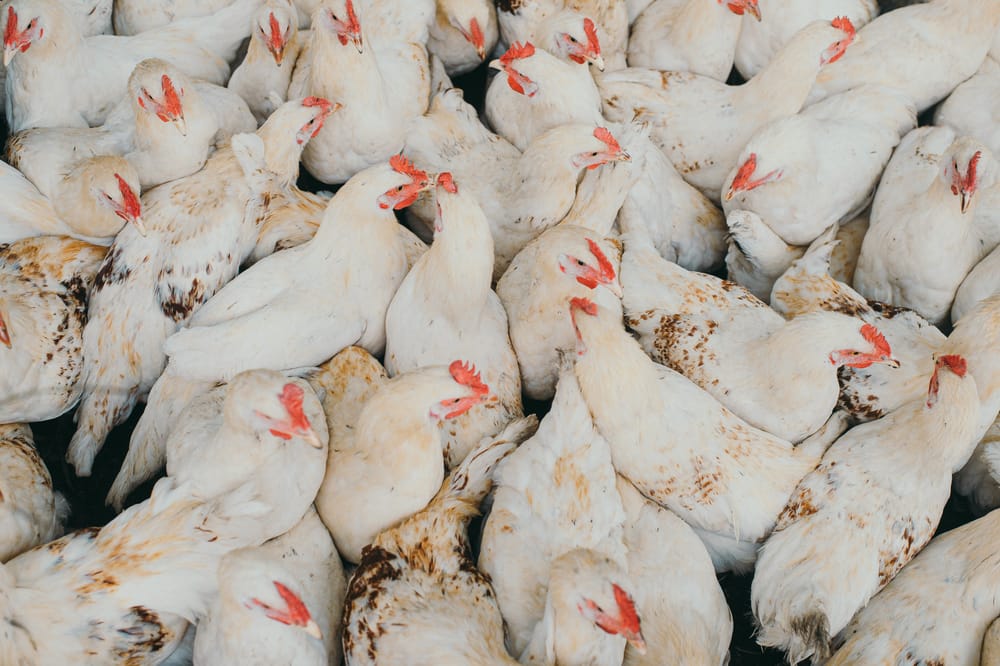
Broilers gain cleaner feet and breasts, lower coccidiosis exposure and a floor that can be washed between batches for true all-in, all-out hygiene. The one caution is brooding: day-old chicks need warmth from below as well as above, and a bare slatted floor under a brooder can be draughty. Many growers brood on a solid section or on paper laid over the slats for the first days and open the floor up as the chicks feather.
Layers are often kept on a partly slatted floor, with slats under the perches and drinkers where most droppings land, and a litter area for scratching and dust bathing. Nest boxes over the slatted section keep eggs cleaner. This is a middle path between cages and deep litter, and our guide to layer cages versus deep litter sets out the full comparison for anyone choosing between the systems.
Ducks are the strongest case of all. They produce very wet droppings and splash their drinking water everywhere, and on litter a duck house is a swamp within days. Slats over a drainage channel, with the drinkers placed over the slats, keep the house workable through the rains.
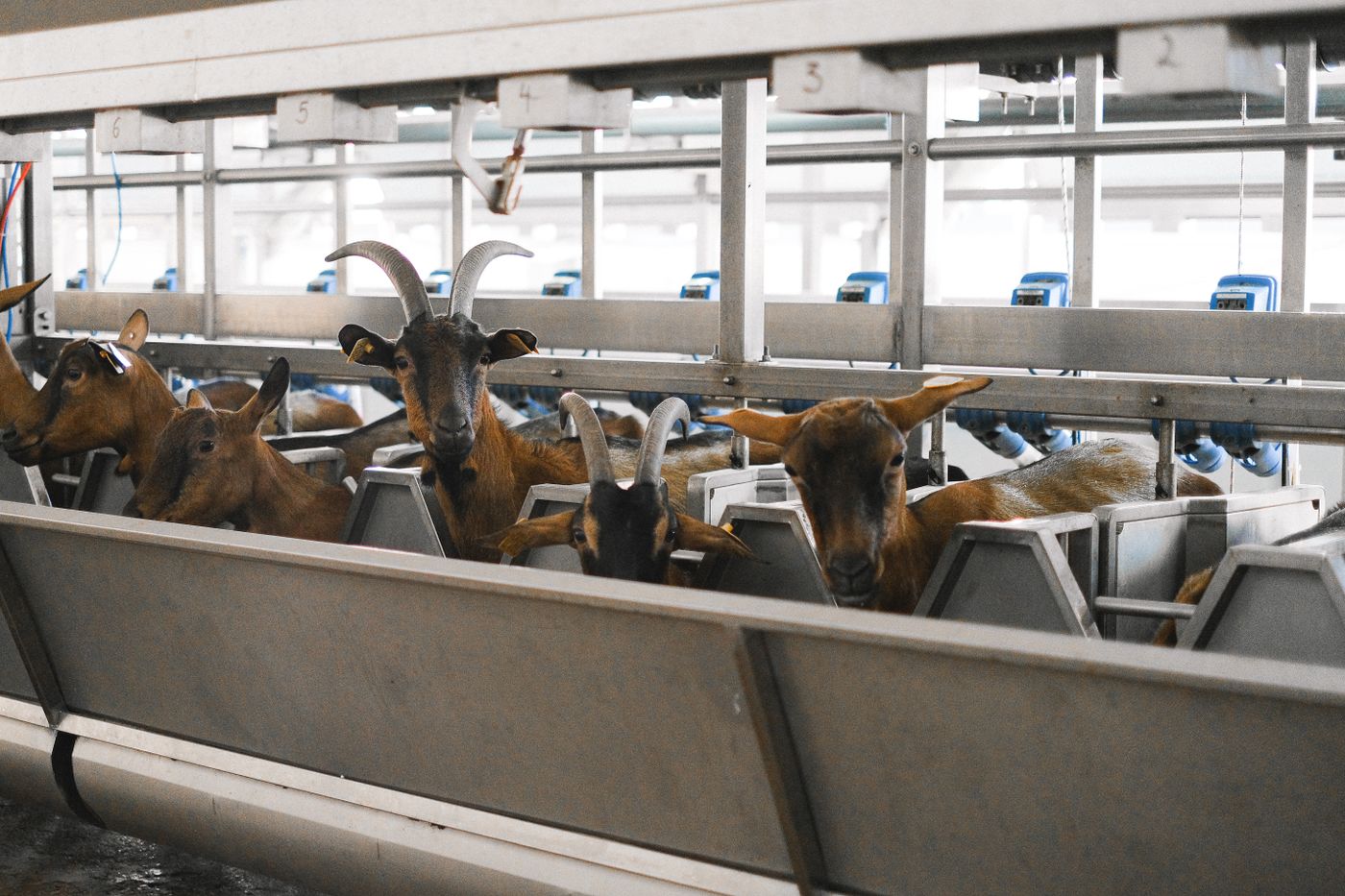
Goats and sheep on slats stay off their dung, keep dry hooves and cleaner udders, and the pen is easier to keep hygienic for kidding and milking. Dairy goats in zero-grazing units benefit most, because they are housed full time and the pen has to cope with everything they produce. Our dairy goat farming guide covers the unit design that a slatted floor sits inside.
Load, Framing and Support
A slatted floor is a structure, and it must carry the full weight of the stock plus a person walking on it during cleaning, plus feed troughs and water. A frame that flexes lets the panels part at the joints, traps feet and eventually breaks. Build it once, properly.
- Level the base. A gently sloped concrete or well-compacted floor beneath the slats lets liquid drain to one side and makes scraping easier. Mark the fall towards the cleaning access before you build.
- Set the bearers. Timber or steel bearers run across the pen at the spacing the slat manufacturer specifies for the load, resting on legs or blockwork. Heavier stock, goats and sheep especially, need closer bearer spacing than poultry.
- Fit the slats. Lay panels so their joints land on a bearer, lock them together as designed, and fix the perimeter so nothing can lift. Check that the top surface is level, because a slope that suits drainage below is not wanted on the walking surface above.
- Arrange drainage. Liquid under the floor must run to a channel or a collection point, not pool. Route it away from the house and from any water source.
- Leave cleaning access. Keep enough height beneath the floor for a scraper and a wheelbarrow, and leave a removable panel or an open side so you can reach every corner. A floor you cannot clean under is worse than litter.
Height matters more than people expect. For poultry a floor a little above knee height gives room to scrape under it. For goats and sheep, which produce far more dung, a higher floor with a proper walkway beneath, or a floor built at the top of a slope so a barrow can pass under, saves hours every month. If you are unsure about spans, use the manufacturer's table for the plastic slatted floors you are buying, and add a bearer rather than take one out.
Gap Size by Species
The gap between slats has one job: let droppings fall through while keeping every foot, hoof and toe on top. Too narrow and dung bridges the gap and builds a layer on the surface, which puts you back on litter. Too wide and a chick's leg or a kid's hoof goes through, and a trapped leg is a broken leg.
That is why plastic slats are made in species-specific patterns, with small openings and a fine grip surface for chickens and ducks, and wider, stronger bars for goats and sheep. Use the slat made for the animal, and check the manufacturer's stated opening size against the youngest stock that will stand on it. For day-old chicks and newborn kids, a solid mat, paper or a finer mesh laid over the slats for the first days is the usual answer, removed once the young are big enough for the standard gap.
Check the edges too. Where a slat panel meets a wall, a post or a trough there is often a gap that is nothing like the design opening. Fill or cover those joints, because that is where feet get caught.
Cleaning Under the Slats
A slatted floor moves the dung; it does not remove it. What collects below still has to be taken out, and how often depends on the species, the stocking density and the weather. Poultry droppings under a well-ventilated floor dry into a crumbly layer and can be left longer. Goat and sheep pens produce a wetter, heavier accumulation that needs scraping out more often in the rains.
- Scrape to the drainage side and take the material to a compost heap or manure store well away from the house.
- Keep the underside dry. If liquid is pooling under the floor, fix the fall or the drain before anything else, because a pool under the slats breeds flies and ammonia just as litter does.
- Wash and disinfect between batches. Lift the panels, pressure wash the top and underside, disinfect, dry in the sun and refit. Plastic makes this possible; timber does not.
- Control flies at the source. A dry accumulation breeds few flies and a wet one breeds many, so the moisture under the floor is the control point.
Cleaning fits inside a wider routine of boot dips, visitor control and all-in, all-out batching. Our farm biosecurity guide puts the floor in that context.
Ventilation Under a Raised Floor
Air beneath the floor does two things. It dries the droppings, which slows every parasite life cycle and cuts ammonia, and it carries that ammonia away rather than up through the slats into the animals' breathing space. A raised floor with closed sides underneath loses most of the benefit; a raised floor with open, screened sides underneath gains it.
The balance to strike is between airflow under the floor and draught on the stock above it. Young chicks and newborn kids chill easily, so the area beneath a brooder or a kidding pen needs its underside sheltered from wind while still able to breathe. Adult stock in a hot, humid house need the opposite: as much air movement as you can give them. Our poultry house ventilation guide explains how to move air through a house without dropping a draught on the birds.
When Deep Litter Is Still the Right Choice
Slats are not the answer for every house, and it is worth being honest about where litter still wins.
- Brooding. Chicks need warmth and a surface that holds it. Deep litter, kept dry and managed well, is a good brooding floor, and many growers brood on litter and grow on slats.
- Very small flocks. A dozen birds in a backyard house do not produce enough dung to justify a slatted floor and its frame, provided the litter is kept dry and topped up.
- Behaviour. Layers and breeders scratch, dust bathe and forage. A litter area, even a small one beside a slatted section, keeps them occupied and reduces feather pecking.
- Compost value. Deep litter mixed with droppings is a useful compost and a real output on a mixed farm. Droppings from under a slatted floor are also valuable, but they arrive without the litter carbon.
- Dry regions and dry seasons. Where litter stays dry, most of its problems disappear. The case for slats is strongest exactly where the rains make litter impossible to keep dry.
The strongest systems are often mixed: a solid or littered brooding area, slats under the drinkers and roosts where the wet droppings fall, and a litter section for behaviour. What matters is that the wettest part of the house is the part the animal is lifted off.
If the rains turn your litter into a mat every year, the floor is the place to start rather than another round of medication. Fuga stocks plastic slatted floors for poultry and small stock alongside the drinkers and feeders it makes locally, and any Fuga branch can talk through the framing for your pen, or WhatsApp 0716 961 018 with the pen dimensions and the species you keep.
Key Takeaways
- A raised slatted floor lets droppings, urine and spilled water fall out of the animal's reach, so the surface it stands and eats on stays dry.
- Coccidiosis oocysts, worm eggs and footrot bacteria all depend on a wet, dung-soiled floor, and the rains are when that floor never dries.
- Broilers, layers, ducks, goats and sheep all benefit, with ducks and zero-grazed dairy goats gaining most.
- Frame for the full load of stock plus a person, follow the maker's bearer spacing, and build in a drainage fall and cleaning height from the start.
- Use the slat made for the species, check its opening against the youngest stock, and cover the odd gaps at walls and troughs.
- Keep the space under the floor open and draining so droppings dry, and keep deep litter where it still wins: brooding, tiny flocks, behaviour and compost.
Frequently Asked Questions
How does a slatted floor reduce coccidiosis in chickens?
Coccidiosis oocysts are shed in droppings and are not infective until they have matured for a day or two in warm, moist litter. Birds on litter then peck them up and the cycle repeats, and wet litter in the rains makes it worse. On a raised slatted floor the droppings fall through the gaps before the oocysts mature, and the birds cannot reach them, so exposure stays low. It does not replace vaccination or a medication programme; it removes the nursery those oocysts depend on.
Can goats and sheep be kept on plastic slatted floors?
Yes, and they are among the animals that benefit most. Slats keep hooves out of the wet dung mat that softens the skin between the claws and lets footrot take hold, keep udders and bedding cleaner, and stop the animals eating from a floor that carries their own worm eggs. Use slats made for goats and sheep, with wider, stronger bars, frame them for the heavier load with closer bearer spacing, and cover the joints against walls and troughs where a hoof could catch.
What gap size do slats need for chicks and kids?
Small enough that no leg, toe or hoof can pass through, and large enough that droppings fall rather than bridge. That is why slats are moulded in species-specific patterns; check the manufacturer's stated opening against the youngest animal that will stand on it. For day-old chicks and newborn kids, most farmers lay paper, a solid mat or a finer mesh over the slats for the first days and remove it once the young are big enough for the standard gap.
Are plastic slats better than wooden slats?
For hygiene, yes. Plastic does not absorb urine or water, so the surface itself does not stay wet or hold pathogens in its grain, and it can be lifted, pressure washed and disinfected between batches without rotting. It also has no splinters or nail heads to injure feet and hocks. Wooden slats work and cost less to start with, but they soak up moisture, harbour bacteria and need replacing as they rot, so their advantage shrinks over a few wet seasons.
When is deep litter still the better choice?
For brooding, where chicks need a warm surface; for very small backyard flocks that do not produce enough dung to justify a frame; for layers and breeders that need somewhere to scratch and dust bathe; where the litter compost is a real output; and in dry regions or seasons where litter can actually be kept dry. Many of the best houses mix the two, with litter for brooding and behaviour and slats under the drinkers and roosts where the wet droppings land.