
The heifer calf born on your farm this morning is the cow you will be milking in two and a half years, and nothing you do to her as a milking cow will recover what she loses in the next ninety days. A calf that scours in week two and reaches weaning a month behind does not catch up. She calves later, milks less, and is more likely to leave the herd early.
None of that is decided by breed or price. It is decided by a few hours of colostrum, a clean teat, a dry bed and a routine that somebody actually follows at six in the morning. The equipment is cheap by dairy standards, which is exactly why it gets neglected.
This is the calf rearing kit in the order the calf needs it: colostrum, feeders, hygiene, pens and bedding, the measuring and marking tools, and the ninety-day routine that ties them together.
The First Six Hours: Colostrum Is the Only Job Today
A calf is born with almost no immunity of its own. The cow's placenta does not pass antibodies to the calf in the womb, so everything the calf has to defend itself with arrives in the first milk, the colostrum. For a short period after birth the calf's gut wall can absorb those large antibody molecules whole and pass them into the blood. That is passive transfer, and it is the single biggest thing separating calves that thrive from calves that struggle.
The catch is that the window closes. Absorption is highest in the first hours and falls steadily through the first day, until by around twenty four hours the gut has closed and colostrum is just food. Hence the widely taught four Qs: quickly, quality, quantity and cleanly. Feed the first meal as soon as the calf is standing, ideally within two hours. Feed a proper first feed rather than a token half litre, then a second within the first day. Feed it warm, at about body temperature, and feed it clean.
The equipment for this is modest: a clean bucket to milk the dam, a calf bottle with a teat, and an oesophageal feeder kept for the calf that will not suck. A colostrometer or refractometer checks quality when the dam is a first calver, and a stock of frozen colostrum from an older cow is the cheapest insurance a dairy can hold. Thaw it in warm water, never boiling, because heat destroys the antibodies.
Bottle, Teat Feeder or Bucket: How the Calf Drinks Changes Where the Milk Goes
A young calf is not a ruminant yet. Its rumen is small and undeveloped, and milk that lands in it ferments instead of being digested. The calf is built to avoid that: when it sucks with its head raised, a reflex closes a fold of tissue called the oesophageal groove, which channels milk past the rumen into the abomasum, the true stomach, where it clots and digests properly.
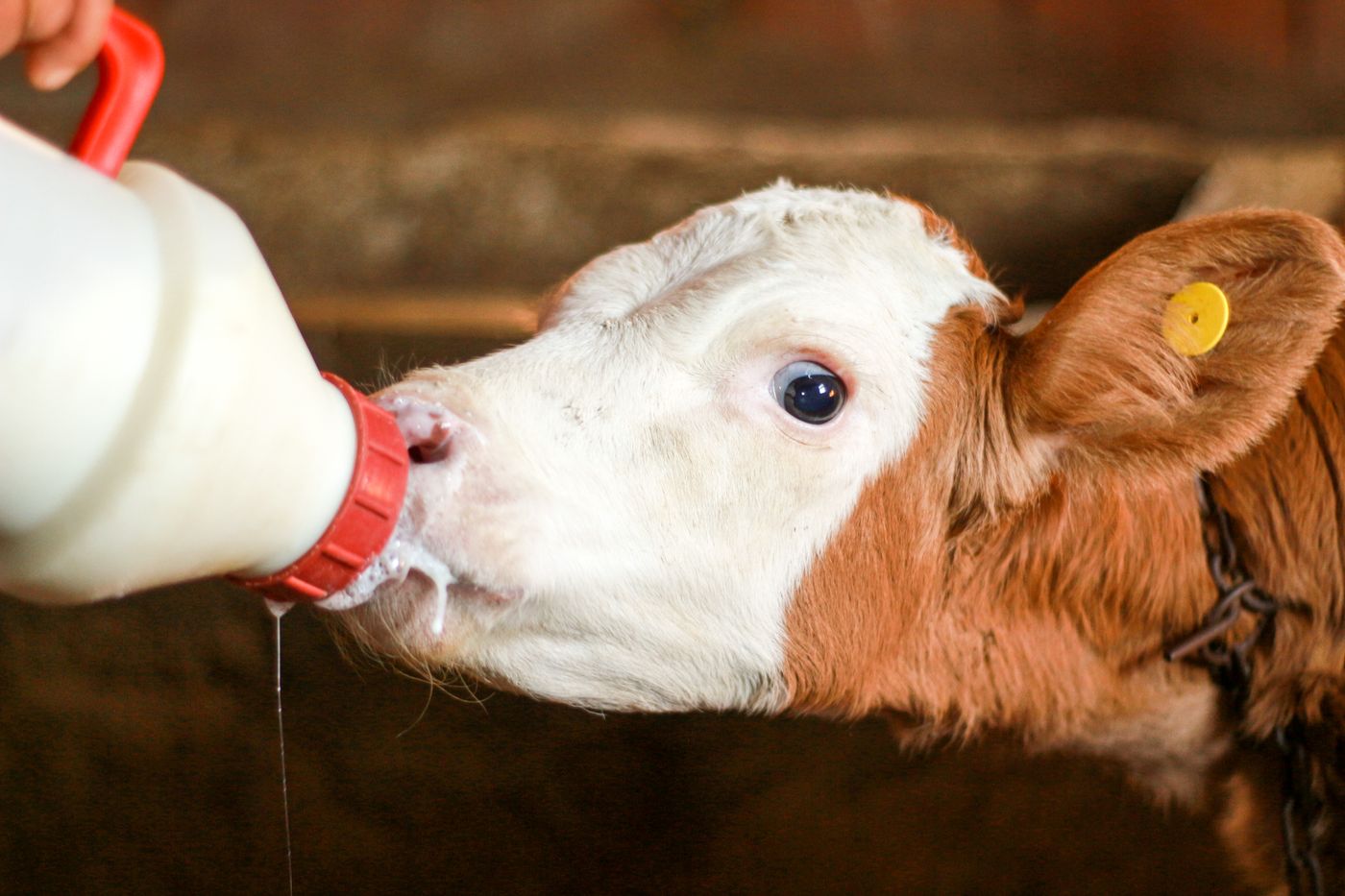
That reflex is why the teat matters. A calf sucking from a bottle or teat feeder is in the natural posture, drinks at a natural pace and closes the groove reliably. It also satisfies the urge to suck. Calves fed from a bucket often turn that urge on their pen mates, sucking ears, navels and the developing udder, a habit that can follow them into the milking herd.
Bucket feeding is not wrong. It is faster with many calves and easier to wash, and a trained calf still closes the groove for most of the meal. The honest summary is that the teat is better for the calf and the bucket is better for the person washing up, and for the first two to three weeks the calf should win. A two litre calf bottle is 650 KSH and a replacement teat 300 KSH on our price list, so cost is not the argument.
Whichever you use, feed at around body temperature and feed the same amount at the same times each day, because a calf's gut settles into a rhythm and sudden changes cause scours. Mix any milk replacer by weight to the label's directions, not by guesswork with a cup.
Cleaning Feeding Equipment: The Film You Cannot See
Every scour outbreak on a calf unit has a suspect list, and the feeding equipment is always on it. Milk leaves a film of fat and protein on plastic, and a rinse under the tap removes the visible milk and leaves the film. Within days the inside of a bottle, the underside of a teat and the seam of a bucket carry a biofilm that reseeds every feed with bacteria.
The wash routine is the milking parlour's, scaled down. Rinse first in lukewarm water, because hot water on raw milk cooks the protein onto the surface. Then wash in hot water with a dairy detergent and a bottle brush, reaching the shoulder of the bottle and the inside of the teat. Rinse, sanitise as the label directs, and stand everything upside down on a rack to dry in the air. Drying is a step, not an afterthought, because bacteria do not multiply on a dry surface.
Teats wear out: rubber goes sticky, cracks appear at the base, and the hole enlarges until the calf gulps instead of sucking. Inspect them weekly and replace them without sentiment. Give each calf its own bottle where you can, and always feed healthy calves before sick ones. One bottle shared along a row of pens is the most efficient way to pass scours down the line.
Individual Pens and Hutches: Why the First Weeks Are Spent Alone
The calf's immunity is borrowed, and it fades through the first weeks until the calf's own takes over. In that gap the biggest risk is the calf next door. Nose-to-nose contact spreads respiratory disease, muck spreads scours, and a bucket left between pens spreads both. An individual pen or hutch for the first weeks is not cruelty; it is quarantine.
A hutch is the simplest form and works well in most of Kenya: a covered shelter with a small open yard in front, sized so the calf can lie, turn and stand comfortably, moved between calves so the ground rests, and facing away from the prevailing wind and rain. What separates a good hutch from a bad one is that it is draught-free at calf height but ventilated above it. A calf in a draught chills; a calf in stale, ammonia-laden air develops pneumonia. You want fresh air moving over the calf, not through its bed.
Fixed pens inside a calf house follow the same rules: solid partitions for the first weeks, a floor that drains, and distance from the adult herd. If you are laying out a zero-grazing unit, put the calf pens upwind of the cow shed and manure store, with their own water point and their own tools. A wheelbarrow that carries slurry should never enter the calf house.
Bedding: Dry Is the Whole Job
Bedding has one purpose, to keep the calf dry and warm. Long straw is best where you can get it, because a calf nests into it and traps warm air around itself. Wood shavings are a fair second, sawdust is dusty and packs down wet, and bare concrete or earth is not bedding at all.
Depth matters more than material. A thin layer wets through in a day; a deep bed topped up daily stays dry at the surface where the calf lies while the base absorbs. When a calf leaves, strip the pen to the floor, wash and disinfect it, and leave it empty and dry for several days before the next calf goes in. That rest breaks the disease build-up that turns a good calf house into a bad one after a year of continuous use.
Weigh Tapes, Ear Tags and Dehorning: Measuring and Marking the Heifer
You cannot manage growth you do not measure, and most smallholder calf units measure nothing. A weighing tape fixes that for 800 KSH. It is a girth tape marked in kilograms: pass it around the calf just behind the front legs, snug but not tight, and read off an estimated liveweight. It is not a scale and it drifts a little with breed and condition, but used the same way by the same person every fortnight it tells you what you need to know: gaining, stalling or losing.
Weigh at birth, then every two weeks to weaning. The widely used target is for a calf to double its birth weight by weaning. If the tape shows a calf falling behind, you find out in week three, when the fix is a feeding adjustment, rather than at nine months, when the fix is a year of lost milk.
Ear tags go in during the first days, while the calf is small enough to hold with one arm. Place the tag in the middle third of the ear, between the ribs of cartilage and away from the visible veins, with a proper applicator. The number links the calf to its birth weight, its dam, its colostrum record and every treatment it ever gets. Cattle tags start from 10 KSH and a marker pen is 650 KSH. The tag, the tape and the rest of the kit are covered in our guide to the livestock handling toolkit.
Dehorning is safer and kinder the earlier it is done. In the first weeks the horn bud is a small, free floating button in the skin that has not yet attached to the skull, and disbudding it with a hot iron is a quick procedure that heals cleanly. Wait past about two months and the bud fuses to the bone, and removal becomes a surgical job with a wound that opens into the sinus. Whatever the method, involve your vet on pain relief and technique, restrain the calf properly, and keep the dehorning iron and the Burdizzo for bull calves clean and dedicated to the job. A large Burdizzo is 4,700 KSH and the small size 3,500 KSH on the price list.
The Ninety-Day Routine That Ties It Together
Equipment is half of calf rearing. The other half is a written routine that the person on the morning shift follows without being reminded.
Days one to four. Colostrum on day one, then the transition milk the cow produces over the next few days, which still carries some protection. Dip the navel with an antiseptic your vet recommends and check it daily. Tag the calf and record the birth weight.
Day five to about week eight. Milk or replacer from a teat, twice daily at fixed times and the same volume each time. From the first week, offer clean water in its own bucket and a small amount of fresh calf starter daily, discarding what is not eaten. This is the part most farms get wrong: the rumen does not develop from milk or hay. It develops in response to fermentation of grain-based starter, which grows the papillae that absorb nutrients for the rest of the cow's life. And a calf with no water will not eat dry feed.
Weaning. Wean by starter intake, not by age. When the calf is eating a good daily amount of starter consistently for several days and the tape confirms steady gain, step milk down over a week or so and then stop. Keep the calf in the same pen through weaning and for a week or two after, so it is not coping with a move, new pen mates and a diet change at once.
Weaning to day ninety. Move the calf to a small group of similar age, keep starter in front of it, introduce forage gradually, and keep weighing. By day ninety a heifer that has been fed, kept dry and measured is visibly different from one that has not, and that difference persists to her first lactation.
Putting the Kit Together
The full list fits in the boot of a car: bottle and spare teats, buckets for water and starter, brush and dairy detergent, hutch or pen, bedding, weighing tape, ear tags with applicator and marker pen, and dehorning and castration tools. The expensive part is the discipline.
We stock all of it within the dairy and livestock range at six branches: Nairobi Ngara (City View Plaza, Musindi Road), Nairobi Haile Selassie Avenue (Gogo Mall B51), Eldoret Uganda Road, Eldoret Langas, Nakuru (Gusii Road) and Coast Kanamai (Mombasa-Malindi Road). Call 0734 263958 or WhatsApp 0716 961018 with the number of calves you are rearing and we will put the right kit together.
Key Takeaways
- The calf is born without immunity. Colostrum fed quickly, in enough quantity and cleanly is the biggest decision of its life, and the absorption window closes over the first day.
- A teat feeder keeps the calf in the sucking posture that closes the oesophageal groove and sends milk to the true stomach. Use it for at least the first two to three weeks.
- Wash feeding equipment after every feed: lukewarm rinse, hot detergent wash, rinse, sanitise, dry upside down. Replace worn teats and feed sick calves last.
- Individual pens or hutches for the first weeks are quarantine: draught-free at calf height, ventilated above, rested between calves. Judge bedding by the knee test.
- Weigh with a tape every fortnight against the ear tag number, and act on a calf falling behind in week three rather than month nine.
- Offer water and starter from the first week, because starter grows the rumen and water lets the calf eat it. Wean by intake, not by calendar, and step milk down rather than stopping.
- Tag in the first days and disbud while the horn bud is still free in the skin, with your vet involved on pain relief.
Frequently Asked Questions
How soon after birth should a calf get colostrum?
As soon as it is standing and sucking, and ideally within the first two hours. The calf's gut can only absorb whole antibodies from colostrum for a short period after birth, and that ability falls steadily through the first day until it is essentially closed by around twenty four hours. Colostrum fed late is still food, but it is no longer protection. Milk the dam early, feed the first meal warm and clean, and repeat within the first day.
Is a teat bottle better than a bucket for feeding calves?
For the first weeks, yes. Sucking from a teat with the head raised triggers the reflex that closes the oesophageal groove, so milk bypasses the undeveloped rumen and goes to the abomasum where it is digested. It also satisfies the urge to suck, which reduces cross-sucking on pen mates. Bucket feeding works and is quicker to wash, but the groove closes less reliably when a calf gulps with its head down.
How do I clean calf bottles and teats properly?
Rinse in lukewarm water first, never hot, because hot water cooks milk protein onto the plastic. Then wash in hot water with detergent and a brush, rinse, sanitise, and leave everything upside down to drain and dry completely. Take the teat off the bottle every time, because milk collects behind it. Replace any teat that is cracked, sticky or has an enlarged hole, and feed sick calves last with their own equipment.
When should a calf be dehorned and ear tagged?
Early, in both cases. Ear tags go in during the first days, while the calf is small enough to hold. Horn buds are disbudded while still free floating in the skin, generally within the first weeks and before about two months of age, because after that the bud attaches to the skull and removal becomes a surgical job. Involve your vet on pain relief and technique, and keep the tools clean and dedicated to the job.
When should I wean a calf off milk?
Wean by starter intake, not by the calendar. The rumen develops in response to grain-based calf starter, not milk or hay, so the calf is ready when it is eating a good daily amount of starter consistently for several days and has clearly gained on the tape. Step milk down over a week or so rather than stopping overnight, and keep the calf in the same pen through weaning.