Fish farming looks simple from the roadside: dig a hole, fill it with water, add fingerlings, and wait. The farmers who make money from it know better. Aquaculture is a water-management business, and the gap between a pond that returns a profit and one that drains your savings comes down to a handful of decisions made before the first fish goes in.
Kenya has pushed hard on this front. Through the Aquaculture Business Development Programme, county governments and national agencies have promoted tilapia and catfish farming, from Kisumu, Homa Bay, and Kakamega in the west to Kiambu, Meru, and Machakos in central Kenya. Demand for fresh tilapia in urban markets keeps climbing, and a pond that was once a nice extra can now be a serious enterprise.
This guide walks through the equipment and choices that decide whether your pond performs: pond type, sizing a liner, water supply and pumps, aeration and why dissolved oxygen matters most, water testing, feed, stocking density, harvesting nets, and the economics that tie it together.
Choose Your Pond Type First
Everything downstream depends on the pond itself. There are three practical options in Kenya, each suiting a different site, budget, and ambition.
Earthen ponds are the traditional choice: a pond dug into the ground with soil walls and floor. They are the cheapest to build where you have clay-rich soil that holds water, and the natural bottom grows algae and micro-organisms that fish graze on. The catch is in the soil: sandy or porous ground lets water seep away faster than you can pump it in, and a leaking earthen pond is a bottomless money pit.
Liner-lined ponds solve that leak. You dig the same pond but seal the floor and walls with a waterproof membrane, a pond liner, usually a tough plastic sheet. This gives a reliable pond on soil that would never hold water, plus cleaner water and easier harvesting. The liner is an added cost, but on the wrong soil it is the difference between a working pond and no pond at all.
Tanks, whether circular plastic, lined steel frames, or concrete, suit sites where land is tight or you want tight control. They use a small footprint, are easy to drain, clean, and harvest, and fit intensive systems that lean on aeration and feed. They cost more per unit of water and depend on power, so they reward active management.
Pond Liners and How to Size Them
A pond liner is the waterproof skin of your pond, and for most Kenyan sites without perfect clay it is what makes the whole thing viable. The common choice for small and medium ponds is a heavy-duty geomembrane, a thick reinforced plastic sheet made for holding water. Laid properly over a smooth base, it will hold a pond for years.
Sizing a liner is where beginners lose money, by buying too little or overpaying. The rule is simple: the liner must cover the floor and climb up both sides, plus a margin to anchor over the top edge. So for each dimension you add the depth twice, once for each sloping wall it must climb.
A worked example makes it concrete. Say you want a pond 10 metres long, 6 metres wide, and 1.5 metres deep. The liner length is the pond length plus two depths plus an anchoring margin: 10 + 1.5 + 1.5 is 13 metres, plus roughly half a metre each end to bury over the edge, giving about 14 metres. The width works the same way: 6 + 1.5 + 1.5 is 9 metres, plus margins, about 10 metres. So you buy a sheet of roughly 14 by 10 metres. Always round up, because a liner that comes up short cannot be stretched.
Water Supply and Pumps
A pond is only as reliable as the water feeding it. Before anything else, secure a dependable source, whether a borehole, a river, a spring, harvested rainwater, or a piped supply, and be honest about how steady it is through the dry months.
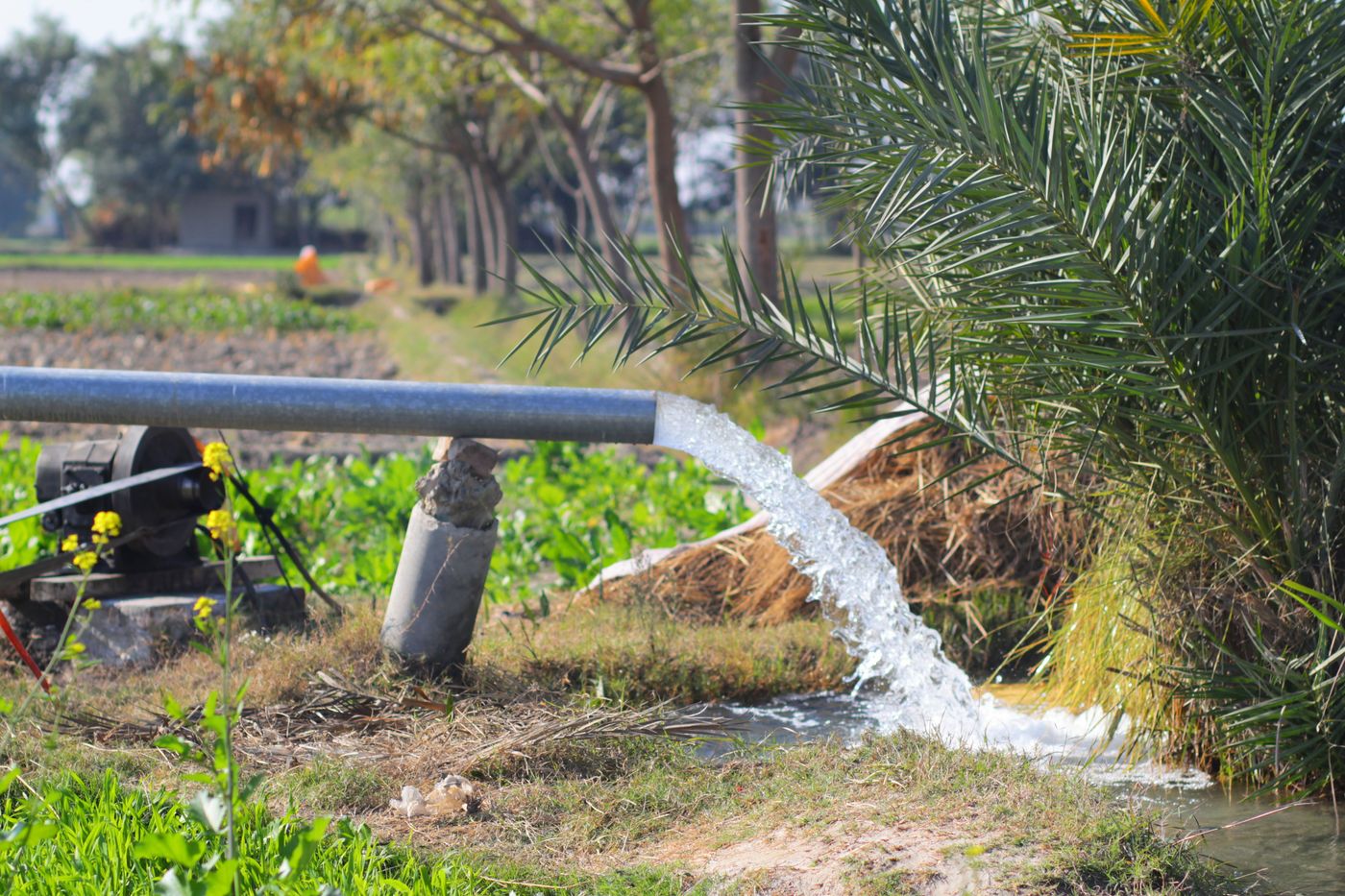
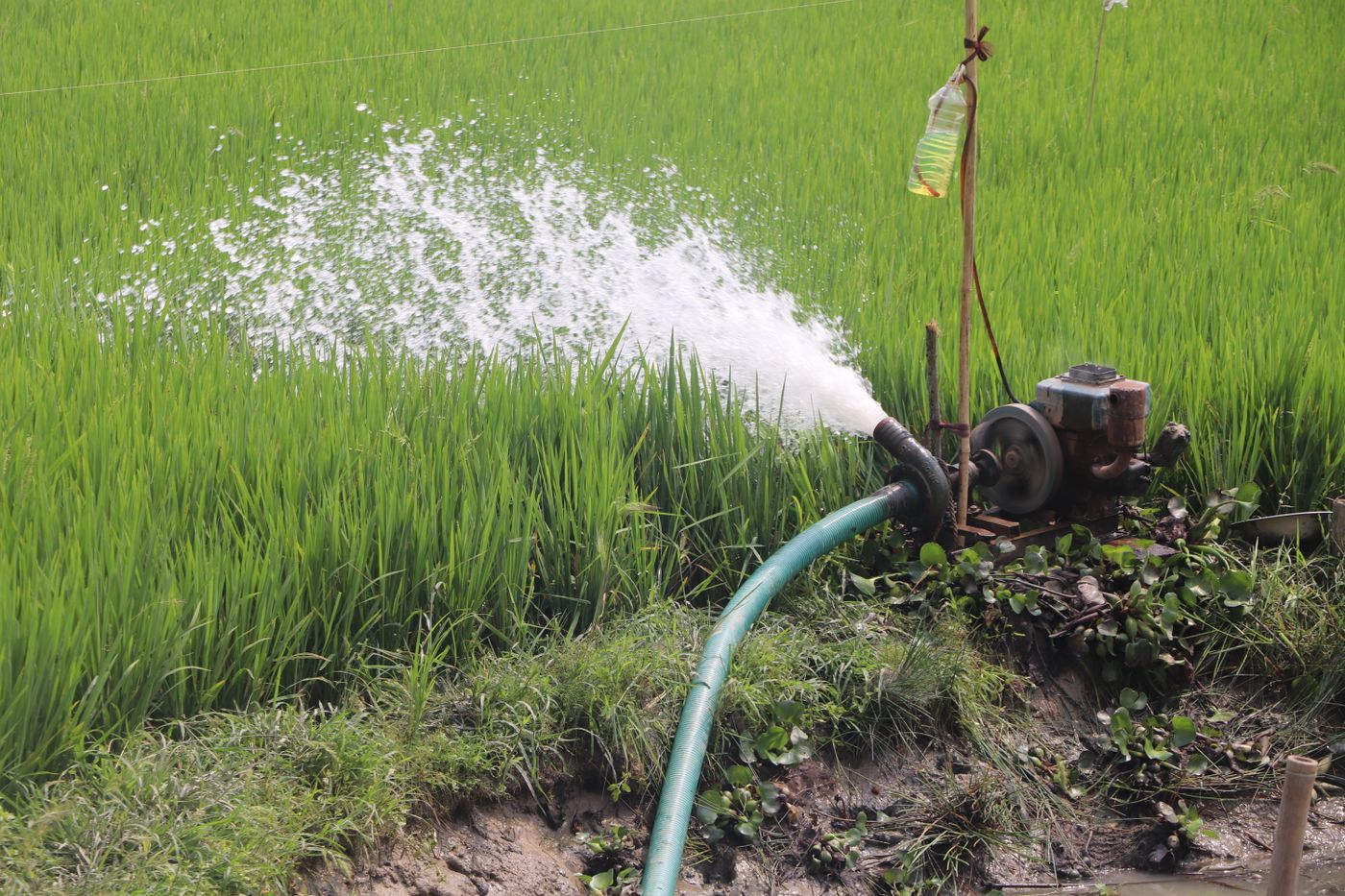
Moving that water almost always means a pump. For most small farms a centrifugal pump handles the initial fill and periodic top-ups to replace what evaporates and seeps away. Where the grid is unreliable or absent, a solar-powered pump turns a borehole into a steady, fuel-free supply that suits a fish farm's daytime demands.
Size the pump to the job. Too small takes a frustrating age to fill a pond; oversized wastes money and power. The two numbers that matter are flow rate, how much water it moves per hour, and head, how high and far it must push that water. Get those right and the pump becomes invisible infrastructure. Our water equipment range covers pumps, tanks, and piping sized for exactly this kind of setup.
Aeration: Why Dissolved Oxygen Decides Your Harvest
If you remember one thing from this guide, make it this. Dissolved oxygen, the amount of breathable oxygen held in the water, is the factor most likely to kill a crop overnight. Warm water holds less oxygen than cool water, and Kenyan ponds are warm. Add more fish and feed, and their breathing plus the decay of waste and uneaten feed can strip the water faster than nature replaces it.
The danger hours are before dawn. By day, algae and plants release oxygen through photosynthesis. At night that stops, yet every fish, plant, and microbe keeps consuming oxygen, so levels fall through the night and bottom out just before sunrise. On a hot, still, cloudy stretch, a heavily stocked pond can cross into oxygen starvation, and farmers wake to fish gasping at the surface. That single morning can erase a season.
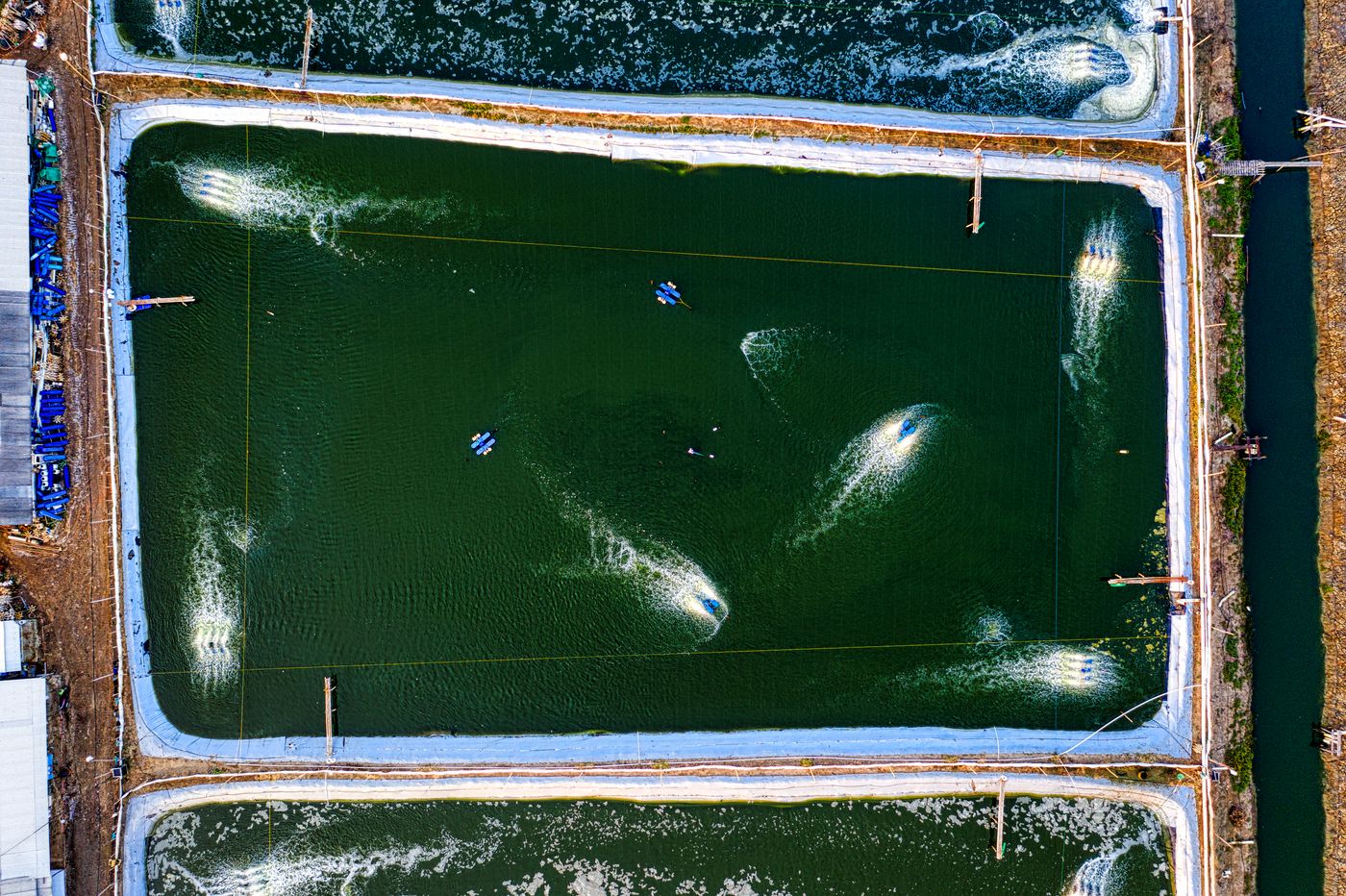
This is what aeration prevents. A paddlewheel aerator churns the surface, folding air into the water and driving a current, and it is the workhorse of stocked tilapia ponds. A diffuser aerator, or air blower, pushes air through pipes to release fine bubbles from the pond floor, oxygenating from the bottom up. Both keep dissolved oxygen above the level at which fish suffer.
Water Testing: Know Your Pond by the Numbers
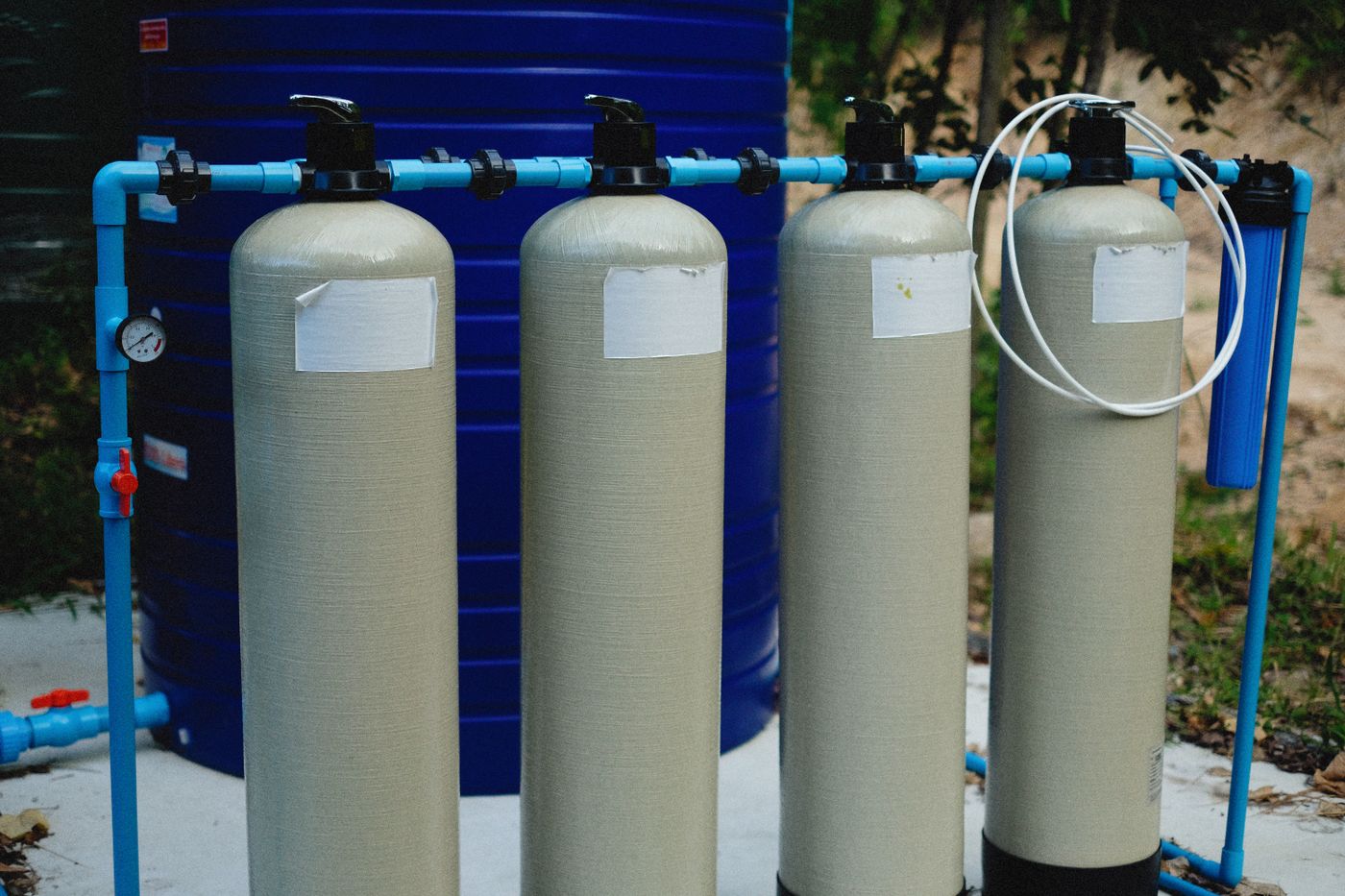
You cannot manage what you cannot measure, and a pond that looks fine can be quietly turning against your fish. A basic water testing kit turns invisible chemistry into numbers you can act on. Four readings carry most of the weight.
Dissolved oxygen confirms whether your aeration is keeping up, especially in the risky pre-dawn window. pH, how acidic or alkaline the water is, should sit in a comfortable middle band, because water that swings too far either way stresses fish. Ammonia builds up from fish waste and rotting feed and is toxic even in small amounts, so a rising reading warns you to feed less, change water, or aerate harder. Temperature governs how fast fish grow and how much oxygen the water can hold.
You do not need a laboratory. A simple test kit, used on a routine and especially after heavy feeding, hot spells, or signs of distress, catches a problem while it is still a small correction rather than a dead pond.
Feed, Feeding, and Stocking Density
Feed is the largest running cost in most fish farms, often well over half, so how you feed decides your margin. Tilapia and catfish both do well on formulated pelleted feed, and the key is matching pellet size to fish size: tiny crumble for fingerlings, larger pellets as they grow. A pellet too big for a small fish sinks and rots, wasting money and fouling the water.
Feed to appetite, not to a fixed scoop. Give what the fish clear in a few minutes, once or twice a day, and watch them eat. Uneaten feed is a double loss: money on the bottom, and decaying matter that pulls down oxygen and pushes up ammonia.
Stocking density, the number of fingerlings per unit of pond, is the lever that most tempts beginners into trouble. Crowd in more fish and in theory you harvest more, but every extra fish demands more oxygen and feed, and produces more waste. A common starting guide for tilapia in a well-managed earthen pond is a few fish per square metre, going higher only with reliable aeration and intensive management. Start conservative: it is far better to harvest healthy fish from a comfortable pond than to lose a crowded one to an oxygen crash.
Harvesting Nets and Handling
Harvest is payday, and the right net makes it quick and clean while the wrong approach stresses fish. A seine net, a long net wall you drag across the pond to corral fish toward one end, is the standard tool for a full harvest, and the reason smooth-floored liner and tank ponds are far easier to work than a snag-filled earthen bottom. For partial harvests, grading, or moving fish, a scoop or dip net does the job.
Handle fish gently and quickly, ideally in the cool of early morning, and have your buyer or transport lined up before you drag the net. Fish lose quality fast in the heat, so the smoothest operations plan the sale before the harvest.
The Economics, Honestly
A fish pond is a real investment. The upfront costs are the pond and liner, the water supply and pump, aeration, and nets and testing gear. The recurring costs are dominated by feed, followed by fingerlings each cycle, power for pumps and aerators, and your own labour.
Because feed and fingerlings are where the money goes, anything that wastes feed or kills fish attacks profit directly. That is why the unglamorous items, the aerator that prevents a wipeout and the test kit that catches trouble early, protect your return far more than their price suggests.
Key Takeaways
- Match the pond to your soil: earthen for cost on good clay, liner-lined for water security on porous soil, tanks for intensive control on tight land.
- Size a liner as pond length plus twice the depth plus a margin, and the same for width. Round up, and cushion the base against sharp stones.
- Secure a reliable water source and size your pump to flow rate and head. Solar pumps suit off-grid farms.
- Dissolved oxygen decides your harvest. Oxygen bottoms out before dawn, and once you push stocking and feed, a paddlewheel or diffuser aerator is essential insurance.
- Test water for oxygen, pH, ammonia, and temperature, and act on rising ammonia or falling oxygen early.
- Feed to appetite with the right pellet size, stock conservatively, and buy healthy monosex tilapia fingerlings.
- Feed and fingerlings dominate running costs, so the aerator and test kit that prevent losses protect profit.
Frequently Asked Questions
Do I need a pond liner, or can I use a plain earthen pond?
It depends on your soil. Clay-rich ground that holds water can work as an earthen pond, at the lowest cost. Sandy or porous soil that drains quickly needs a liner to hold a reliable pond. Test first: dig a pit, fill it, and watch how fast it empties.
When does a fish pond really need an aerator?
The more fish and feed you add to raise your harvest, the more you need aeration. A lightly stocked, well-managed pond may cope on its own, but any heavily stocked pond risks an oxygen crash before dawn on hot, still nights. For anyone farming for market, a paddlewheel or diffuser aerator is cheap protection against losing the whole crop.
How many tilapia fingerlings should I stock per square metre?
Start conservative, a few fish per square metre in a well-managed earthen pond, and push higher only with reliable aeration and intensive management. Overstocking crowds the fish, strips oxygen, and often produces many small fish instead of fewer large, marketable ones.
Should I farm tilapia or catfish in Kenya?
Both have strong markets. Tilapia is the most popular table fish and sells widely, while catfish is hardier, tolerates lower oxygen, and is often farmed alongside tilapia. Many farmers begin with tilapia for its market and add catfish as they gain confidence. Let your water source, market access, and buyer preferences guide the choice.
How much does fish farming equipment cost at Fuga?
Prices vary with size, specification, and stock, so we do not list fixed figures here. Confirm current price on WhatsApp at wa.me/254716961018 or call 0734263958, and our team will help you spec liners, pumps, aerators, and testing kits. You can also visit any branch in Eldoret, Nakuru, Nairobi, or the Coast.