Setting up a garage or a fabrication shop in Kenya rarely fails because someone bought a bad tool. It fails because they bought the wrong tools in the wrong order, spent the deposit on a machine they use twice a month, and left the everyday workhorses for later. By the time cash flow tightens, the shop is half equipped and can only take on half the jobs.
We sell to jua kali fabricators in Eldoret, matatu mechanics in Nakuru, workshop owners in Nairobi, and marine and truck repairers on the Coast. The pattern is the same everywhere. The tools that pay for themselves fastest are the cheap, boring ones you reach for every single day, not the expensive specialist machines.
This guide walks through the core workshop power tools, what each one is really for, and the order we would buy them in if we were opening a shop today. If you also weld, read it alongside our companion piece on choosing a welding machine for a rural workshop, because the two toolsets work hand in hand.
The Angle Grinder: The Tool You Buy First
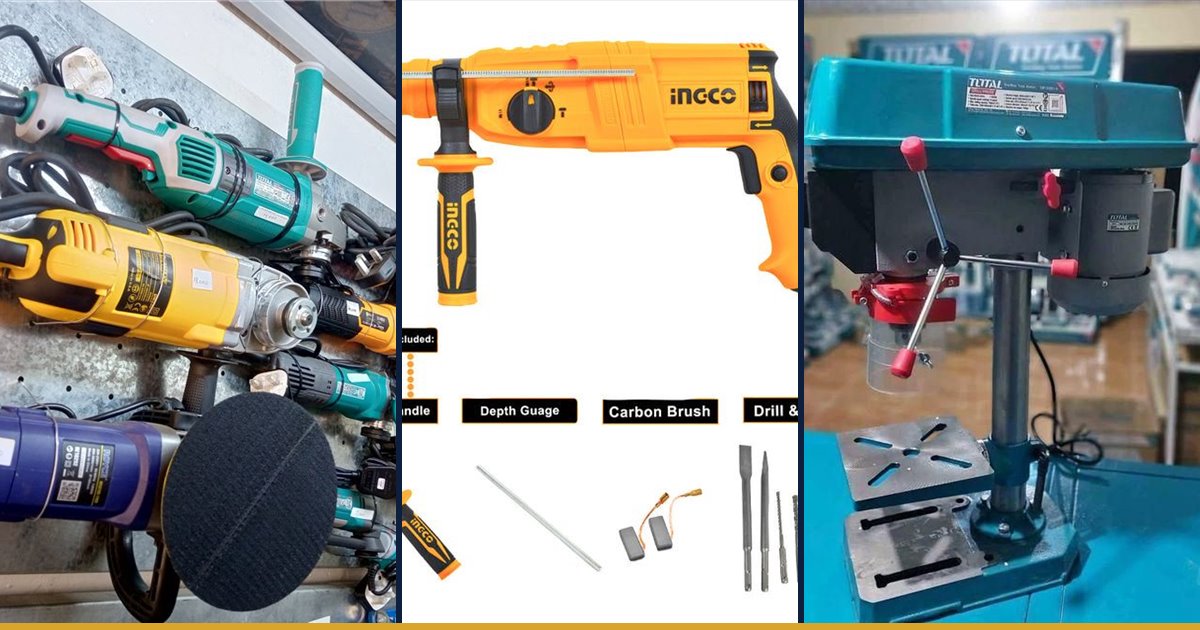
If you can only afford one power tool on day one, make it an angle grinder. Nothing else in the shop is as versatile. With the right disc, a single 4.5 inch or 5 inch grinder will cut steel bar, slice through bolts, grind down welds, clean off rust and paint, sharpen panga and jembe blades, and polish a finished piece.
Most Kenyan shops run more than one grinder for a simple reason: changing discs all day wastes time. A common setup is one grinder kept loaded with a thin cutting disc and a second kept loaded with a grinding disc. Fabricators who do a lot of finishing add a third for flap discs and wire cups.
When you buy, look at wattage and build quality rather than the sticker on the box. A grinder in the 800 to 1000 watt range handles continuous fabrication work far better than a light domestic unit that overheats after twenty minutes. Ask us to confirm current price and available models on WhatsApp before you decide.
The Drill: Corded, Cordless, or Both
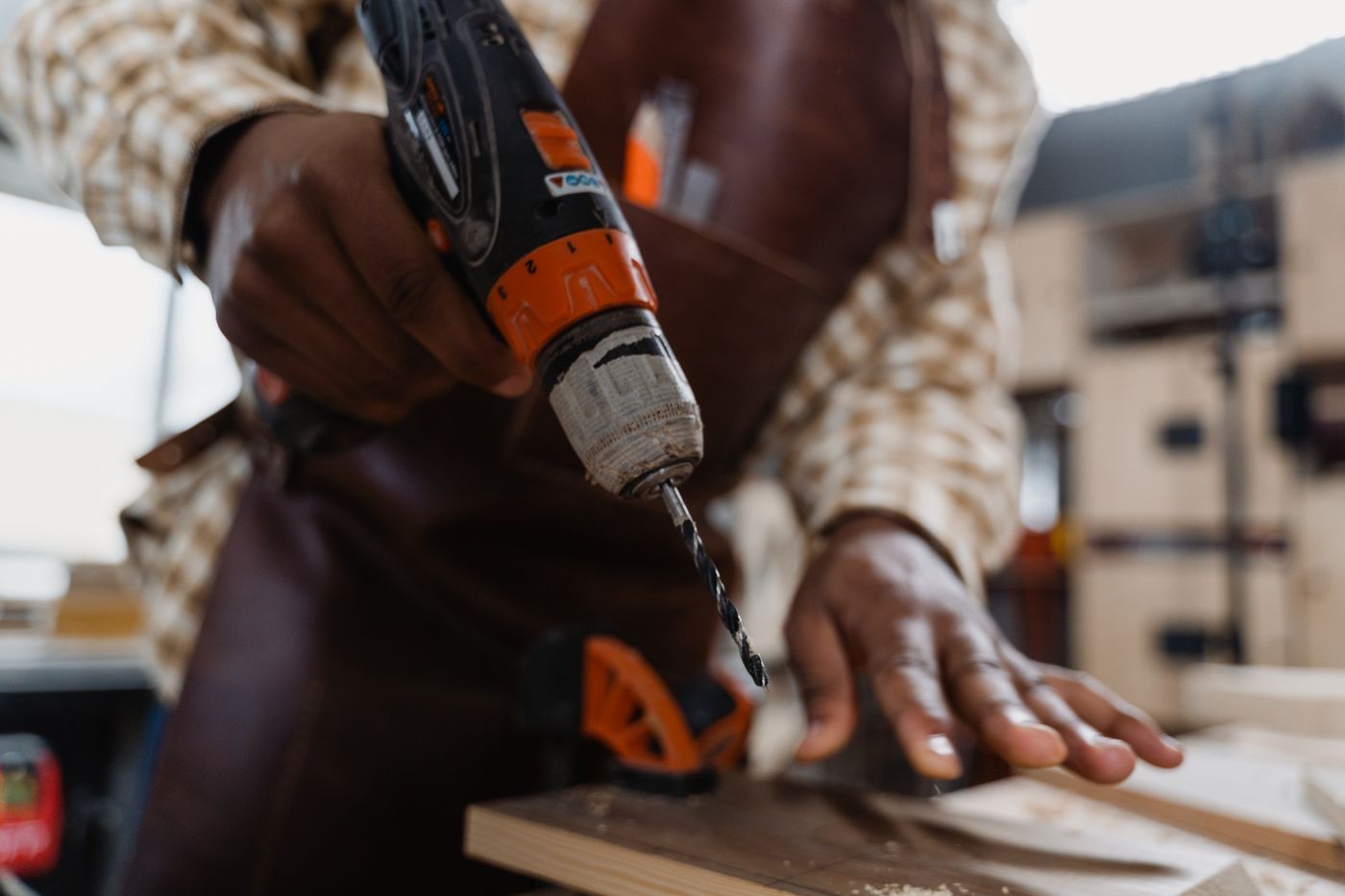
A drill is the second tool most shops reach for. In practice you want two capabilities: a corded impact or hammer drill for heavy, continuous drilling into steel and masonry, and a cordless driver for the fast, repetitive screwing and light drilling that happens away from a socket.
For a fabrication shop, the corded unit earns its keep first. It gives constant torque with no battery to run flat halfway through a job, which matters when you are drilling a run of holes through thick plate. The cordless is the convenience tool you add once the shop is earning, and it shines on site visits and installations where trailing a cable is a hazard.
If your work touches masonry, wall anchors, or concrete floors, choose a drill with a hammer function rather than buying a separate machine early on. One capable corded hammer drill covers steel and concrete for most general workshops.
The Bench Grinder: Sharpening and Shaping
A bench grinder is the fixed workhorse that quietly keeps the rest of the shop productive. Bolted to a bench, it sharpens drill bits, chisels, and blades, dresses metal edges, and with a wire wheel fitted it strips rust and scale fast.
For mechanics and fabricators the bench grinder pays back through sharp tools. A blunt drill bit forced through steel burns out, wanders, and ruins the workpiece. A few seconds on the bench grinder restores the cutting edge and saves the cost of a new bit. For agricultural customers it doubles as the fastest way to sharpen a shamba full of jembes and pangas before planting season.
Choose a grinder with one coarse and one fine wheel, a stable base, and eye shields over each wheel. The heavier the machine, the less it vibrates and the truer your grind.
The Air Compressor: One Machine, Many Tools
An air compressor is the tool that unlocks a whole second layer of capability. On its own it inflates tyres and blows out dust and swarf. Fitted with the right attachments it drives impact wrenches, air ratchets, spray guns, sandblasters, and tyre changers.
For a matatu or truck garage the impact wrench alone justifies the compressor, because loosening seized wheel nuts by hand is slow and hard on the mechanic. For a fabrication or panel shop the spray gun turns out a far better paint finish than any brush or roller.
Size the tank to the work. A small portable tank suits inflation and light air tools, while continuous spraying or running an impact wrench all day needs a larger tank and a higher air delivery rating so the motor is not always struggling to keep up. Tell us how you plan to use it and we will match the tank size and motor to the job.
The Pressure Washer: Clean Work Wins Repeat Customers
A pressure washer is easy to dismiss as a luxury, right up until you see how much faster it makes the dirty jobs and how much it improves the finish. It strips caked mud, grease, and old underseal off vehicle chassis, cleans engine bays before a mechanic goes in, and washes down a workshop floor at the end of the day.
For fabricators it clears mill scale and grinding dust off steel before painting, which helps paint and primer bond properly. For anyone offering a car wash sideline alongside repairs, it is a direct earner from day one.
The trade off is water and power supply. A pressure washer needs a steady water feed and a sound electrical connection, so plan the plumbing and the socket before the machine arrives. In areas with unreliable water, a feed tank keeps it running.
Buy for the Kenyan Grid, Not the Showroom
A tool is only as reliable as the power feeding it. Kenyan workshops deal with voltage dips, surges when the power returns, and long runs of thin extension cable that starve motors. These conditions cook cheap tools quickly.
Two habits protect your investment. First, use properly rated cable and avoid daisy chaining thin extensions, because undersized cable drops voltage and overheats motors under load. Second, favour tools with copper windings and honest wattage ratings over the lightest, cheapest option, since the heavier motor survives Kenyan conditions far longer.
If your area suffers frequent outages, plan power the way you would for any critical equipment. Our guide to running a workshop on unreliable power covers generator sizing and surge protection that apply equally to grinders, compressors, and washers.
Safety Is Part of the Toolkit
Every tool above can injure a careless operator, and the injuries are avoidable. Treat safety gear as part of the purchase, not an afterthought bought later.
Where to Start, and How We Help
You do not need to buy everything at once. Start with an angle grinder and a corded drill, add a bench grinder within the first month, then layer in a compressor and pressure washer as the work and the cash flow justify them. Each tool should be earning before you buy the next.
We stock the full range across our machinery and workshop and industrial tools pages, and we hold stock in Eldoret, Nakuru, Nairobi, and the Coast branch in Mombasa. Because prices move with the shilling and with supply, we do not print them here. Message us the tools you are considering and we will confirm current price and availability the same day.
Key Takeaways
- Buy the angle grinder first. It is the most versatile tool in any Kenyan workshop, and many shops run two or three loaded with different discs.
- Add a corded drill early for constant torque, and a cordless driver later for site work and convenience.
- A bench grinder keeps every other tool sharp and pays back through saved bits, blades, and time.
- An air compressor unlocks impact wrenches, spray guns, and more, so size the tank and air delivery to your most demanding tool.
- A pressure washer speeds the dirty jobs and improves finishes, and can be a direct earner alongside repairs.
- Match every tool to the Kenyan grid with proper cable and honest wattage, and treat guards, eye protection, and correct discs as part of the kit.
Frequently Asked Questions
What is the single most useful power tool for a new workshop?
The angle grinder. With the right disc it cuts, grinds, cleans, sharpens, and polishes, so it covers more jobs than any other single tool. If your budget only stretches to one power tool on day one, buy a good grinder in the 800 to 1000 watt range.
Should I buy a corded or cordless drill first?
For a fixed workshop, buy the corded drill first. It gives constant torque with no battery to run flat during heavy drilling. Add a cordless driver later for site visits, installations, and fast repetitive screwing where a trailing cable is a hazard.
How big an air compressor do I need?
Size it to your most demanding air tool, not the smallest job. Check the air demand of the tool you use most, such as an impact wrench or spray gun, and choose a compressor rated a little above it. A tank too small will starve the tool and overheat the motor. Tell us your intended tools and we will match the size.
How do I keep power tools safe and long lasting on Kenyan power?
Use correctly rated cable and avoid chaining thin extensions, choose tools with copper windings and honest wattage, and protect against surges if your area has frequent outages. Always keep guards fitted, wear eye protection, and use the correct, undamaged disc rated for the tool speed.
Do you deliver tools outside your branch towns?
Yes. We hold stock in Eldoret, Nakuru, Nairobi, and Mombasa, and arrange delivery beyond those towns. Message us on WhatsApp with the tools you need and your location, and we will confirm current price, availability, and delivery the same day.