A simple cattle handling set-up for a smallholder is a holding pen, a narrow single-file race that cattle cannot turn around in, and a crush or head restraint at the end of the race. For adult cattle the clear width between the race rails is usually quoted at about 50 to 70 cm, set to the size of your largest animal. Build it so animals move forward calmly in a line, and tagging, dosing and treatment become jobs for one or two people instead of a wrestling match.
Most smallholders do without one for years. The cow is caught with a rope, tied to a tree or a post, and held by whoever is strongest. That works until the day she is heavy in calf, or a young bull is big enough to flatten the person holding him, and somebody ends up in hospital. A crush is not a luxury for big ranches. It is the cheapest insurance a dairy or beef keeper can build against injury to people and to animals.
This guide covers the dimensions that extension and animal-handling sources agree on, a layout you can build from timber, pipe or poles, the principles of low-stress handling, and how to use the crush for ear tagging, drenching and castration. Our guide to livestock handling and vet equipment covers the tools in more detail, and this article is about the structure that makes using them safe.
Why Does a Smallholder Need a Crush at All?
Four jobs come round again and again on a dairy or beef farm: giving dewormer or other medicine by mouth or injection, fitting identification, checking an animal that is lame or ill, and castrating young bulls. Every one of them goes wrong faster when the animal is frightened and free to move. A badly given dose, a torn ear or an injury to the handler are the usual results.
A crush gives you three things. It holds the animal still so the job is done correctly. It keeps people out of kicking and crushing range. And because handling is calm and quick, the animal is stressed less, which matters for a milking cow whose yield can drop after a bad day. A vet visit also costs less when the vet finds a safe place to work and does not have to spend an hour catching the animal.
How Do Cattle See and Move? The Low-Stress Rules
Good handling design starts with cattle behaviour rather than with steel. Animal-behaviour scientist Temple Grandin and agricultural extension services such as Alberta Agriculture teach the same few ideas.
The flight zone. Every animal has a personal space. When a person steps inside it the animal moves away, and when the person steps out it stops. Tame dairy cows have a small flight zone, young stock raised in the field have a big one. You move animals by entering and leaving this space, not by shouting.
The point of balance. In a single-file race it sits at about the shoulder. Stand behind it and the animal walks forward, stand in front of it and the animal backs up. Many handling problems come from a person standing in the wrong place.
Curves and solid sides. Cattle move more easily through a curved race because they cannot see the person or the crush ahead, so they follow the animal in front. Solid sides stop them being distracted by people and movement outside. If your cattle are used to being led on a halter, you can often manage without solid sides, but a solid lower section is still worth having.
How Wide, Long and High Should the Race Be?
The race has one job: let an animal walk in but not turn around. If it is too wide the animal turns and may get wedged sideways, and if it is too narrow the animal is squeezed and panics. Published guidance gives close, slightly different numbers.
The practical message: about 65 to 70 cm suits adult dairy cows and the average smallholder herd, and a calf-size race is around 50 cm. If you keep both, the simplest fix is a race with adjustable or movable side rails, so you can narrow it for young stock. An oversized race for adults is the usual mistake, because a weaner or heifer calf will turn in it.
| Part | Figure | Source |
|---|---|---|
| Race width, adult cattle | About 65 to 70 cm clear | Teagasc; FAO gives 50 to 70 cm by size |
| Race length | At least 6 m, or long enough for three animals waiting for the crush; Teagasc gives a 3.6 m minimum and prefers over 5 m | FAO; Teagasc |
| Race height | About 1.8 m, higher than the pen fences | FAO |
| Solid lower panel | About 60 cm high, to protect legs | FAO; Grandin |
| Pen fence height | At least 1.65 m where large zebu cattle are held | FAO |
| Posts | 150 to 200 mm diameter, set at least 0.8 m deep, no more than 2.5 m apart | FAO |
For a smallholder with a handful of cows, a race of the full commercial length is not always practical. Space for at least two or three animals in line is a good target, and if your plot is small, a shorter straight race attached to a strong wall or fence is better than none. Check that the largest animal you keep, including any bull, fits with a few centimetres to spare.
How Big Should the Holding Pen Be?
Animals need somewhere to wait before they enter the race, and a smaller forcing pen that funnels them into it. A pen that is too crowded pushes animals against the fence and each other, and one that is too big lets them circle back. FAO gives allowances per animal by weight.
An adult dairy cow in the 300 to 550 kg band therefore needs about 1.6 m² while waiting and about 1.0 m² in the forcing pen. A group of four such cows needs a holding pen of around 6.4 m² and a forcing pen of about 4 m². Grandin also advises using a crowd pen well below full capacity, for example about half full, so animals can move and do not jam at the race entrance.
A Simple Layout That Works on a Small Plot
Cattle should move in one direction, from the pen into the race and on to the crush, with no sharp corners and no gap where an animal can turn or squeeze. FAO suggests building the crush as a straight extension of the race.
A few details decide whether the layout works on the day. Put a gate at the end of the crush so the animal walks out forward and does not have to back out. Make every gate swing in the direction of cattle movement and fit latches the animal cannot lift. Keep sharp edges, bolt ends and projecting wire out of the race. A walkway for the handler along the outside rails lets you work from beside the animal, not from in front of it.
What Should You Build It From, and What Goes Wrong in the Rains?
Hardwood posts, galvanised pipe or welded steel can all work. What matters is strength and the absence of sharp edges. FAO's guidance on posts is 150 to 200 mm in diameter, set at least 0.8 m into the ground and no more than 2.5 m apart, with rails on the inside of the posts so animals push against the rails, not against the post joints. For a crush, a head bail with vertical bars is preferred because horizontal bars can choke an animal that collapses.
Floors matter more than most people think. A concrete floor with a rough finish gives animals grip and lets you wash the crush. Where concrete is out of reach, build on well-drained, compacted ground with a layer of stones or murram, because a race that turns to mud in the short rains is slippery for animals and people. Our guide to mastitis in muddy yards explains why wet, dirty yards are also bad for udders, and the same drainage rules apply to your handling area.
Tagging, Dosing and Castration: Using the Crush Safely
Once the animal is held, the job is quick, but only if your equipment is ready before you open the pen gate. Lay out everything you need on a clean surface within reach, and do not leave the animal waiting in the race while you look for something.
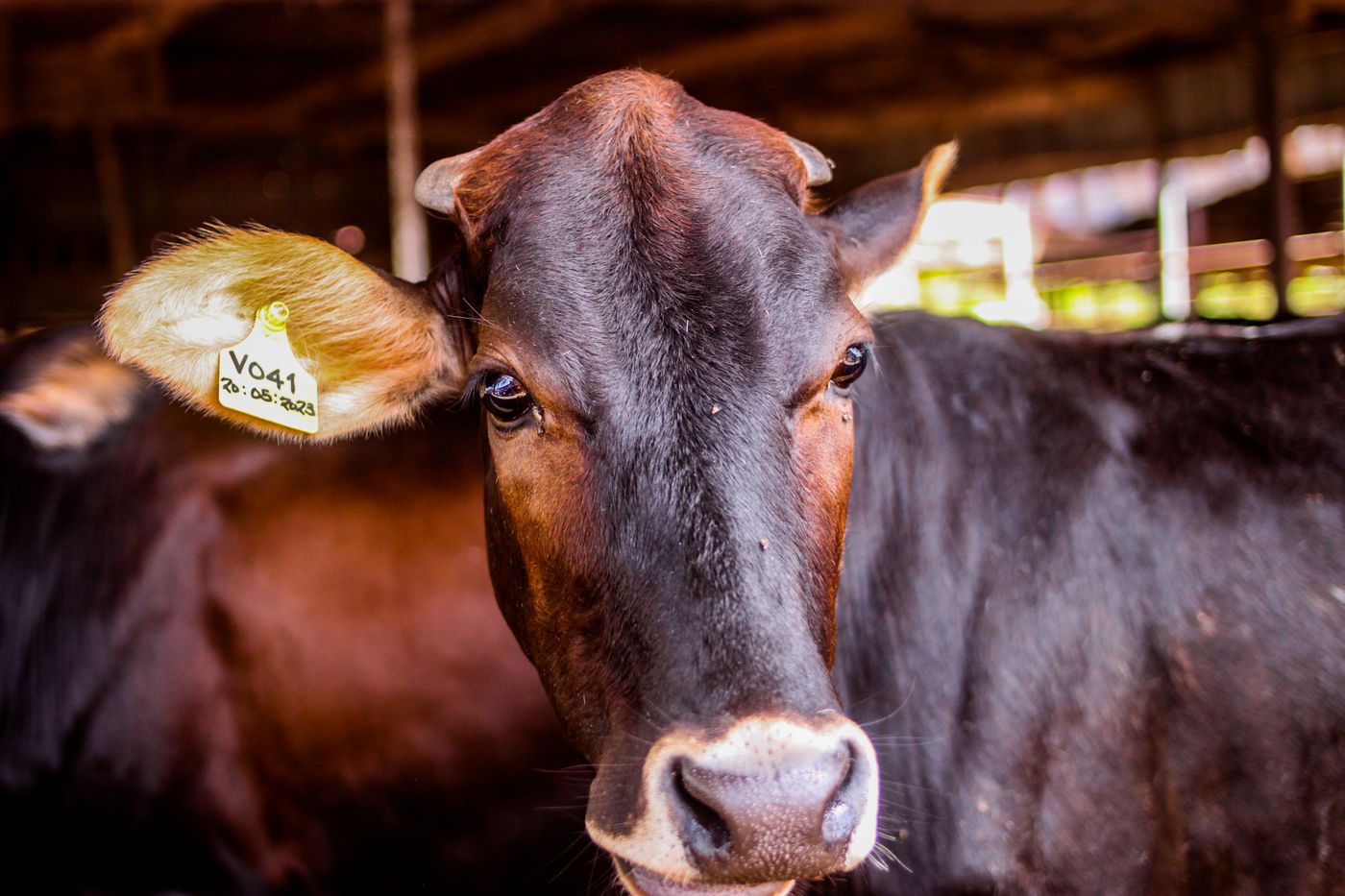
Ear tagging. A numbered ear tag and an applicator fit identification in seconds when the head is steady. Tag where the ear is thick and avoid the large veins, and keep the applicator clean. Read the maker's instructions for the exact position and keep a record of each tag number against the animal's name, date of birth and dam, as our guide to ear tagging and records explains for goats, since the same record rules apply. Fuga lists an ear tag and an eartag applicator on separate pages.
Dosing by mouth. A manual drenching gun delivers a measured dose over the tongue, which is easier and cleaner from a crush than from a loose animal. The dose of a dewormer or other medicine depends on the animal's weight and the product, so weigh or estimate weight first (see our guide to the heart girth weighing tape), read the label, and ask a vet or animal health officer about which product and how often. Never guess a dose, never use a product intended for another species and never tip the head far back while drenching, because the liquid can go into the lungs.
Castration. A burdizzo is a bloodless castration tool that crushes the spermatic cord through the skin. It is usually done on young animals, with the animal held firmly and the tool positioned correctly, and the technique needs training. Ask a vet or a trained animal health worker to show you the first few times, and ask about pain relief and tetanus protection. A bull calf castrated badly may remain fertile and become a danger later.
Safety Rules for the People
Most injuries around cattle happen to people who are in the wrong place at the wrong time. Keep these basics in force every time the crush is used.
Work from outside the rails wherever the job allows. Never stand directly behind a cow's back legs or in front of a bull. Keep children and visitors well away from the handling area, and allow nobody under the influence of alcohol near the animals. Do not shout, slap or hit; calm, steady movement is faster in the end. Release an animal that is struggling hard rather than forcing it, because a panicking animal can break a leg or a fence. Build a gap or small gate in the rails that a person can slip through if an animal turns on you.
If an animal collapses in the crush, release the head bail at once. Keep a spare key for any padlock and a pair of fencing pliers close at hand. Rest the animals between jobs, especially in hot weather, and make water available in the holding pen. Our guide to spraying cattle for ticks shows how a race also makes tick control safer for the sprayer.
Your Crush Checklist
| Check | What you want |
|---|---|
| Race width | About 65 to 70 cm for adult dairy cows; narrower or adjustable for calves |
| Length | Room for at least two or three animals in line |
| Sides | Solid lower panel, no gaps for legs, no sharp edges |
| Floor | Rough concrete or well-drained, compacted ground; drains in the rains |
| Gates | Swing with the flow; latches cattle cannot lift; exit gate at the crush |
| Head bail | Vertical bars with a quick release |
| Water | Available in the holding pen |
| Kit | Tags, applicator, drenching gun and records ready before the first animal enters |
| Vet | Number at the crush; routine jobs agreed beforehand |
Livestock Equipment to Look At
Prices change, so we do not print them here. See each product page or the Fuga price list for current prices and stock.
| Item | Where it fits |
|---|---|
| Ear Tag | Identification for each animal |
| Eartag Applicator | Fitting tags from the crush |
| Manual Drenching Gun | Giving oral doses, as advised by your vet |
| Burdizzo | Bloodless castration by a trained person |
Measure your biggest animal, decide the race width, and build a simple race and crush before you buy the first dose or tag. Browse our dairy and livestock equipment, or WhatsApp 0716 961 018 with your herd size and we will help you pick the kit that fits.
Key Takeaways
- A simple set-up is a holding pen, a single-file race the animal cannot turn around in, and a crush or head restraint at the end.
- Published race widths for adult cattle run from about 50 to 70 cm, with about 65 to 70 cm common for adult cows; build it to your largest animal.
- FAO allows about 1.6 m2 per animal in the holding pen and 1.0 m2 in the forcing pen for cattle of 300 to 550 kg.
- Move cattle from behind the shoulder, use curves and solid sides, and keep pens about half full so animals do not jam.
- Tag, drench and castrate only with everything laid out beforehand, and ask a vet or animal health worker to teach you the technique and dose.
- A concrete or well-drained floor, gates that swing with the flow and a quick-release head bail prevent most injuries.
Frequently Asked Questions
How wide should a cattle race be?
Published guidance gives about 50 to 70 cm between the rails, depending on the size of the cattle, and about 65 to 70 cm for adult stock. The race must let an animal walk in but not turn around, so build it to your largest animal.
How long should a handling race be?
FAO suggests at least 6 m, or long enough for three animals waiting for the crush, and Teagasc gives a minimum of 3.6 m and prefers over 5 m. On a small plot, a shorter race that holds two or three animals in a line is better than none.
Can I build a cattle crush from timber or poles?
Yes, if the posts are strong and set deep, with no sharp edges or gaps where legs can catch. FAO suggests posts 150 to 200 mm across, set at least 0.8 m into the ground and no more than 2.5 m apart.
How do I give a cow a dewormer safely?
Hold the animal in the crush, weigh or estimate its weight, and give the dose your vet or animal health officer has advised with a drenching gun, without tipping the head far back. Never guess a dose or use a product made for another species.
Can I castrate a bull calf myself with a burdizzo?
It needs the right technique and the right age, and a poor job can leave the animal fertile or injured. Ask a vet or a trained animal health worker to show you the first few times and to advise on pain relief and tetanus protection.