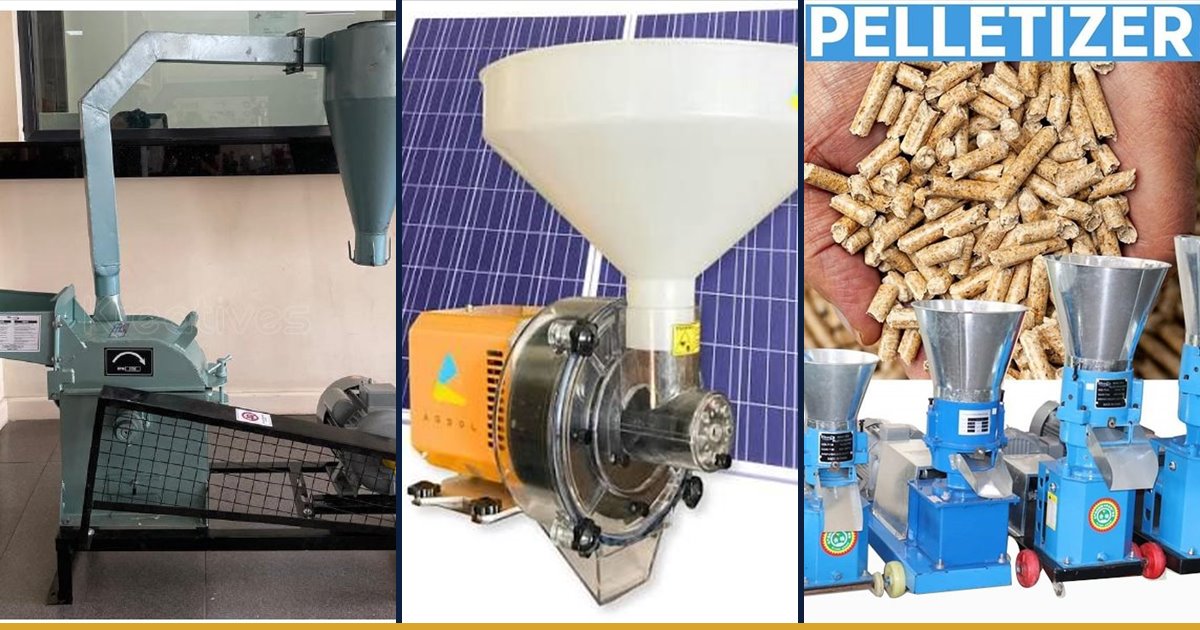
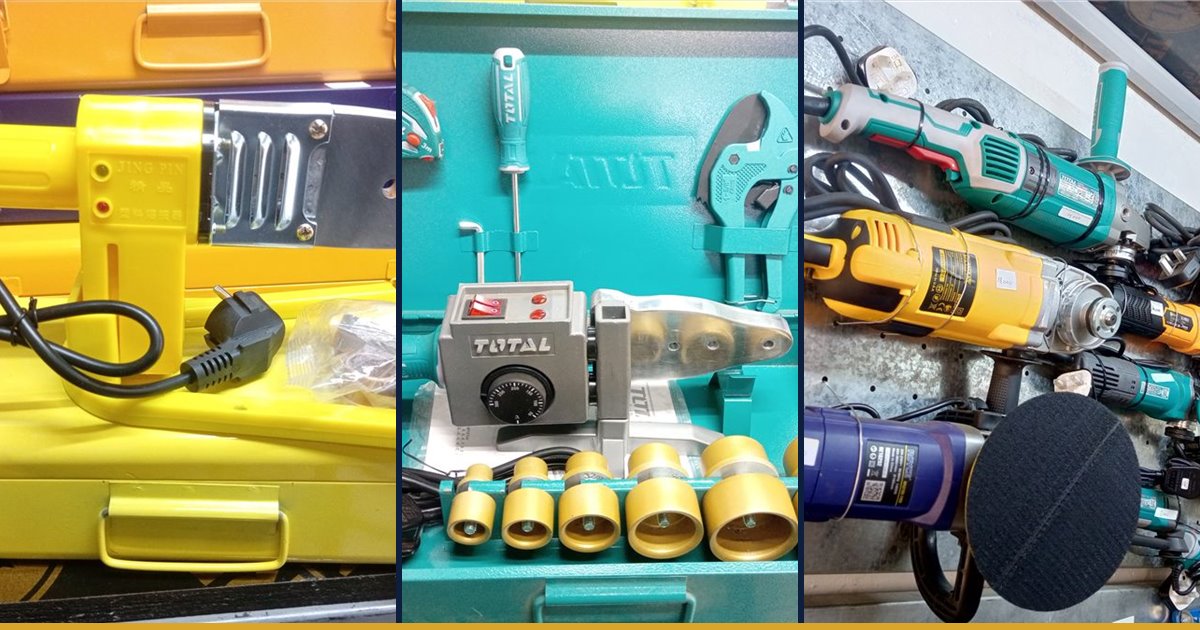
Two chaff cutters stand side by side on a shop floor. Same hopper shape, same blade wheel, same paint colour, near enough the same photograph in the catalogue. One is priced well below the other. One dealer says it is the same machine without the name on it. The other says you get what you pay for. Neither sentence helps you decide.
This is the most common and least discussed problem in equipment buying in Kenya, and it is not really a question about fakes. It is a question about what the builder chose to leave out, and whether the missing thing matters for your work.
Most of those choices are visible. Steel thickness, bearing type, winding mass, cable size, weld quality and fastener grade can be seen, lifted, spun and counted in ten minutes at a counter, with no instruments and without trusting anybody's word. This guide teaches you to read the machine itself.
Counterfeit and Substandard Are Two Different Problems
The two words are used as though they mean the same thing. They do not, and the problems have different remedies.
Counterfeiting has a specific legal meaning in Kenya. The Anti-Counterfeit Authority, established under the Anti-Counterfeit Act No. 13 of 2008 and now a state corporation under the Ministry of Investments, Trade and Industry, describes counterfeiting on its own site as the violation of an intellectual property owner's rights: using someone else's registered or protected trademark, copyright or patent without authority.
A counterfeit, then, is a machine pretending to be someone else's brand. A machine carrying an unfamiliar name, copying nobody's trademark and simply built as cheaply as the factory could manage is not a counterfeit. It is a lawful product, sold honestly, that happens to be substandard for hard work.
Most price gaps in a Kenyan equipment shop are that second kind, which is encouraging: the question in front of you is not a legal one but an engineering one, and engineering questions can be answered with your eyes and hands.
Ask a better question. Instead of "is this one fake?", ask "what did this builder remove to reach this price, and does the missing thing matter for my duty cycle?" The first question rarely has an answer at the counter. The second one almost always does.
Where the Money Actually Goes: Eight Places a Builder Can Save
When two machines look identical and are priced far apart, the difference is in the material and the parts behind the covers.
Steel gauge and grade. Thinner sheet is cheaper by the kilogram and easier to fold, and gauge numbers run backwards, so a higher number means thinner steel. A thin hopper flexes, rings and eventually cracks at the fold lines under vibration.
Cast parts versus pressed parts. Gearboxes, bearing carriers and pump bodies are traditionally cast because a casting is rigid and holds shaft alignment. A folded sheet housing lets shafts wander under load, which chews bearings, throws belts out of line and wears gears on one flank.
Bearings. The quietest saving and the most expensive one. A sealed ball or roller bearing can be replaced by an unsealed one, a loose fit, or a plain bush in a drilled hole. Bushes are respectable in slow positions and quite wrong on a high speed shaft. Our guide on belts, pulleys and bearings explains why most breakdowns are drive faults, not engine faults.
Motor windings and iron. A motor is mostly copper and laminated iron, both heavy and expensive. Cost comes out through thinner wire, less of it, copper coated aluminium in place of copper, and a shorter lamination stack. All four cut available torque and the ability to shed heat, and a motor that runs hot in its first hour will not survive a season.
Nameplate ratings. Power figures are sometimes measured generously and sometimes simply written optimistically, which gets its own section below.
Electrics and cabling. An undersized switch welds its contacts shut, an undersized cable warms and drops voltage, and a missing thermal overload leaves the motor protected by nothing but your attention. The physics that ruins a long thin extension reel applies inside the machine too, as our article on extension cables, plugs and RCDs sets out.
Plastics and UV stability. Virgin polymer with a proper ultraviolet stabiliser package survives Kenyan sun. Unstabilised material, or material heavily loaded with reground scrap, goes chalky, then brittle, then cracks when knocked. Wall thickness is the other lever, and the same logic decides how long a water storage tank lasts.
Welds and fasteners. A continuous, evenly stacked bead takes electrode, current and time, while a stitch weld takes less of all three and concentrates stress at the end of every short run. Bolt heads carry grade markings, and a mismatched set on a vibrating machine says nothing was specified, only assembled.
The Nameplate Test: How Inflated Ratings Work
The nameplate is the small metal or foil plate riveted to the motor or frame, carrying the model, serial number, voltage, frequency, current, power and duty rating. It is the most useful object on the machine, because unlike a catalogue it has to carry numbers that can be checked against each other.
Ratings get inflated in three honest looking ways. Quoting input power rather than output flatters, because a motor always draws more than it delivers. Quoting a peak or starting figure flatters, because it is not the power the machine can hold. Quoting a duty cycle of short bursts with long rests flatters, because that is not how anyone cuts fodder or shells maize.
One cross check needs nothing but arithmetic. Kenyan single phase mains is nominally 240 volts. Multiply the voltage on the plate by the current on the plate and you have the most the machine can draw from the socket. True output must be less, because no motor is perfectly efficient and power factor takes a further slice. If the claimed output exceeds volts times amps, the claim is not physically possible.
Weight is the second cross check and it is even easier. Copper and laminated iron are dense, and there is no way to make a strong motor light. Two motors claiming the same output that differ noticeably in weight are not making the same claim in the same units. Lift both.
Three numbers must agree. The power on the plate, the current on the plate, and the weight in your hands. When any one of them disagrees with the other two, believe the current and the weight, because those are hard to fake and easy to check.
What to Check in Ten Minutes on the Shop Floor
None of this needs tools, only permission to touch the machine, which any confident seller will give you.
Open the cover. Ask for the belt guard, terminal box or gearbox cover to come off, and note how willingly. Inside you want bearings rather than bushes on fast shafts, a proper terminal block rather than twisted joints wrapped in tape, and an earth wire bolted to the frame.
Spin the shaft. It should turn smoothly with an even drag, not in gritty steps. Then rock it and pull it in and out. Play on a new machine means a bad bearing, a loose fit, or a housing that was never properly bored.
Read the welds and the bolts. Run a finger along the main joints, feeling for gaps, deep grooves along the bead edge and heavy spatter, all described in our piece on choosing the right welding rod. Mixed bolt heads or missing washers on one joint say the machine was built from whatever was in the bin.
Run it. Listen for rattles that change pitch and feel the motor body afterwards: warm is normal, too hot to touch after a short no load run is not. Then ask to see a wear part on the shelf, because a machine with no spares behind it is a consumable.
Standards Marks: What They Prove and What They Do Not
Kenya has a formal system of quality marks, and both over trusting it and dismissing it lead to bad decisions.
The Kenya Bureau of Standards describes the Standardisation Mark, the S-Mark, as a mandatory product certification scheme for locally manufactured products, provided for under section 10 of the Standards Act, Cap 496 of the Laws of Kenya. A Kenyan factory selling a product covered by the scheme must hold a permit showing it meets the relevant Kenya Standard.
The Import Standardisation Mark, the ISM, is the counterpart for goods brought into the country. KEBS states that it targets all imported products intended for sale in the local market and that importers buy ISM stickers directly from KEBS. KEBS also explains why the stickers take their current secure form: it implemented marks with track and trace software from 1 August 2015 to deal with the faking of its own marks and to allow real time validation in the field. The sticker itself was being copied, which is exactly why a sticker alone should never end an enquiry. KEBS also runs the voluntary Diamond Mark of Quality, whose holders qualify automatically for the S-Mark.
Now the limits. A mark shows that a permit was granted to a named manufacturer for a named product against a standard. It does not certify the unit in front of you, say whether the machine suits your crop, your hours or your power supply, or promise that spares will exist next year.
Verification is the part most buyers skip. KEBS publishes a searchable list of products holding the Standardisation Mark on kebs.org, showing product details, brand and validity dates. Note the brand and permit details, then check them against that record rather than against the seller's confidence.
Why the Cheapest Machine Often Costs More Across a Season
The price on the tag is the only cost visible on the day, which is why it dominates the decision. The costs that decide whether the purchase was good arrive later, in three forms.
Downtime at the wrong moment. Equipment fails under load, and load comes at harvest, at peak milk, at the busiest week of the fabrication year. A week of stoppage then is not the same as a week in the off season.
Spares that do not exist. A bearing you can buy anywhere is a half hour repair. A moulded part or a gear that only came with that machine, from a supplier who has since moved to a different model, is the end of the machine.
Waste and your own labour. A chopper with a soft blade wastes fodder and a pump off its best efficiency point burns more fuel for the same cubic metres. Add the hours spent nursing, tightening and queuing at a fundi. Small per day, large per season.
Price the season, not the day. Write down three numbers for each option: the price, a likely repair, and what one week of stoppage at peak would cost you. The ranking often flips once the third number is on the paper.
When a Budget Machine Is Genuinely the Right Choice
This is not an argument that dear is always better. Some of the worst buying decisions in Kenyan workshops involve heavy, expensive machines standing idle because the owner over bought.
A budget machine is the right call in four situations: when the duty is light and occasional, such as a tool used a few times a year or a standby unit; when you are testing a new enterprise and do not yet know whether the demand is real; when the item is genuinely simple, with no motor, no gearbox and nothing to go out of alignment; and when failure is cheap, meaning nothing stops and nobody is in danger if it dies.
The rule underneath all four is the same: match the build to the duty cycle. Buy carefully where failure is expensive and cheaply where it is merely annoying. A workshop that applies that rule ends up with a mixed bench, and our workshop and industrial tools range is stocked across that spread for the same reason.
Never buy cheap on safety. Whatever your budget, do not economise on the parts that protect people: guards, earthing, residual current protection, lifting gear and pressure vessels. A saving there is not a saving, it is a transfer of risk onto whoever is standing next to the machine.
A Ten Point Checklist for the Shop Floor
Photograph this before you go shopping.
- Lift a corner and compare the weight against the other candidate.
- Check that the plate's power, voltage and current agree with each other.
- Ask for the covers to come off, and watch how willingly.
- Spin the main shaft by hand, then rock it for play.
- Compare cable thickness with plate current, and find the earth connection.
- Run a finger along the main welds, feeling for gaps, grooves and spatter.
- Look for grade marks on structural bolts and for washers all present.
- Press the plastics, listening for a brittle crackle.
- Run the machine, then feel the motor body and listen for changing noise.
- Ask to see a wear part on the shelf, and get the warranty in writing.
If You Have Already Bought Something Substandard
There is a useful sequence here, and it starts with safety rather than argument.
First, stop using the item if the fault touches safety: exposed conductors, a missing earth, a guard that will not stay on, a lifting device that slips. Gather evidence while it exists, meaning the receipt, the box, and photographs of the nameplate, the serial number and the failure. Keep the item, because it is the evidence.
Second, go back to the seller in writing and keep a copy. Kenya's Consumer Protection Act, 2012 addresses this at section 5: a supplier is deemed to warrant that goods supplied under a consumer agreement are of reasonably merchantable quality, the implied conditions and warranties under the Sale of Goods Act, Cap 31 apply to such goods, and a term purporting to negate or vary them is void. A sign saying goods once sold are not returnable does not by itself remove a quality obligation, and a calm written request naming the defect usually moves faster than an argument at the counter.
Third, match the problem to the right body. Faked branding is the Anti-Counterfeit Authority's territory, and it publishes a complaint route on aca.go.ke along with a toll free line, 0800 211 237. A marked product that fails the standard it claims is a matter for KEBS. A machine that is simply weak, where nobody lied about a brand, is a commercial dispute with the seller rather than a regulatory case.
Fourth, consider salvage before scrap. Many disappointing machines can be rescued by fitting a properly rated motor, real bearings, a thermal overload and a correctly sized cable, then downgrading what you ask of them. Used within honest limits, they still earn their keep.
Key Takeaways
- A counterfeit copies someone's intellectual property. A substandard machine is lawfully built down to a price, and most price gaps you meet are the second kind.
- Cost is removed in eight predictable places: steel gauge, castings, bearings, motor copper and iron, nameplate honesty, electrics, plastics, and welds and fasteners.
- Check the nameplate against itself. If the claimed output exceeds volts times amps the plate contradicts itself, and weight is the second check that cannot be faked.
- A mark certifies a permit, not the unit in your hands, so verify it against the published KEBS listings rather than trusting a sticker.
- Budget machines suit light, occasional duty where failure is cheap, and never suit anything load bearing or safety related.
Frequently Asked Questions
Does a KEBS sticker mean a machine is good quality?
It means a permit exists. KEBS describes the Standardisation Mark as a mandatory scheme for locally manufactured products under section 10 of the Standards Act, Cap 496, and the Import Standardisation Mark as covering imported products intended for local sale. Neither tests the individual unit in the shop or guarantees spares. Treat a mark as one input, verified against the published KEBS listing, and keep doing the physical checks.
How can I tell if a motor's power rating is honest?
Multiply the voltage and current on the nameplate to get the ceiling on what the motor can draw, and compare it with the claimed output, which must be lower. Then lift it, because two motors claiming the same output that feel very different are not measuring the same thing. If either check fails, ask the seller to explain the numbers.
What do I do if a machine fails within weeks?
Stop using it if safety is involved, keep the item and the receipt, photograph the nameplate and the fault, and write to the seller rather than arguing verbally. Kenya's Consumer Protection Act, 2012 at section 5 deems a supplier to warrant reasonably merchantable quality and voids any term that tries to negate the implied conditions and warranties carried over from the Sale of Goods Act.
At Fuga we sit on both sides of this question. We manufacture our poultry drinkers and feeders and our Sharpa sprayer range on our own blow moulding and injection moulding lines in Kenya, using our own steel moulds, which is why we keep spares on the shelf year after year and stand behind a minimum one year warranty. Where we import rather than manufacture, such as egg incubators, we say so plainly, as our about page explains. Bring the two machines you are weighing up, or send photographs of both nameplates, through our contact page or on WhatsApp, and we will walk you through what you are actually comparing.