To grow cabbage in Kenya, raise seedlings four to six weeks in a clean nursery, transplant at the onset of rains at 60 by 45 cm (60 by 60 cm for big heads), keep the soil evenly moist, scout weekly for diamondback moth, and spray only registered products as the label and an agronomist advise.
Cabbage rewards a tidy farmer. The crop is not hard to grow, but it is easy to grow badly: seedlings crowded in the nursery, plants set too close, water that swings from flood to drought, and a caterpillar pest that returns every few weeks. Each of these costs heads, and each is within your control.
Mid November is a good moment to think about it. The short rains are under way across much of Kenya, markets are filling for the December season, and a crop planted now heads up in the hot, dry weeks of January and February, when water becomes the limit. This guide follows the crop from nursery to head, using the Kenya Agricultural and Livestock Research Organization (KALRO) technology and information material, and gives special attention to the two things that decide most cabbage crops: water and diamondback moth. If you also grow leafy greens, our guide to kale for market covers a close relative with a different harvest pattern.
What Spacing Should I Use for Cabbage?
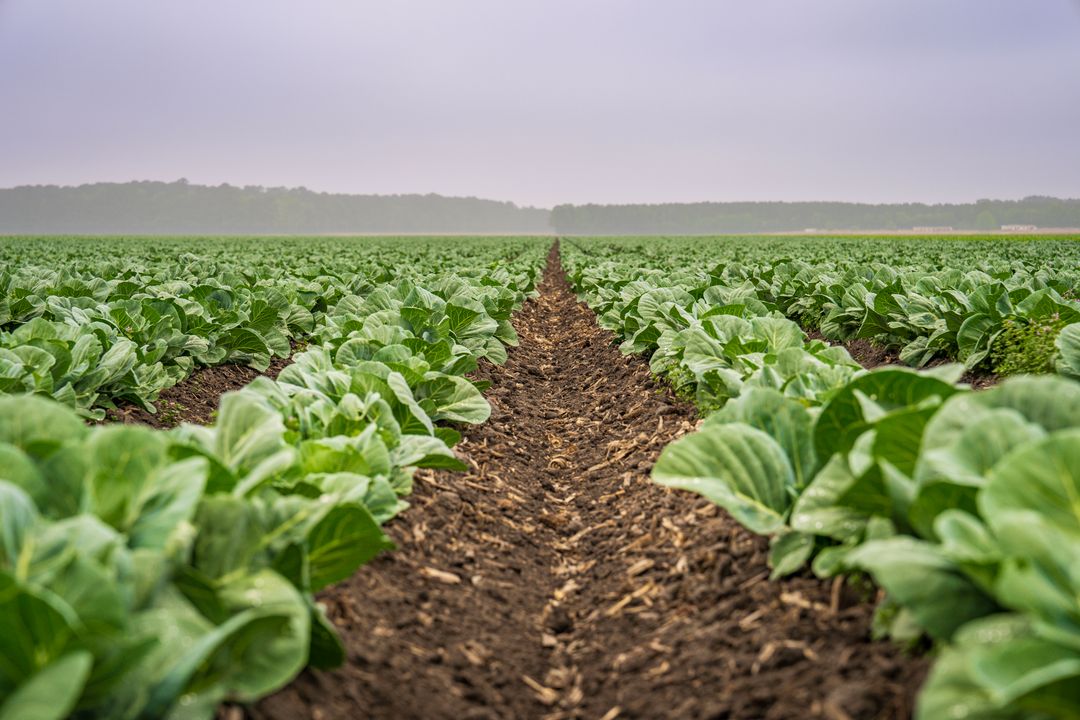
KALRO's cabbage guide gives three spacings, matched to head size: 60 by 60 cm for large-headed varieties, 60 by 45 cm for medium-sized heads and 30 by 30 cm for small-headed types. Your seed packet tells you which group your variety belongs to. Planting a large-headed variety at small-head spacing does not give you more cabbages, it gives you crowded plants, small heads and more disease.
The number of plants per acre follows from simple arithmetic. An acre is about 4,047 square metres, and each plant needs the area between its neighbours. The figure below shows what the three KALRO spacings work out to, before you subtract any paths or bed edges.
Online guides quote very different plant numbers per acre because they allow for different paths and bed layouts. Work out your own: measure the plot, decide where the paths go, and divide the planted area by the area per plant. Then order seedlings for that number plus a small allowance for gap filling.
How Do I Raise Cabbage Seedlings in a Nursery?
KALRO describes a nursery bed about 1 metre wide and 15 cm high, with rows at least 15 cm apart and seed sown 1 to 2 cm deep in furrows. The seed is covered with about 1 cm of fine soil, watered gently and covered with straw or dry grass until it germinates, when the cover comes off. KALRO suggests a basal fertiliser in the bed, either DAP at about 50 grams per square metre or a compound fertiliser chosen from a soil test.
The nursery is where many crops are lost. Dense rows and wet weather bring damping off, a fungal disease that rots seedlings at the soil line, and KALRO lists spacing seedlings so the surface dries as one of the answers. Raise the bed so it drains, water in the morning rather than the evening, and use clean seed, ideally dressed or treated as your seed supplier advises. Seed-borne diseases such as black rot, ring spot and black leg start here, so clean seed matters more than any later spray.
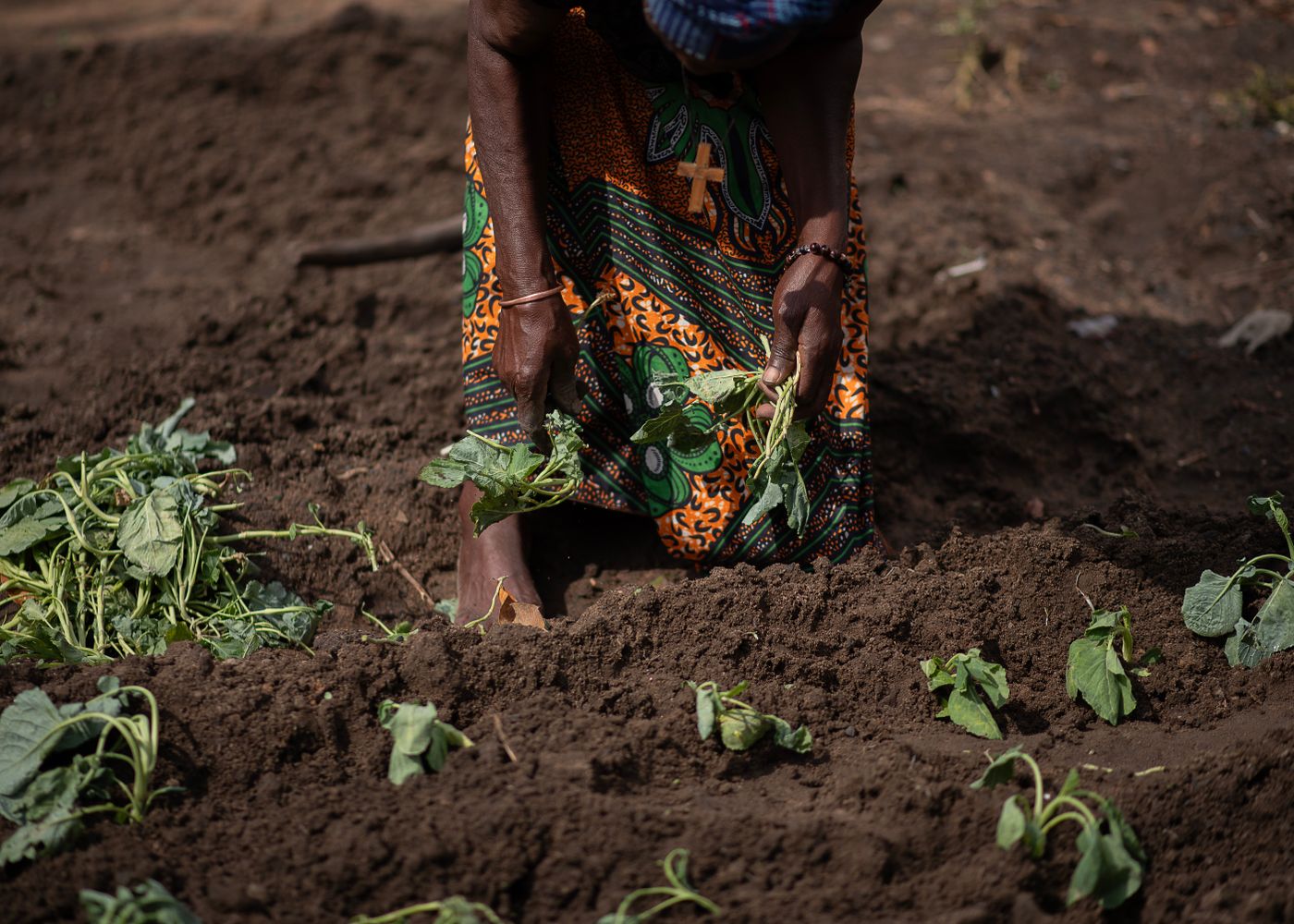
Seedlings are ready after four to six weeks, depending on temperature. Wet the bed about an hour before lifting, so roots come out with soil, and transplant in the early morning or late afternoon, ideally at the onset of rains. A fine rose can or small sprinkler is enough for the nursery.
How Long From Transplanting to Harvest?
KALRO gives the general maturity as three to four months, with variety figures that are shorter: about 80 to 85 days for Gloria F1, 85 to 90 for Riana F1 and 80 to 90 for Pruktor, counted from transplanting. Other seed guides quote slightly longer for some varieties, so treat your seed packet as the final word.
Put that on the calendar. Seedlings transplanted on 20 November and maturing in 80 to 85 days are ready between about 8 and 13 February. That is a hot, dry window. A plan that looks fine in November rain can fail in February if the water is not there.
How Much Water Does Cabbage Need?
KALRO gives a crop water requirement of 380 to 500 mm, depending on climate and the length of the growing season, and warns that cabbage cannot stand waterlogging. Keep the soil moist but never saturated, apply a thin mulch to hold moisture and drain the plot after heavy rain. KALRO lists sprinkler and drip as suitable, and drip keeps the leaves dry and the heads cleaner.
A millimetre of water over one square metre is one litre, so the figure can be turned into litres per plant. The table below is our own arithmetic, assuming the crop uses its 380 to 500 mm over roughly 85 days, and counts rain as well as irrigation, so subtract what falls from the sky.
| Item | Working | Result |
|---|---|---|
| Season water need | KALRO TIMPs | 380 to 500 mm |
| Per week over about 12 weeks | Season need divided by 12 | About 30 to 40 mm |
| Area per plant at 60 x 45 cm | 0.6 m x 0.45 m | 0.27 m2 |
| Litres per plant per week | 30 to 40 mm x 0.27 m2 | About 8 to 11 litres, from rain and irrigation together |
Real needs swing with weather, soil and crop stage, so treat these as a planning figure, not a rule. Measure what your own system delivers, as our guide to drip line layout explains, and check the soil with your hand before you open the valve. Water more often in light, sandy soils and less often in heavy clay.
Cabbage is also sensitive to swings. Long dry gaps followed by a flood are a common cause of split heads, so even watering beats heavy watering. If you are short of water, protect the first weeks after transplanting and the period when heads form, and shade the water budget from there.
What Is Diamondback Moth and Why Does It Keep Coming Back?
KALRO describes the diamondback moth as a small grey moth with a diamond pattern on its folded wings. The adults are not the problem. The small green caterpillars hatch on the leaves, chew holes and windows in them, and in bad infestations shred the leaves and foul the heart of the cabbage. They are a pest of the whole cabbage family, which includes kale, cauliflower and broccoli, so a farmer with several brassica crops at different stages gives the moth an unbroken food supply.
The reason it keeps coming back is that it breeds fast and it adapts. Reviews of the moth describe resistance to almost every synthetic insecticide used against it, and work by the International Centre of Insect Physiology and Ecology (icipe) in Kenya reports that this resistance pushed farmers towards Bacillus thuringiensis (Bt) products. Spraying the same product every week is the quickest way to breed a resistant population and kill the natural enemies that would otherwise help.
Natural enemies matter. icipe imported a parasitic wasp, Diadegma semiclausum, and released it in Kenya in 2001 to help control the moth. Wasps like that survive only if the farm is not sprayed with broad-spectrum products every few days.
How Can I Cut Diamondback Moth Without Spraying Every Week?
Start with the cheapest steps. A protected nursery keeps the moth off seedlings, so caterpillars do not arrive in the field with the plants. An icipe-linked study in Kenya found fewer diamondback moths and less damage on cabbage grown under low-cover agronet than on uncovered plants. Rotate cabbage with crops outside the brassica family, because KALRO advises rotation for black rot (three years), ring spot (at least two years between plantings of the same family) and club root. Keep weeds down, since wild relatives of cabbage harbour the moth.
KALRO also lists intercropping with tomatoes, beans or onions as a control for the moth, with tomatoes planted 30 days ahead of the cabbage. Treat this as a helper to your other measures, not a substitute.
Then scout. Once a week, walk the plot in a V or W pattern, turn over leaves on several plants and note how many caterpillars you see. A pest you can count is a pest you can time a spray against. If numbers are low and rising slowly, you may need nothing. If caterpillars are on most plants and the heart of young plants is being eaten, it is time to act.
How Do I Spray Cabbage Properly?
When you do spray, use only a product registered by the Pest Control Products Board (PCPB) for cabbage, read the label for rate, protective gear and the days to wait between spraying and harvest, and ask an agronomist or agrovet about the product group to choose. Do not buy from hawkers or use products from unmarked containers. Alternate product groups between sprays rather than repeating one, and keep a record of what you used and when.
Technique matters as much as the product. Caterpillars hide on the underside of leaves and in the heart, so spray there, lifting the lance and aiming up and into the plant. Cabbage leaves are waxy and shed spray easily, so check the label or ask your agrovet whether a sticker or spreader is advised. Spray in the cool, calm hours of early morning or late afternoon, and not when rain is due. The spray should wet the leaf without running off it, which is a matter of calibration, and our guide to calibrating a knapsack sprayer shows how to measure what your sprayer delivers.
A manual knapsack sprayer is enough for most smallholder cabbage plots, and Fuga lists the manual knapsack sprayer on its water equipment shelf. Whatever sprayer you use, wear gloves, a long-sleeved shirt, boots and a mask suited to the chemical, wash after spraying and keep children and animals away. Do not enter the crop again until the label's re-entry time has passed.
What Other Problems Should I Watch For?
| Problem | What you see | KALRO-listed answer |
|---|---|---|
| Aphids | Curled leaves, poor heads | Check weekly; control as advised by an agronomist |
| Club root | Swollen, galled roots; wilting | Rotation, destroy infected plants, lime the soil |
| Black rot | V-shaped brown leaf lesions, blackened veins | Clean seed, rotate for 3 years, remove residues |
| Soft rot | Slimy, smelly heads after wet weather | Avoid harvesting wet; protect heads as advised |
| Damping off | Seedlings rot at soil level in the nursery | Space seedlings, drain the bed, avoid infested ground |
Feeding matters too. KALRO suggests a nutrient balance of about 1:1:1 (commonly sold as 10:10:10) and advises basing the rate on a soil test, mixing in compost and avoiding fresh manure. A soil test tells you far more than guessing does.
Your Cabbage Season Checklist
| Stage | Check |
|---|---|
| Before sowing | Variety and head size chosen; clean seed; soil test; water source confirmed for February |
| Nursery | Raised bed, rows 15 cm apart, covered until germination, protected from pests |
| Transplanting | 4 to 6 weeks old; wetted first; early morning or late afternoon; spacing matched to head size |
| Water | Even moisture; mulch; no waterlogging; litres per plant planned |
| Pests | Weekly scouting; sprays only at need, registered product, groups rotated, record kept |
| Harvest | Heads firm; cut in cool, dry hours; outer leaves left on |
If you are planning irrigation for the dry weeks ahead, look at the irrigation kits and our water equipment range, or WhatsApp 0716 961 018 with your plot size and water source. Prices change, so we do not print them here; see each product page or the Fuga price list.
Key Takeaways
- KALRO gives 60 x 60 cm for large heads, 60 x 45 cm for medium heads and 30 x 30 cm for small heads; check which group your variety belongs to.
- Seedlings are ready after 4 to 6 weeks in a raised, well-drained nursery bed; clean seed prevents most seed-borne disease.
- KALRO puts cabbage water need at 380 to 500 mm per crop, about 8 to 11 litres per plant per week at 60 x 45 cm by our arithmetic, from rain and irrigation together.
- Diamondback moth breeds fast and resists many sprays, so protect the nursery, rotate crops, scout weekly and spray only at need.
- Use only products registered by the PCPB for cabbage, rotate product groups, follow the label and ask an agronomist about doses and the days before harvest.
- Aim spray at the underside of leaves and the heart in calm, cool hours, and calibrate the sprayer so leaves are wetted without run-off.
Frequently Asked Questions
What spacing is best for cabbage in Kenya?
KALRO recommends 60 x 45 cm for medium-sized heads, 60 x 60 cm for large-headed varieties and 30 x 30 cm for small-headed types. At 60 x 45 cm an acre holds roughly 15,000 plants before you leave room for paths. Check your seed packet for the head size of your variety.
How long does cabbage take from transplanting to harvest?
KALRO lists about 80 to 90 days after transplanting for varieties such as Gloria F1, Riana F1 and Pruktor, and gives three to four months as a general figure. Seedlings spend 4 to 6 weeks in the nursery first. Your seed supplier's figure for your variety is the best guide.
How much water does cabbage need?
KALRO gives 380 to 500 mm over the crop, depending on climate and season length, and warns that cabbage cannot tolerate waterlogging. Keep the soil moist, mulch thinly and water evenly, because long dry gaps followed by a flood can split heads.
How do I control diamondback moth on cabbage?
Start with a protected nursery, crop rotation, weed control and weekly scouting. Spray only when caterpillars are building, using a product registered by the PCPB for cabbage, and rotate product groups. Ask an agronomist or agrovet for the product and dose, and read the label.
How do I spray cabbage so the spray actually reaches the caterpillars?
Caterpillars hide on the underside of leaves and in the heart, so aim the lance up and into the plant. Spray in the cool, calm hours of morning or late afternoon, calibrate the sprayer so leaves are wetted without run-off, and ask your agrovet whether a sticker is advised for waxy cabbage leaves.