
Heat stress sets in earlier than most farmers expect: laying hens start panting around 27 degrees Celsius, and dairy cows lose milk once the temperature humidity index passes about 68. The fixes that work are cool clean water within easy reach, shade with moving air, a quick wet-down for cows, and moving feeding and handling to the cool hours.
In mid November much of Kenya is still wet and green, so heat stress feels like a problem for another season. It is not. The Kenya Meteorological Department treats January to March as the hottest months of the year, and its early 2026 outlooks put average daytime highs above 30 degrees Celsius across the coast, the north, the Rift Valley and parts of western Kenya. The sheds, tanks and drinkers that must cope are the ones you fix now, while the rains still make the work easy.
Our guides already cover how much water chickens drink at each age, drinking bowls and troughs for cattle and poultry house ventilation. This guide is about the stress itself: how to recognise it early, how to measure it with a thermometer and a hygrometer, what to do hour by hour on a hot day, and which equipment is worth having in place before January. It is general farm guidance, and your vet or livestock officer should decide treatment for any sick animal.
How Hot Is Too Hot for Cows and Hens?
Temperature alone misleads, because humid heat is harder to lose than dry heat. Dairy scientists therefore use the temperature humidity index, or THI, which combines the two. Extension services in the United States, including the universities of Wisconsin and Minnesota, put the point where lactating cows begin to lose milk at a THI of about 68, with an older cut-off of 72 still quoted. Higher-yielding cows feel it earlier.
You do not need a gadget to work it out. A thermometer and a hygrometer in the shade, and the standard formula, are enough. The grid below shows the index for a range of temperatures and humidities.
The grid shows why a dry 30 degree day on the Rift Valley floor and a humid 30 degree day at Kanamai are different problems. At 30 degrees and 30 percent humidity the index is about 75, but at 70 percent it passes 80. A cheap thermo hygrometer hung at cow height in the shade tells you which kind of day it is. Cows are also slow to cool: according to the University of Wisconsin, a cow's internal temperature peaks about two hours after the air temperature does, and recovery takes four to six hours. A hot evening with no breeze keeps the stress going.
What Are the Signs of Heat Stress in Cows?
Watch breathing first. A resting adult cow breathes 25 to 50 times a minute. Around 60 breaths, roughly one a second, means the cow is heat stressed and needs help. Panting, with the mouth open and the tongue out, runs at about 100 breaths a minute (University of Wisconsin Extension). Count flank movements for 30 seconds and double it, at the same time each day, so that you know what is normal for your herd.
Other signs follow. Cows crowd into the shade, stand rather than lie, drool, eat less in the daytime and drink more. Milk yield falls, and a cow that is hot and stressed may show a weaker heat cycle, which is the oestrus a farmer watches for when planning insemination. That is a different thing from the stress this article is about, so do not confuse a cow that stands restlessly in the sun with one in oestrus.
What Are the Signs of Heat Stress in Poultry?
Birds have no sweat glands, so they cool by panting, and they hold their wings away from the body to lose heat. Penn State Extension notes that panting begins at about 80 degrees Fahrenheit, which is 27 degrees Celsius, and that stress becomes very obvious near 85 degrees Fahrenheit, about 29 degrees Celsius. Feed intake falls as it gets hotter, and at 35 degrees Celsius and above birds drink heavily and eat very little. Above about 38 degrees Celsius survival becomes a concern.
A few dead birds on the hottest afternoon, usually the heaviest broilers or the best layers, are the late sign. Panting and a slump in drinking and feed before that point are the early ones, which is why a thermometer in the house is worth more than any amount of guesswork.
How Much Water Do They Need When It Is Hot?
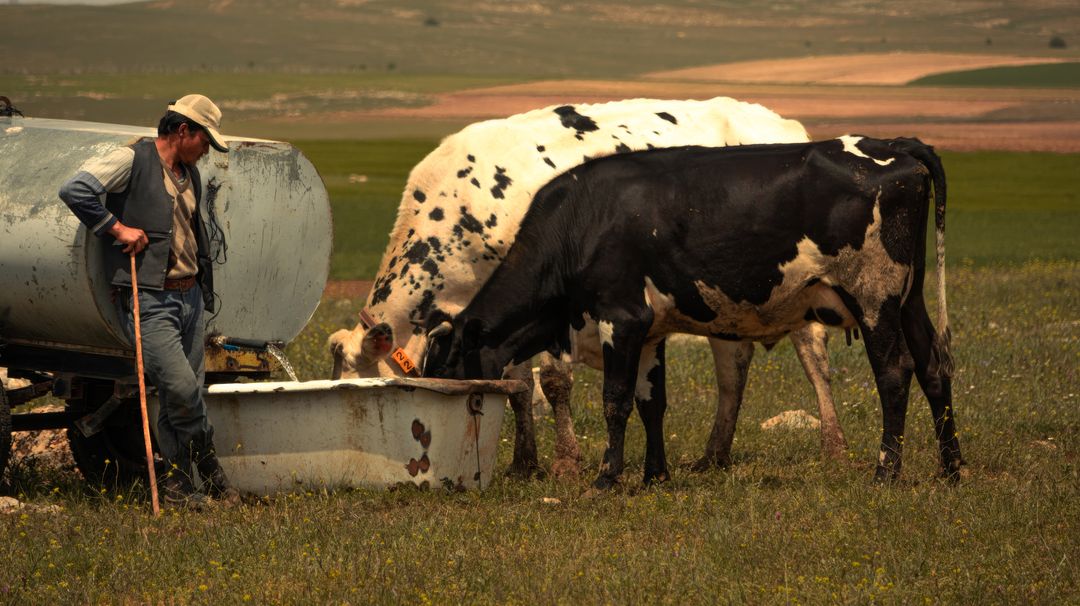
Water is the first and cheapest defence. Heat increases how much animals drink, and that extra drinking is how they get rid of heat. Kenyan farm press such as the Standard's Smart Harvest section quotes anywhere from about 60 up to 150 litres a day for a high-yielding dairy cow, depending on yield and temperature, so a trough that is fine in July may run dry by 2 pm in February. The University of Minnesota Extension reports that birds can drink two to four times their normal amount in severe heat, a figure from one source that we treat as an upper bound. The exact amount matters less than the principle: at the hottest hour every bird and cow must find clean, cool water without queuing.
| Animal | Reported water use in hot weather | Source |
|---|---|---|
| High-yielding dairy cow | About 60 to 150 litres a day, rising with yield and temperature | Standard Media, Smart Harvest (accessed November 2026) |
| Chickens in severe heat | Two to four times normal intake, single-source figure | University of Minnesota Extension (accessed November 2026) |
| Chickens at 35 to 38 C | Water use described as high | Penn State Extension (accessed November 2026) |
| Water problem | Fix |
|---|---|
| Water in tanks and pipes gets hot | Shade the tank, paint it a light colour, bury pipes shallowly, and top up from the coolest source |
| Troughs empty before afternoon | Check hoses, pumps and floats, and add a temporary extra tank if refilling is too slow (University of Wisconsin Extension advice) |
| Birds queue at drinkers | Add drinkers, space them evenly, and raise them as birds grow |
| Dirty, warm water | Wash drinkers daily; algae and slime grow fast in heat |
| Cows push and drink little | Provide more than one trough point so dominant cows do not block others |
For poultry, our automatic drinkers include a 3-litre unit made at Fuga Center, and an automatic drinker keeps a steady supply without you refilling by hand at midday. For cows, a float-valve trough or a bowl on a tank with enough head keeps refilling ahead of drinking. Ask the vet or agrovet about electrolytes in the water on very hot days, and do not dose without advice.
Shade, Air and Wet-Downs: What Actually Cools Them?
Shade removes the sun's load, but it does not remove the heat that the animal makes itself. Moving air does that, and so does water on the skin. For cows, the University of Wisconsin Extension recommends soaking about one gallon, roughly 4 litres, of water onto each animal, starting at the shoulders and back, and repeating within 15 minutes or less while the signs persist. Respiration should drop within minutes. A fan or breeze across the wet cow speeds the cooling.
A hose with a shower nozzle is a simple way to apply that soak without a drenching jet. Wet the cow, not the floor, and keep the yard sloped so water drains instead of ponding. A muddy yard is the start of mastitis problems, so a wet-down should always be paired with drainage and a clean, dry lying area.
Poultry need a different approach. Fine misting can cool a house in dry heat, but in a humid area it raises humidity, reduces the cooling birds get from panting and wets the litter. Wet litter then brings ammonia, coccidiosis and sore feet. Use misting only where the air is dry, keep the litter dry, and put your effort first into open sides, a high ridge and a roof that does not trap heat. Penn State Extension suggests grass cover around the house, trimmed vegetation and shade trees placed so they do not block airflow, and a light-coloured or insulated roof also helps. Our ventilation guide explains how to size openings.
How Do I Run a Hot Day, Hour by Hour?
The animals tell you when the heat peaks, and the timetable below follows them. Move heavy work, handling and feeding away from the midday peak, and make sure everything that cools them is working before they need it.
Which Animals Suffer First?
Heavy broilers close to market weight, layers at peak production, cows at peak lactation, cows that have just calved, and animals that are sick, lame, thin or newly bought are the ones that go down first. Look at them hardest. Do not stock a broiler house at the same density in January as in July, and keep new cattle in shade with extra water for the first days. Do not transport birds or cattle in the heat of the day: load in the early morning, or at night if the roads are safe, and keep stops short and in shade.
Your Heat-Stress Readiness Checklist
| Area | Check before January |
|---|---|
| Measuring | Thermometer and hygrometer at animal height, in shade, read at 10 am, 1 pm and 4 pm |
| Water | Tanks shaded, pipes protected, floats working, extra drinker points, spare tank for peak days |
| Shade | Cows can reach it without crowding; poultry houses have shade trees or overhangs that do not block airflow |
| Cooling | Hose and shower nozzle ready for cows, yard drained, fans or open sides for air movement |
| Poultry house | Light roof, trimmed grass, curtains or open sides, stocking density reviewed |
| Routine | Handling and feeding times moved to cool hours, every worker knows the signs |
| Vet | Phone number saved; a plan for electrolytes and for animals that are down |
Equipment to Look At
Prices change, so we do not print them here. See each product page for current prices and stock.
| Item | Where it fits |
|---|---|
| Automatic drinkers | A steady supply of clean water for poultry through the hottest hours |
| Shower nozzle | A gentle spray on a hose for wetting down cows |
| Thermo hygrometer | Reading temperature and humidity to work out the THI |
Measure the heat, keep water cool and plentiful, wet the cows and keep air moving over them, and move work out of the afternoon. See our drinkers and the rest of our watering guide for cattle, or WhatsApp 0716 961 018 with your herd or flock size and we will help you plan.
Key Takeaways
- Cows start losing milk once the temperature humidity index passes about 68, and hens start panting around 27 degrees Celsius.
- A thermometer and a hygrometer in the shade let you work out the index and know whether it is a dry or a humid heat day.
- A resting cow breathes 25 to 50 times a minute; about 60 means heat stress and about 100 means panting.
- Cool clean water within easy reach at the hottest hour is the cheapest and most important defence.
- Soak cows at the shoulders and back and keep air moving over them; keep misting out of humid poultry houses.
- Move feeding and handling to the cool hours, and fix tanks, drinkers and shade before January.
Frequently Asked Questions
At what temperature do chickens start suffering from heat?
Penn State Extension says panting begins at about 27 degrees Celsius and stress becomes very obvious around 29 degrees. Feed intake falls as the shed gets hotter, and above about 38 degrees survival becomes a concern. Heavy broilers and layers at peak lay suffer first.
How do I know if my dairy cow is heat stressed?
Count her breaths. A resting adult cow breathes 25 to 50 times a minute, and around 60, or one breath a second, means she is heat stressed. Other signs are crowding into shade, standing instead of lying, drooling, eating less by day and drinking more.
Does spraying water on cows really help in the heat?
Yes. University of Wisconsin Extension advises soaking about 4 litres of water onto each cow, starting at the shoulders and back, and repeating within 15 minutes while she shows signs of heat stress. Air moving over the wet skin speeds the cooling, so combine it with shade and a fan or breeze.
Can I use misting in my poultry house?
Fine misting can help in dry heat, but in humid areas it raises the humidity, reduces the cooling birds get from panting and wets the litter. Wet litter brings ammonia, coccidiosis and sore feet, so use misting only where the air is dry and the litter stays dry.
Should I add electrolytes to the water in hot weather?
Electrolytes are sometimes used during heat stress, but ask your vet or agrovet which product and how much, because the right amount depends on the species and the product. Clean, cool water in plentiful supply matters more than any additive.


