
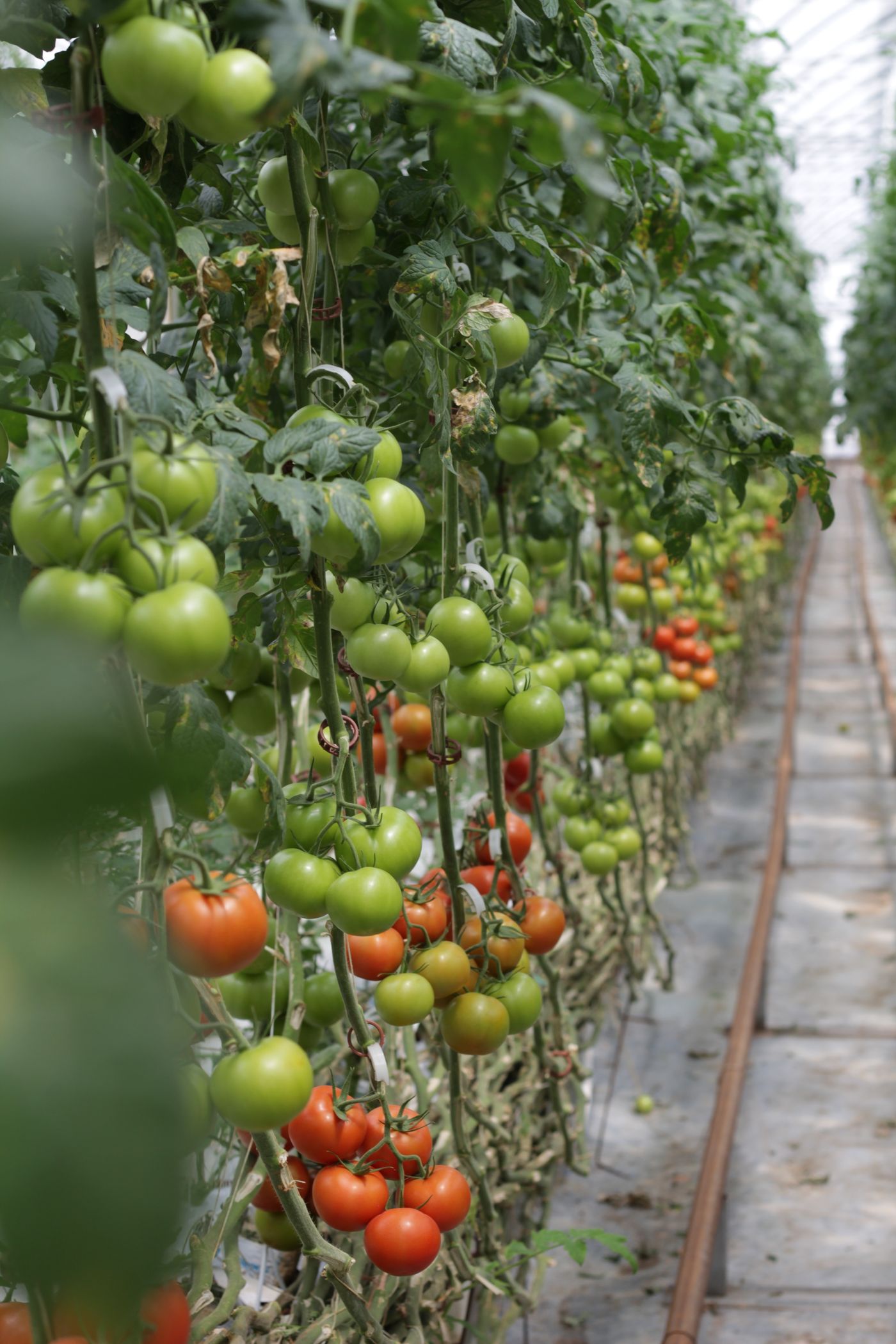
A greenhouse is one of the few investments in Kenyan farming that lets you sell tomatoes when everyone else has none. It stretches the growing season, shields a crop from the hailstorm that flattens open fields, and holds off the blight that thrives in our long rains. Done well, a single structure can turn a quarter-acre into serious income.
Done badly, it becomes an expensive tunnel of disappointment. The most common reason a greenhouse fails in Kenya is not the crop or the seed. It is a setup where one part was undersized or skipped: a cover that tore in a season, an irrigation line with no reliable pressure, or no way to vent the heat that cooks a crop by midday.
This guide walks through the full equipment stack in the order you should think about it: structure, covering, irrigation, crop support, climate control, and sprayers. It closes with a realistic look at first-season economics for the high-value crops that make greenhouses pay, so you can size the investment before you spend a shilling.
Start With the Structure: Wooden or Metal, Tunnel or Multi-Span
The structure is the skeleton that carries every other component and takes the full force of wind and a wet, heavy crop. Two decisions define it: frame material, and roof shape.
On material, the trade-off is upfront cost against lifespan. A wooden-frame greenhouse is the cheapest way in, but the timber must be properly treated against termites and rot or it weakens within a few seasons in the humid interior. A galvanised metal frame costs more at the start, yet the zinc coating resists rust and a well-built one lasts many seasons with little attention. For a farmer growing year after year, metal is usually the lower cost per season despite the higher cost per structure.
On roof shape, a tunnel greenhouse is a single arched span, simple and affordable, ideal for a first structure on a small plot. A multi-span joins several arches into one larger house with open ridges, which vents heat far better and covers more ground per shilling of perimeter, so it suits a hot site or a farmer scaling up. Whichever you choose, insist on a raised, well-drained pad and firm foundations, because a greenhouse that shifts in the wind rips its own cover.
The Covering Decides Everything: Polythene, Shade Net, Insect Net
The cover is the working skin of the greenhouse, and the part most farmers wrongly under-spec: it controls light, temperature, and which pests get in.
The roof and walls are usually greenhouse polythene, a UV-treated plastic film. The UV treatment is what matters: our equatorial sun is fierce, and ordinary builder's polythene turns brittle and cracks within a season. A proper UV-stabilised film diffuses light evenly across the crop and holds up for several seasons, so buy the film rated for greenhouses, not the cheapest sheet on the shelf.
Insect net, a fine mesh fitted at the vents and open sides, is the single most cost-effective disease-control tool you can install. It physically blocks whiteflies, aphids, and thrips, the insects that carry the viruses which destroy tomato and capsicum crops, while still letting air through. Skimp on the net and you invite in the very problems a greenhouse is meant to keep out.
Shade net is a knitted cloth, rated by the percentage of light it blocks, used where the sun is simply too strong: on the hot roof of a Coast or lowland structure, or over seedlings during establishment. A light shade cloth takes the edge off midday heat without starving the crop of the light it needs to set fruit.
Irrigation: Drip, Tank, and Pump as One System
Inside a greenhouse there is no rain, so you feed the crop every drop it drinks. Drip irrigation is the standard, and for good reason. Driplines lay along each row and release water slowly at the base of every plant through built-in emitters, so almost none is lost to evaporation and the leaves stay dry. Dry leaves matter: wet foliage is what fungal diseases need to take hold, and drip keeps moisture in the soil where the roots are.
Drip is a system that only works when every part is sized to match. Water flows from a source into a raised storage tank, which gives both a buffer for dry days and the gravity head that pushes water through the lines. From the tank a pump lifts pressure to the level the emitters need, a filter traps the grit that would otherwise block those tiny emitters, and only then does water reach the mainline and driplines. Leave out the filter and you spend the season unclogging drippers by hand.
Many Kenyan growers add a small fertigation tank or venturi, a device that draws soluble fertiliser into the irrigation stream, so the crop is fed and watered in one pass, which lifts yield and evens out growth. For pumping and storage, our water equipment range covers the tanks, pumps, and fittings that turn a pile of pipe into a system that delivers pressure to the last plant in the row.
Crop Support and Training Keep the Yield Off the Ground
Greenhouse tomatoes and cucumbers are grown as tall, single-stem vines that can climb well over two metres in a season. Left to sprawl, the fruit sits on wet soil and rots, and the canopy tangles into a humid mass that disease loves, so support and training are what keep a high-value crop productive and pickable.
The system is cheap relative to what it protects. Overhead support wires run the length of each row near the roof. From them a length of trellis twine drops to each plant, and as the vine grows you wind the stem up the string, a task called training. Tomato clips or rings secure the stem to the twine at intervals so the weight of a heavy truss does not snap it.
Alongside training goes pruning: removing the side shoots so the plant channels its energy into fruit rather than foliage, and stripping the lower leaves as they age to keep air moving at the base. A well-trained row is easier to spray and harvest, and far less prone to disease than a jungle. Keep a clean pair of pruning tools and disinfect them between rows so you do not carry infection from plant to plant.
Climate Control: Ventilation, Temperature, and Humidity
A sealed greenhouse under the Kenyan sun becomes an oven by mid-morning. When leaf temperature climbs too high the plant shuts its pores to survive, and while it is shut it cannot photosynthesise or set fruit. Tomato flowers, in particular, drop or fail to pollinate in sustained heat, so managing the climate is not a luxury.
The primary tool is ventilation, and for most Kenyan growers it is passive. Roll-up side vents and open ridges let hot air escape at the top while cooler air is drawn in low, a natural chimney effect that needs no electricity. Every vent, of course, must carry insect net so cooling does not become an open door for pests.
Humidity is the twin of temperature. A greenhouse traps moisture, and warm, still, humid air is the perfect nursery for fungal diseases such as botrytis and late blight. You lower it by venting well, watering with drip rather than overhead sprays, spacing plants so air moves between them, and stripping lower leaves. A simple hygrometer, a thermometer with a humidity reading, hung at crop height tells you when to open up and when to hold moisture, for almost nothing against the crop it protects.
Sprayers and Integrated Pest Management
Even a well-netted greenhouse will meet pests and disease, and how you respond decides your margins. The goal is integrated pest management: using the net, hygiene, and scouting to keep problems rare, and reaching for chemicals only when you must. Scout the crop by walking the rows and turning leaves two or three times a week, catching whitefly, red spider mite, or the first spots of blight while they are still a few plants, not the whole house. Yellow sticky traps hung above the canopy both catch flying pests and warn you when their numbers rise.
When you do spray, the equipment matters as much as the product. A knapsack sprayer is the workhorse for a small greenhouse: choose one with an adjustable nozzle that produces a fine, even mist and reaches the underside of the leaves, where mites and whitefly actually live, while a motorised or battery sprayer gives more consistent coverage in a larger house. Rotate the active ingredients so pests do not build resistance, always wear protection, and respect the pre-harvest interval on the label so residues clear before you pick. Browse our sprayers and crop-protection tools to match the sprayer to your house.
First-Season Economics for Tomatoes, Capsicum, and Cucumbers
A greenhouse justifies all this equipment through the value of what grows inside it. High-value vegetables under cover yield more per plant, over a longer window, and often sell into the off-season gaps when prices are highest.
Tomatoes are the classic greenhouse crop in Kenya: a long-bearing, indeterminate vine that produces for months from one planting, spreading your harvest and cashflow. Capsicum, sweet or bell pepper, fetches a strong price and rewards the steady climate a greenhouse provides. Cucumbers grow fast and turn over quickly, giving an earlier first payday while a slower crop matures.
Think in terms of the whole first season. Your setup cost, the frame, cover, and irrigation, is spent once and spread across many seasons, while your running cost each cycle is seedlings, fertiliser, crop protection, and labour. A greenhouse is a multi-season asset: the first crop typically recovers your running costs and a share of the structure, and it keeps paying long after.
Match the Setup to Your Site and Your Scale
There is no single correct greenhouse. A first-time grower on a small plot is well served by a metal tunnel with good UV film, full insect net, a gravity tank feeding drip, and a knapsack sprayer, while a hot, low site or a scaling-up farmer gains more from a multi-span with venting ridges. The mistake to avoid is starving a strong frame of the parts that make it work, because the cheapest part left out usually costs you the harvest.
We supply greenhouse structures, covering, drip irrigation, tanks, pumps, sprayers, and crop-support materials across our branches in Eldoret, Nakuru, Nairobi, and the Coast, and our team can size a full setup to your plot and your crop. Start with the farm equipment range, and talk to us before you buy so the parts match.
Key Takeaways
- Think of a greenhouse as a stack: structure, cover, irrigation, support, climate control, and sprayers. A weak part undoes the strong ones.
- Galvanised metal usually costs less per season than wood, and a multi-span vents heat better than a sealed tunnel on a hot site.
- The cover is where farmers wrongly economise. Use UV-treated polythene and full insect net to block heat, hail, and virus-carrying pests.
- Drip is a system: source, tank, pump, filter, then driplines. The filter and a correctly sized pump keep the whole house watered.
- Ventilation and humidity control decide whether flowers set into fruit, because tomato and capsicum flowers abort in sustained heat.
- Support, prune, scout, and spray on time. High-value crops reward management, and the structure keeps paying across many seasons.
Frequently Asked Questions
Wooden or metal frame for a greenhouse in Kenya?
Wood is cheaper to build but must be well treated against termites and rot, and it weakens faster in the humid interior. Galvanised metal costs more upfront yet resists rust and lasts many seasons, so for anyone growing year after year it is usually the lower cost per season. If budget forces wood, insist on properly treated timber.
Why do I need insect net if the greenhouse is already covered?
The polythene covers the roof and walls, but the vents and open sides must stay open for cooling, and that is where pests enter. A fine insect net over those openings blocks whiteflies, aphids, and thrips, the insects that carry the viruses which destroy tomato and capsicum. It is one of the cheapest and most effective disease controls you can fit.
Do I really need a pump and filter, or can I just use a tank?
A raised tank alone can gravity-feed a small drip layout, but many sites need a pump to reach the pressure the emitters require and to serve the far end of every row evenly. The filter is not optional: drip emitters are tiny and clog on grit, so a filter between the tank and the lines saves you a season of unblocking drippers by hand.
How much does a full greenhouse setup cost at Fuga?
Prices depend on the size of the house, the frame material, and the irrigation you choose, and they move with stock, so we do not list fixed figures here. Send your plot size and target crop on WhatsApp at wa.me/254716961018 or call 0734263958, and our team will size a complete setup and give you a current quote. You can also visit any branch in Eldoret, Nakuru, Nairobi, or the Coast.